1
/
of
1
Human AHR (Aryl Hydrocarbon Receptor) ELISA Kit
Human AHR (Aryl Hydrocarbon Receptor) ELISA Kit
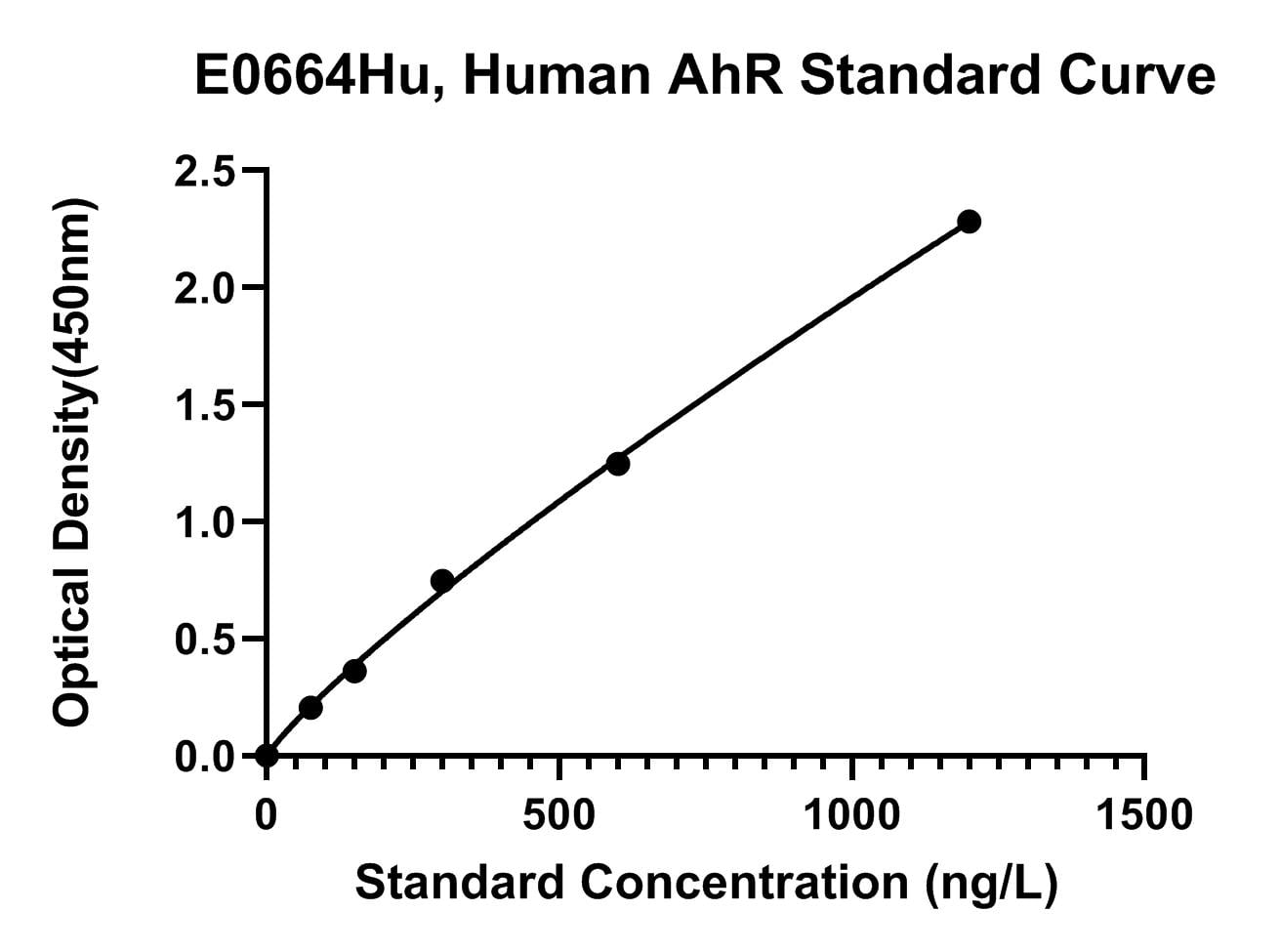
The Human (AHR) Aryl Hydrocarbon Receptor ELISA Kit measures Aryl Hydrocarbon Receptor in samples. The plate has been pre-coated with Human AHR antibody. AHR present in the sample is added and binds to antibodies coated on the wells. And then biotinylated Human AHR Antibody is added and binds to AHR in the sample. Then Streptavidin-HRP is added and binds to the Biotinylated AHR antibody. After incubation unbound Streptavidin-HRP is washed away during a washing step. Substrate solution is then added and color develops in proportion to the amount of Human AHR. The reaction is terminated by addition of acidic stop solution and absorbance is measured at 450 nm.
Catalog No:
E0664Hu
Regular price
$595.00 USD
Regular price
$458.00 USD
Sale price
$595.00 USD
Unit price
/
per
2.5 weeks
Couldn't load pickup availability
Product Details
Species Reactivity
Human
Sensitivity
5.25 ng/L
Detection Range
10-2000 ng/L
Sample Type
Serum, plasma, cell culture supernates
Incubation(s)
1.5 hour(s)
Research Areas
Epigenetics and Nuclear Signaling
Background
Ligand-activated transcription factor that enables cells to adapt to changing conditions by sensing compounds from the environment, diet, microbiome and cellular metabolism, and which plays important roles in development, immunity and cancer (PubMed: 30373764, PubMed: 23275542, PubMed: 7961644, PubMed: 32818467). Upon ligand binding, translocates into the nucleus, where it heterodimerizes with ARNT and induces transcription by binding to xenobiotic response elements (XRE) (PubMed: 30373764, PubMed: 23275542, PubMed: 7961644). Regulates a variety of biological processes, including angiogenesis, hematopoiesis, drug and lipid metabolism, cell motility and immune modulation (PubMed: 12213388). Xenobiotics can act as ligands: upon xenobiotic-binding, activates the expression of multiple phase I and II xenobiotic chemical metabolizing enzyme genes (such as the CYP1A1 gene) (PubMed: 7961644). Mediates biochemical and toxic effects of halogenated aromatic hydrocarbons (PubMed: 7961644). Next to xenobiotics, natural ligands derived from plants, microbiota, and endogenous metabolism are potent AHR agonists (PubMed: 18076143). Tryptophan (Trp) derivatives constitute an important class of endogenous AHR ligands (PubMed: 32866000, PubMed: 32818467). Acts as a negative regulator of anti-tumor immunity: indoles and kynurenic acid generated by Trp catabolism act as ligand and activate AHR, thereby promoting AHR-driven cancer cell motility and suppressing adaptive immunity (PubMed: 32818467). Regulates the circadian clock by inhibiting the basal and circadian expression of the core circadian component PER1 (PubMed: 28602820). Inhibits PER1 by repressing the CLOCK-ARNTL/BMAL1 heterodimer mediated transcriptional activation of PER1 (PubMed: 28602820). The heterodimer ARNT:AHR binds to core DNA sequence 5'-TGCGTG-3' within the dioxin response element (DRE) of target gene promoters and activates their transcription (PubMed: 28602820). Source: UniProt Consortium (2025)
Shipping Condition
Shipped on cold gel packs.
Storage Condition and Shelf Life
2-8C
Analyte
Aryl Hydrocarbon Receptor
Regulatory Status
For Research Use Only