1
/
of
1
Human AMFR (E3 Ubiquitin-protein Ligase Amfr) ELISA Kit
Human AMFR (E3 Ubiquitin-protein Ligase Amfr) ELISA Kit
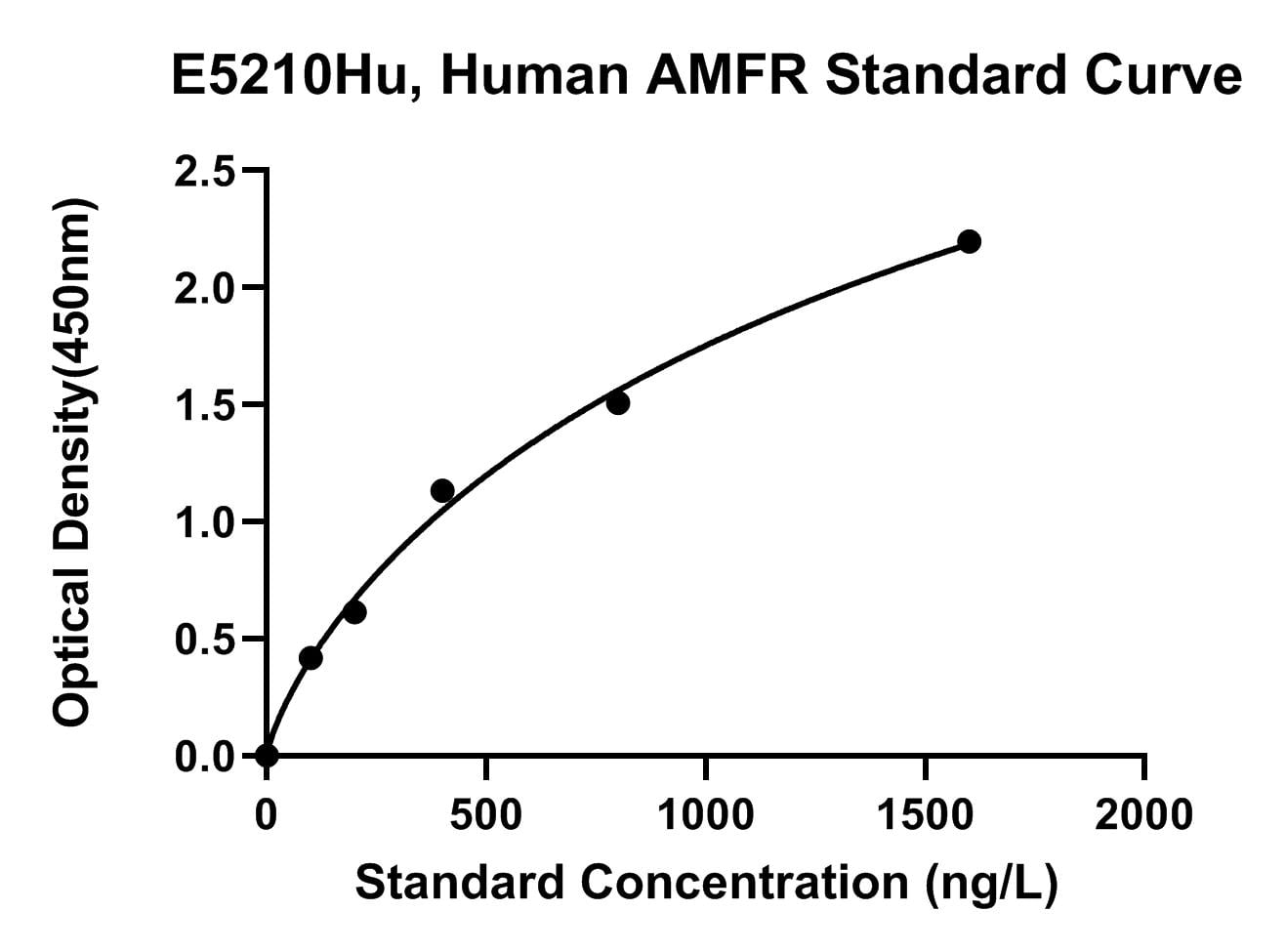
The Human (AMFR) E3 Ubiquitin-protein Ligase Amfr ELISA Kit measures E3 ubiquitin-protein ligase AMFR in samples. The plate has been pre-coated with Human AMFR antibody. AMFR present in the sample is added and binds to antibodies coated on the wells. And then biotinylated Human AMFR Antibody is added and binds to AMFR in the sample. Then Streptavidin-HRP is added and binds to the Biotinylated AMFR antibody. After incubation unbound Streptavidin-HRP is washed away during a washing step. Substrate solution is then added and color develops in proportion to the amount of Human AMFR. The reaction is terminated by addition of acidic stop solution and absorbance is measured at 450 nm.
Catalog No:
E5210Hu
Regular price
$595.00 USD
Regular price
$458.00 USD
Sale price
$595.00 USD
Unit price
/
per
2.5 weeks
Couldn't load pickup availability
Product Details
Species Reactivity
Human
Sensitivity
7.15 ng/L
Detection Range
15-3000 ng/L
Sample Type
Serum, plasma, cell culture supernates
Incubation(s)
1.5 hour(s)
Research Areas
Cell Biology, Immunology
Background
E3 ubiquitin-protein ligase that mediates the polyubiquitination of lysine and cysteine residues on target proteins, such as CD3D, CYP3A4, CFTR, INSIG1, SOAT2/ACAT2 and APOB for proteasomal degradation (PubMed: 10456327, PubMed: 11724934, PubMed: 12670940, PubMed: 19103148, PubMed: 24424410, PubMed: 28604676). Component of a VCP/p97-AMFR/gp78 complex that participates in the final step of endoplasmic reticulum-associated degradation (ERAD) (PubMed: 10456327, PubMed: 11724934, PubMed: 19103148, PubMed: 24424410). The VCP/p97-AMFR/gp78 complex is involved in the sterol-accelerated ERAD degradation of HMGCR through binding to the HMGCR-INSIG1 complex at the ER membrane (PubMed: 16168377, PubMed: 22143767). In addition, interaction of AMFR with AUP1 facilitates interaction of AMFR with ubiquitin-conjugating enzyme UBE2G2 and ubiquitin ligase RNF139, leading to sterol-induced HMGCR ubiquitination (PubMed: 23223569). The ubiquitinated HMGCR is then released from the ER into the cytosol for subsequent destruction (PubMed: 16168377, PubMed: 22143767, PubMed: 23223569). In addition to ubiquitination on lysine residues, catalyzes ubiquitination on cysteine residues: together with INSIG1, mediates polyubiquitination of SOAT2/ACAT2 at 'Cys-277', leading to its degradation when the lipid levels are low (PubMed: 28604676). Catalyzes ubiquitination and subsequent degradation of INSIG1 when cells are depleted of sterols (PubMed: 17043353). Mediates polyubiquitination of INSIG2 at 'Cys-215' in some tissues, leading to its degradation (PubMed: 31953408). Also regulates ERAD through the ubiquitination of UBL4A a component of the BAG6/BAT3 complex (PubMed: 21636303). Also acts as a scaffold protein to assemble a complex that couples ubiquitination, retranslocation and deglycosylation (PubMed: 21636303). Mediates tumor invasion and metastasis as a receptor for the GPI/autocrine motility factor (PubMed: 10456327). In association with LMBR1L and UBAC2, negatively regulates the canonical Wnt signaling pathway in the lymphocytes by promoting the ubiquitin-mediated degradation of CTNNB1 and Wnt receptors FZD6 and LRP6 (PubMed: 31073040). Source: UniProt Consortium (2025)
Shipping Condition
Shipped on cold gel packs.
Storage Condition and Shelf Life
2-8C
Analyte
E3 ubiquitin-protein ligase AMFR
Regulatory Status
For Research Use Only