1
/
of
1
Human ARC (Activity-regulated Cytoskeleton-associated Protein) ELISA Kit
Human ARC (Activity-regulated Cytoskeleton-associated Protein) ELISA Kit
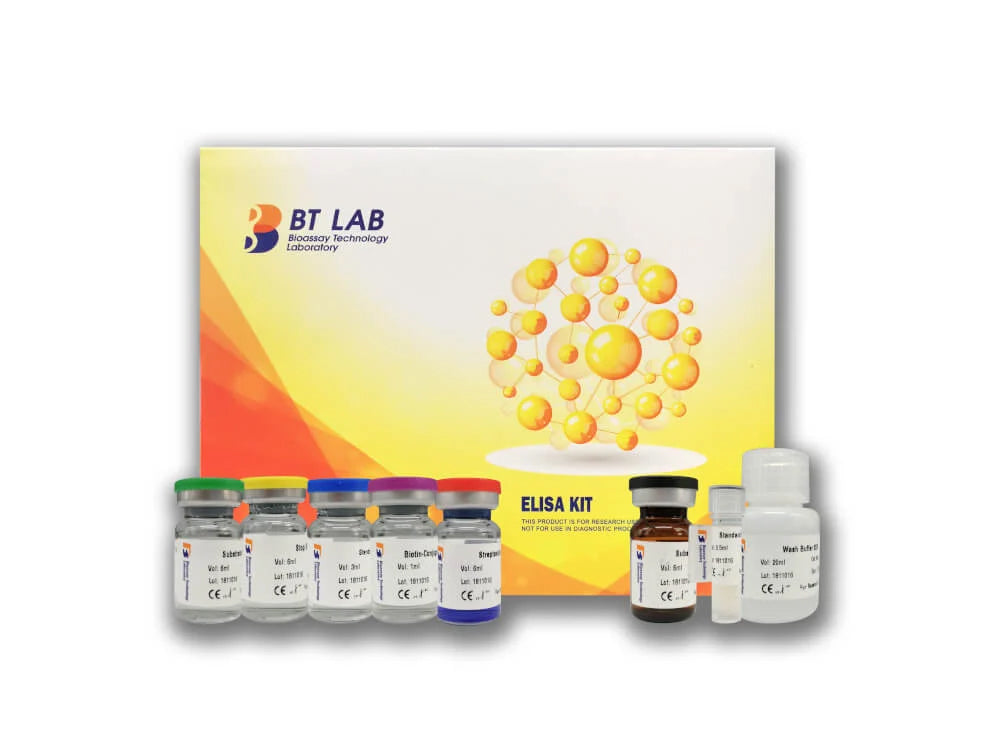
The Human (ARC) Activity-regulated Cytoskeleton-associated Protein ELISA Kit measures Activity-Regulated Cytoskeleton-Associated Protein in samples. The plate has been pre-coated with Human ARC antibody. ARC present in the sample is added and binds to antibodies coated on the wells. And then biotinylated Human ARC Antibody is added and binds to ARC in the sample. Then Streptavidin-HRP is added and binds to the Biotinylated ARC antibody. After incubation unbound Streptavidin-HRP is washed away during a washing step. Substrate solution is then added and color develops in proportion to the amount of Human ARC. The reaction is terminated by addition of acidic stop solution and absorbance is measured at 450 nm.
Catalog No:
E4498Hu
Regular price
$595.00 USD
Regular price
$458.00 USD
Sale price
$595.00 USD
Unit price
/
per
2.5 weeks
Couldn't load pickup availability
Product Details
Species Reactivity
Human
Sensitivity
7.28 ng/L
Detection Range
15-3000 ng/L
Sample Type
Serum, plasma, cell culture supernates
Incubation(s)
1.5 hour(s)
Research Areas
Immunology
Background
Master regulator of synaptic plasticity that self-assembles into virion-like capsids that encapsulate RNAs and mediate intercellular RNA transfer in the nervous system. ARC protein is released from neurons in extracellular vesicles that mediate the transfer of ARC mRNA into new target cells, where ARC mRNA can undergo activity-dependent translation. ARC capsids are endocytosed and are able to transfer ARC mRNA into the cytoplasm of neurons. Acts as a key regulator of synaptic plasticity: required for protein synthesis-dependent forms of long-term potentiation (LTP) and depression (LTD) and for the formation of long-term memory. Regulates synaptic plasticity by promoting endocytosis of AMPA receptors (AMPARs) in response to synaptic activity: this endocytic pathway maintains levels of surface AMPARs in response to chronic changes in neuronal activity through synaptic scaling, thereby contributing to neuronal homeostasis. Acts as a postsynaptic mediator of activity-dependent synapse elimination in the developing cerebellum by mediating elimination of surplus climbing fiber synapses. Accumulates at weaker synapses, probably to prevent their undesired enhancement. This suggests that ARC-containing virion-like capsids may be required to eliminate synaptic material. Required to transduce experience into long-lasting changes in visual cortex plasticity and for long-term memory (By similarity). Involved in postsynaptic trafficking and processing of amyloid-beta A4 (APP) via interaction with PSEN1 (By similarity). In addition to its role in synapses, also involved in the regulation of the immune system: specifically expressed in skin-migratory dendritic cells and regulates fast dendritic cell migration, thereby regulating T-cell activation (By similarity). Source: UniProt Consortium (2025)
Shipping Condition
Shipped on cold gel packs.
Storage Condition and Shelf Life
2-8C
Analyte
Activity-Regulated Cytoskeleton-Associated Protein
Regulatory Status
For Research Use Only