1
/
of
1
Bovine CST3 (Cystatin C) ELISA Kit
Bovine CST3 (Cystatin C) ELISA Kit
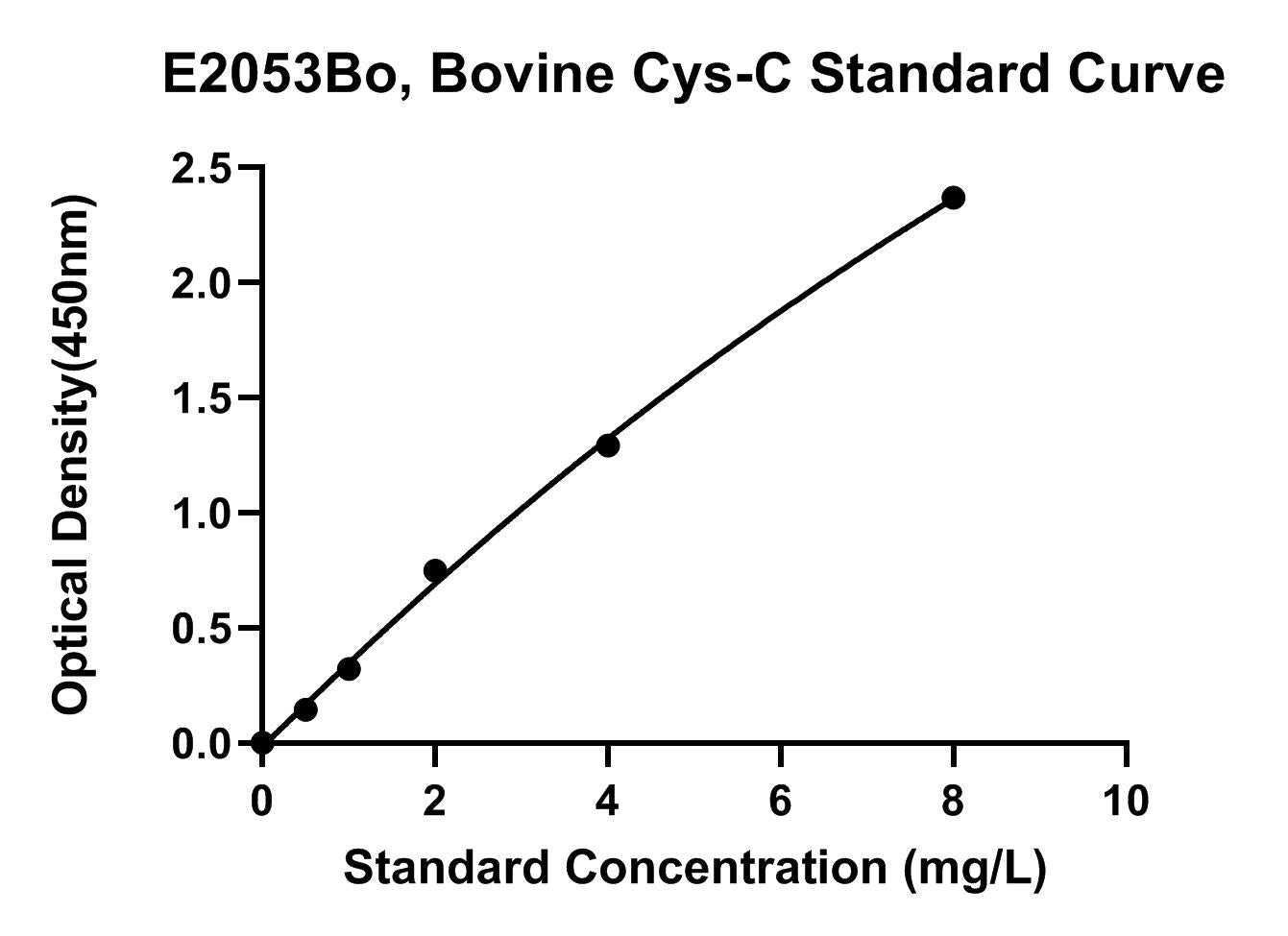
The Bovine (CST3) Cystatin C ELISA Kit measures Cystatin C in Bovine samples. The plate has been pre-coated with Bovine Cystatin-3 antibody. Cystatin-3 present in the sample is added and binds to antibodies coated on the wells. And then biotinylated Bovine Cystatin-3 Antibody is added and binds to Cystatin-3 in the sample. Then Streptavidin-HRP is added and binds to the Biotinylated Cystatin-3 antibody. After incubation unbound Streptavidin-HRP is washed away during a washing step. Substrate solution is then added and color develops in proportion to the amount of Bovine Cystatin-3. The reaction is terminated by addition of acidic stop solution and absorbance is measured at 450 nm.
Catalog No:
E2053Bo
Regular price
$595.00 USD
Regular price
$458.00 USD
Sale price
$595.00 USD
Unit price
/
per
2.5 weeks
Couldn't load pickup availability
Product Details
Species Reactivity
Bovine
Sensitivity
0.02 mg/L
Detection Range
0.05-15 mg/L
Sample Type
Serum, plasma, cell culture supernates
Incubation(s)
1.5 hour(s)
Research Areas
Cardiovascular, Kidney biomarker
Background
Cystatin C or cystatin 3 (formerly gamma trace, post-gamma-globulin, or neuroendocrine basic polypeptide), a protein encoded by the CST3 gene, is mainly used as a biomarker of kidney function. Recently, it has been studied for its role in predicting new-onset or deteriorating cardiovascular disease. It also seems to play a role in brain disorders involving amyloid (a specific type of protein deposition), such as Alzheimer's disease. In humans, all cells with a nucleus (cell core containing the DNA) produce cystatin C as a chain of 120 amino acids. It is found in virtually all tissues and body fluids. It is a potent inhibitor of lysosomal proteinases (enzymes from a special subunit of the cell that break down proteins) and probably one of the most important extracellular inhibitors of cysteine proteases (it prevents the breakdown of proteins outside the cell by a specific type of protein degrading enzymes). Cystatin C belongs to the type 2 cystatin gene family. Source: UniProt Consortium (2025)
Shipping Condition
Shipped on cold gel packs.
Storage Condition and Shelf Life
2-8C
Analyte
Cystatin C
Regulatory Status
For Research Use Only