1
/
of
1
Canine Uromodulin ELISA
Canine Uromodulin ELISA
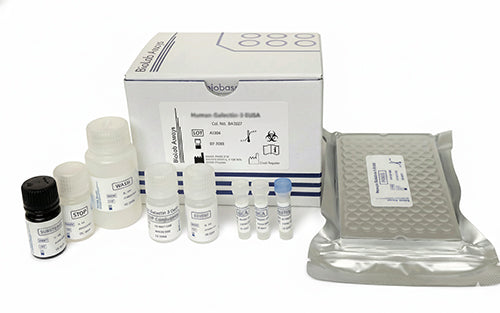
The Canine Uromodulin ELISA is an enzyme immunoassay for the quantitative determination of canine uromodulin in serum or urine.
Catalog No:
BA2009
Regular price
$560.00 USD
Regular price
$560.00 USD
Sale price
$560.00 USD
Unit price
/
per
2 weeks
Couldn't load pickup availability
Product Details
Species Reactivity
Canine
Sensitivity
10 pg/mL
Detection Range
0.16 - 10 ng/mL
Sample Type
Serum, Urine
Sample Size
5 uL
Incubation(s)
2.5 hour(s)
Research Areas
Nephrology
Background
Uromodulin, also known as Tamm–Horsfall protein (THP) is the most abundant protein found in mammalian urine under physiological conditions selectively expressed by epithelial cells of the thick ascending limb of Henle’s loop (TALH). It is a glycosylphosphatidylinositol (GPI)-anchored apical membrane protein, released into the tubular lumen through proteolytic cleavage. The normal urinary THP has a molecular weight of 80–90 kDa. Approximately 30% of the molecular weight of THP is carbohydrates, mainly consisting of N-linked complex-type glycans with the most varied array of di-, tri- and tetra-antennary sugar structures. Depending upon the species, urine uromodulin consists of around 640 amino acids. It contains a very high number of cysteine residues that are completely engaged in disulfide bond formation, which is important for the conformation of the protein.
Canine uromodulin is most closely related to human and bovine THP with 80.7 and 79.9% identity to bovine and human THP, respectively. In accordance to humans, the THP in the urine of dogs exists in a polymeric form with molecular weight above 5000 kDa which dissociates into monomeric molecules of around 100 kDa.
It has been suggested that THP protein may be an important component of epithelia, which absorb sodium and chloride ions but are impermeable to water. Uromodulin interacts with other molecules and cells including IL-1, IL-2, TNF, IgG, neutrophils, lymphocytes and monocytes. THP acts as a host defense factor against urinary tract infections, specifically targeting type 1 fimbriated Escherichia coli. Uromodulin also acts as an inhibitor of stone formation in healthy individuals by trapping crystals in the same manner. However, this function may be subverted under some circumstances and THP may facilitate crystal aggregation and then promote stone formation. It means that it has been proposed to play a dual role as promoter or inhibitor of nephrolithiasis.
A THP-like protein has been studied in dogs specifically because of the species’ urinary excretion of vitamin A. In contrast to humans, carnivores excrete vitamin A in urine as lipophilic retinol and retinyl esters. Therefore, THP is released in the urine of dogs to facilitate the excretion of retinol and retinyl esters.
Previous reports have described urinary THP as biomarker for distal tubular dysfunction in dogs. Its potential use is illustrated by decreased urinary THP in dogs with chronic kidney diseases (CKD) and in dogs with urolithiasis. The high metabolic activity of the cells of the thick ascending limb of Henle’s loop makes them particularly vulnerable to ischemic injury. Consequently, in acute kidney injury (AKI) caused by ischemic insults, evaluation of THP as an early AKI biomarker is potentially valuable.
The study on the Bernese Mountain dogs concluded that THP together with the other identified urinary proteins may be valuable markers for the diagnosis of juvenile nephropathy.
Shipping Condition
Shipped on cold gel packs.
Storage Condition and Shelf Life
2-8C
Analyte
Uromodulin
Regulatory Status
For Research Use Only