1
/
of
1
Human CLEC4E (C-type Lectin Domain Family 4 Member E) ELISA Kit
Human CLEC4E (C-type Lectin Domain Family 4 Member E) ELISA Kit
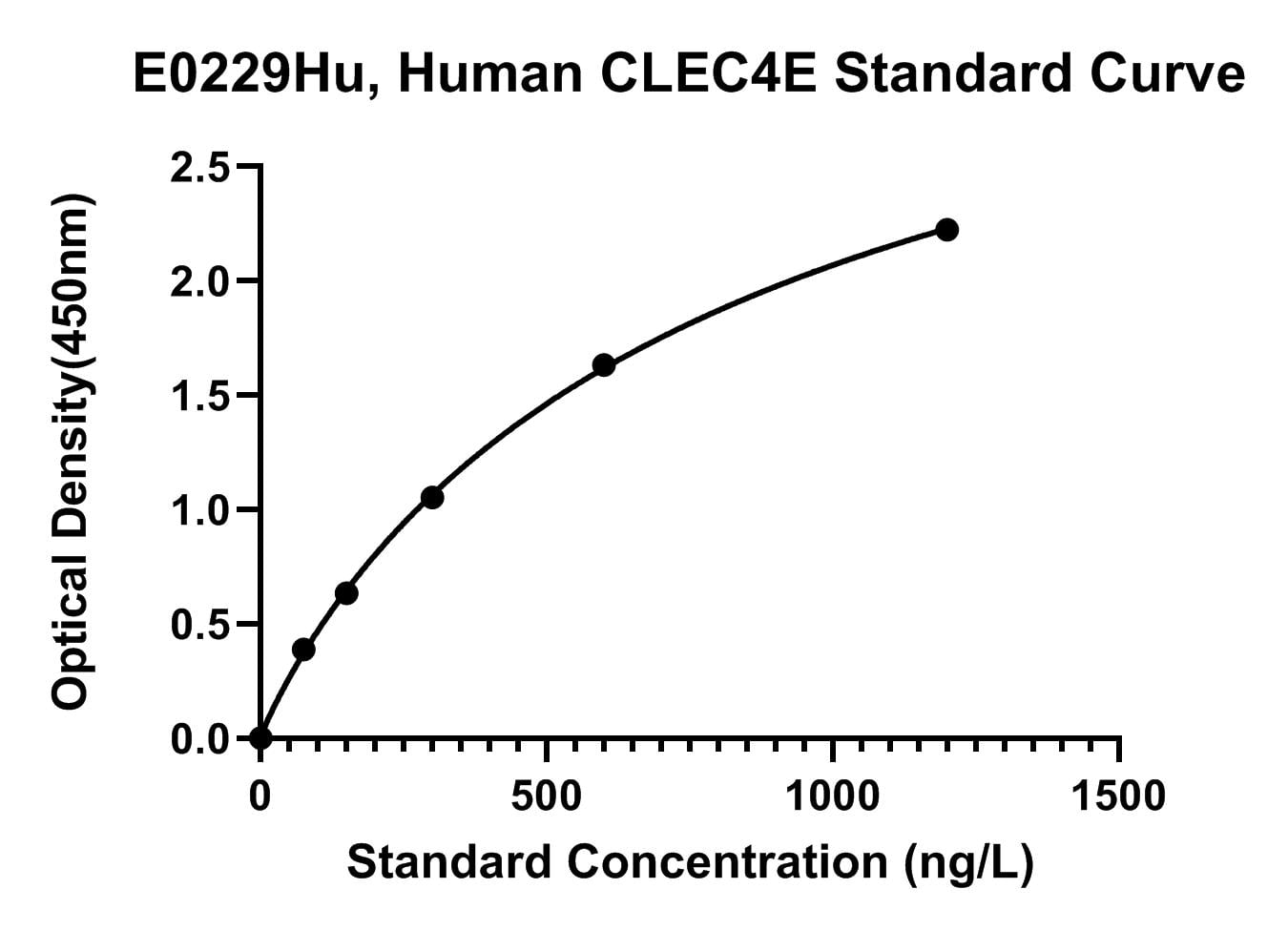
The Human (CLEC4E) C-type Lectin Domain Family 4 Member E ELISA Kit measures C-type lectin domain family 4 member E in samples. The plate has been pre-coated with Human CLEC4E antibody. CLEC4E present in the sample is added and binds to antibodies coated on the wells. And then biotinylated Human CLEC4E Antibody is added and binds to CLEC4E in the sample. Then Streptavidin-HRP is added and binds to the Biotinylated CLEC4E antibody. After incubation unbound Streptavidin-HRP is washed away during a washing step. Substrate solution is then added and color develops in proportion to the amount of Human CLEC4E. The reaction is terminated by addition of acidic stop solution and absorbance is measured at 450 nm.
Catalog No:
E0229Hu
Regular price
$595.00 USD
Regular price
$458.00 USD
Sale price
$595.00 USD
Unit price
/
per
2.5 weeks
Couldn't load pickup availability
Product Details
Species Reactivity
Human
Sensitivity
2.33 ng/L
Detection Range
5-2000 ng/L
Sample Type
Serum, plasma, cell culture supernates
Incubation(s)
1.5 hour(s)
Background
Calcium-dependent lectin that acts as a pattern recognition receptor (PRR) of the innate immune system: recognizes damage-associated molecular patterns (DAMPs) of abnormal self and pathogen-associated molecular patterns (PAMPs) of bacteria and fungi (PubMed:18509109, PubMed:23602766).
The PAMPs notably include mycobacterial trehalose 6,6'-dimycolate (TDM), a cell wall glycolipid with potent adjuvant immunomodulatory functions (PubMed:23602766, PubMed:24101491).
Interacts with signaling adapter Fc receptor gamma chain/FCER1G to form a functional complex in myeloid cells (By similarity).
Binding of mycobacterial trehalose 6,6'-dimycolate (TDM) to this receptor complex leads to phosphorylation of the immunoreceptor tyrosine-based activation motif (ITAM) of FCER1G, triggering activation of SYK, CARD9 and NF-kappa-B, consequently driving maturation of antigen-presenting cells and shaping antigen-specific priming of T-cells toward effector T-helper 1 and T-helper 17 cell subtypes (By similarity).
Also recognizes alpha-mannose residues on pathogenic fungi of the genus Malassezia and mediates macrophage activation (By similarity).
Through recognition of DAMPs released upon nonhomeostatic cell death, enables immune sensing of damaged self and promotes inflammatory cell infiltration into the damaged tissue (By similarity). Source: UniProt Consortium (2025)
Shipping Condition
Shipped on cold gel packs.
Storage Condition and Shelf Life
2-8C
Analyte
C-type lectin domain family 4 member E
Regulatory Status
For Research Use Only