1
/
of
1
Human KRAS (Gtpase Kras) ELISA Kit
Human KRAS (Gtpase Kras) ELISA Kit
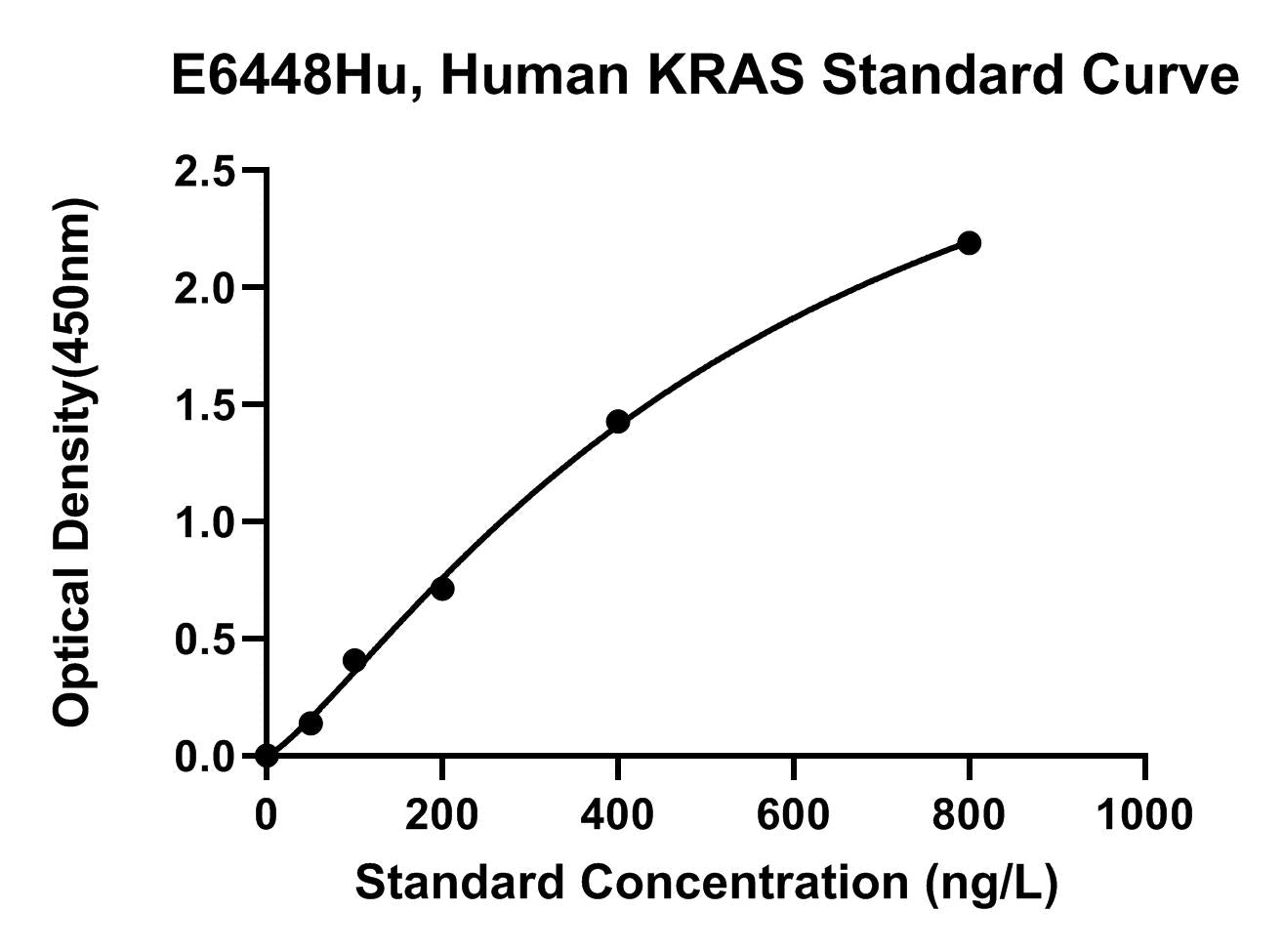
The Human (KRAS) Gtpase Kras ELISA Kit measures GTPase KRas in samples. The plate has been pre-coated with Human KRAS antibody. KRAS present in the sample is added and binds to antibodies coated on the wells. And then biotinylated Human KRAS Antibody is added and binds to KRAS in the sample. Then Streptavidin-HRP is added and binds to the Biotinylated KRAS antibody. After incubation unbound Streptavidin-HRP is washed away during a washing step. Substrate solution is then added and color develops in proportion to the amount of Human KRAS. The reaction is terminated by addition of acidic stop solution and absorbance is measured at 450 nm.
Catalog No:
E6448Hu
Regular price
$595.00 USD
Regular price
$458.00 USD
Sale price
$595.00 USD
Unit price
/
per
2.5 weeks
Couldn't load pickup availability
Product Details
Species Reactivity
Human
Sensitivity
3.39 ng/L
Detection Range
7-1500 ng/L
Sample Type
Serum, plasma, cell culture supernates
Incubation(s)
1.5 hour(s)
Background
The KRAS (Kirsten rat sarcoma virus) gene provides instructions for making a protein called K-Ras, part of the RAS/MAPK pathway. The protein relays signals from outside the cell to the cell's nucleus. These signals instruct the cell to grow and divide (proliferate) or to mature and take on specialized functions (differentiate). The K-Ras protein is a GTPase, which means it converts a molecule called GTP into another molecule called GDP. In this way the K-Ras protein acts like a switch that is turned on and off by the GTP and GDP molecules. To transmit signals, it must be turned on by attaching (binding) to a molecule of GTP. The K-Ras protein is turned off (inactivated) when it converts the GTP to GDP. When the protein is bound to GDP, it does not relay signals to the cell's nucleus. It is called KRAS because it was first identified as an oncogene in Kirsten RAt Sarcoma virus. The viral oncogene was derived from cellular genome. Thus, KRAS gene in cellular genome is called a proto-oncogene. Source: UniProt Consortium (2025)
Shipping Condition
Shipped on cold gel packs.
Storage Condition and Shelf Life
2-8C
Analyte
GTPase KRas
Regulatory Status
For Research Use Only