1
/
of
1
Human MUSK (Muscle Skeletal Receptor Tyrosine Kinase) ELISA Kit
Human MUSK (Muscle Skeletal Receptor Tyrosine Kinase) ELISA Kit
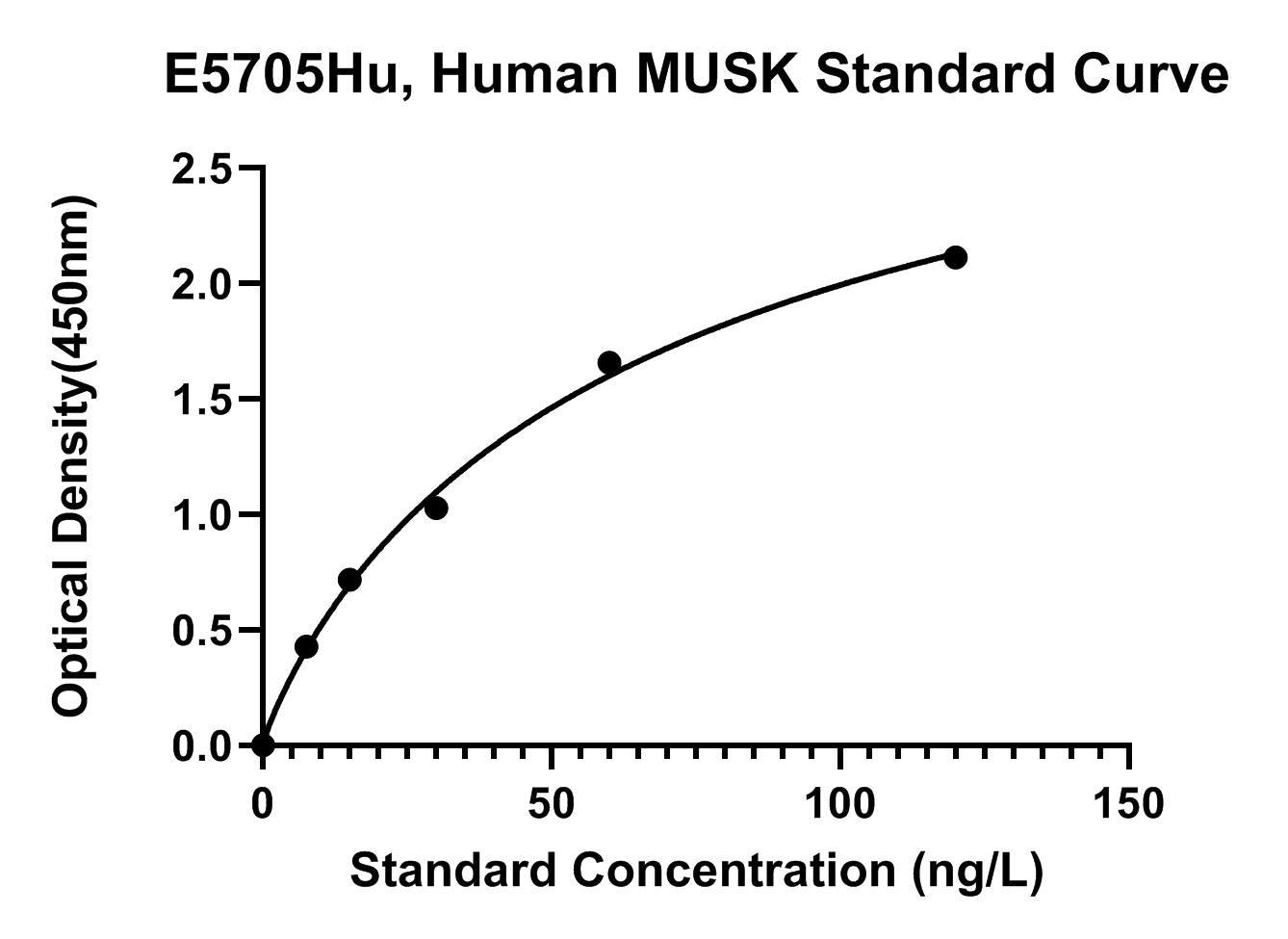
The Human (MUSK) Muscle Skeletal Receptor Tyrosine Kinase ELISA Kit measures Muscle Skeletal Receptor Tyrosine Kinase in samples. The plate has been pre-coated with Human MUSK antibody. MUSK present in the sample is added and binds to antibodies coated on the wells. And then biotinylated Human MUSK Antibody is added and binds to MUSK in the sample. Then Streptavidin-HRP is added and binds to the Biotinylated MUSK antibody. After incubation unbound Streptavidin-HRP is washed away during a washing step. Substrate solution is then added and color develops in proportion to the amount of Human MUSK. The reaction is terminated by addition of acidic stop solution and absorbance is measured at 450 nm.
Catalog No:
E5705Hu
Regular price
$595.00 USD
Regular price
$458.00 USD
Sale price
$595.00 USD
Unit price
/
per
2.5 weeks
Couldn't load pickup availability
Product Details
Species Reactivity
Human
Sensitivity
0.32 ng/L
Detection Range
0.5-200 ng/L
Sample Type
Serum, plasma, cell culture supernates
Incubation(s)
1.5 hour(s)
Research Areas
Enzyme & Kinase
Background
Receptor tyrosine kinase which plays a central role in the formation and the maintenance of the neuromuscular junction (NMJ), the synapse between the motor neuron and the skeletal muscle (PubMed:25537362).
Recruitment of AGRIN by LRP4 to the MUSK signaling complex induces phosphorylation and activation of MUSK, the kinase of the complex. The activation of MUSK in myotubes regulates the formation of NMJs through the regulation of different processes including the specific expression of genes in subsynaptic nuclei, the reorganization of the actin cytoskeleton and the clustering of the acetylcholine receptors (AChR) in the postsynaptic membrane. May regulate AChR phosphorylation and clustering through activation of ABL1 and Src family kinases which in turn regulate MUSK. DVL1 and PAK1 that form a ternary complex with MUSK are also important for MUSK-dependent regulation of AChR clustering. May positively regulate Rho family GTPases through FNTA. Mediates the phosphorylation of FNTA which promotes prenylation, recruitment to membranes and activation of RAC1 a regulator of the actin cytoskeleton and of gene expression. Other effectors of the MUSK signaling include DNAJA3 which functions downstream of MUSK. May also play a role within the central nervous system by mediating cholinergic responses, synaptic plasticity and memory formation (By similarity). Source: UniProt Consortium (2025)
Shipping Condition
Shipped on cold gel packs.
Storage Condition and Shelf Life
2-8C
Analyte
Muscle Skeletal Receptor Tyrosine Kinase
Regulatory Status
For Research Use Only