1
/
of
1
Human OBFC1 (Cst Complex Subunit Stn1) ELISA Kit
Human OBFC1 (Cst Complex Subunit Stn1) ELISA Kit
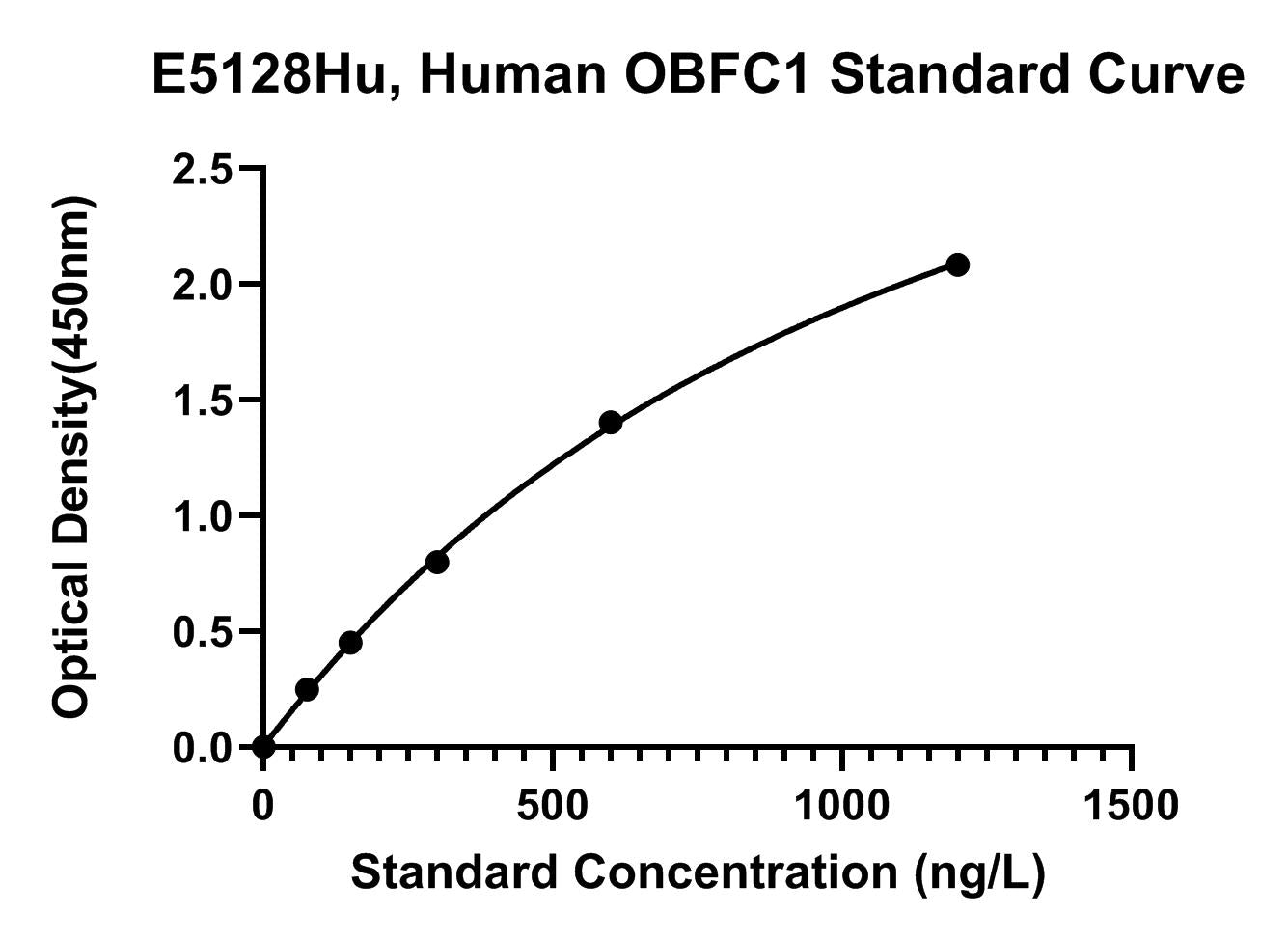
The Human (OBFC1) Cst Complex Subunit Stn1 ELISA Kit measures CST complex subunit STN1 in samples. The plate has been pre-coated with Human OBFC1 antibody. OBFC1 present in the sample is added and binds to antibodies coated on the wells. And then biotinylated Human OBFC1 Antibody is added and binds to OBFC1 in the sample. Then Streptavidin-HRP is added and binds to the Biotinylated OBFC1 antibody. After incubation unbound Streptavidin-HRP is washed away during a washing step. Substrate solution is then added and color develops in proportion to the amount of Human OBFC1. The reaction is terminated by addition of acidic stop solution and absorbance is measured at 450 nm.
Catalog No:
E5128Hu
Regular price
$595.00 USD
Regular price
$458.00 USD
Sale price
$595.00 USD
Unit price
/
per
2.5 weeks
Couldn't load pickup availability
Product Details
Species Reactivity
Human
Sensitivity
5.62 ng/L
Detection Range
10-2000 ng/L
Sample Type
Serum, plasma, cell culture supernates
Incubation(s)
1.5 hour(s)
Research Areas
Epigenetics and Nuclear Signaling
Background
Component of the CST complex proposed to act as a specialized replication factor promoting DNA replication under conditions of replication stress or natural replication barriers such as the telomere duplex. The CST complex binds single-stranded DNA with high affinity in a sequence-independent manner, while isolated subunits bind DNA with low affinity by themselves. Initially the CST complex has been proposed to protect telomeres from DNA degradation (PubMed:19854130).
However, the CST complex has been shown to be involved in several aspects of telomere replication. The CST complex inhibits telomerase and is involved in telomere length homeostasis; it is proposed to bind to newly telomerase-synthesized 3' overhangs and to terminate telomerase action implicating the association with the ACD:POT1 complex thus interfering with its telomerase stimulation activity. The CST complex is also proposed to be involved in fill-in synthesis of the telomeric C-strand probably implicating recruitment and activation of DNA polymerase alpha (PubMed:22964711, PubMed:22763445).
The CST complex facilitates recovery from many forms of exogenous DNA damage; seems to be involved in the re-initiation of DNA replication at repaired forks and/or dormant origins (PubMed:25483097).
Required for efficicient replication of the duplex region of the telomere. Promotes efficient replication of lagging-strand telomeres (PubMed:22863775, PubMed:22964711).
Promotes general replication start following replication-fork stalling implicating new origin firing (PubMed:22863775).
May be in involved in C-strand fill-in during late S/G2 phase independent of its role in telomere duplex replication (PubMed:23142664).
Component of the CST complex, a complex that binds to single-stranded DNA and is required to protect telomeres from DNA degradation. The CST complex binds single-stranded DNA with high affinity in a sequence-independent manner, while isolated subunits bind DNA with low affinity by themselves. In addition to telomere protection, the CST complex has probably a more general role in DNA metabolism at non-telomeric sites. Source: UniProt Consortium (2025)
Shipping Condition
Shipped on cold gel packs.
Storage Condition and Shelf Life
2-8C
Analyte
CST complex subunit STN1
Regulatory Status
For Research Use Only