1
/
of
1
Human PAK3 (Serine Threonine-protein Kinase Pak 3) ELISA Kit
Human PAK3 (Serine Threonine-protein Kinase Pak 3) ELISA Kit
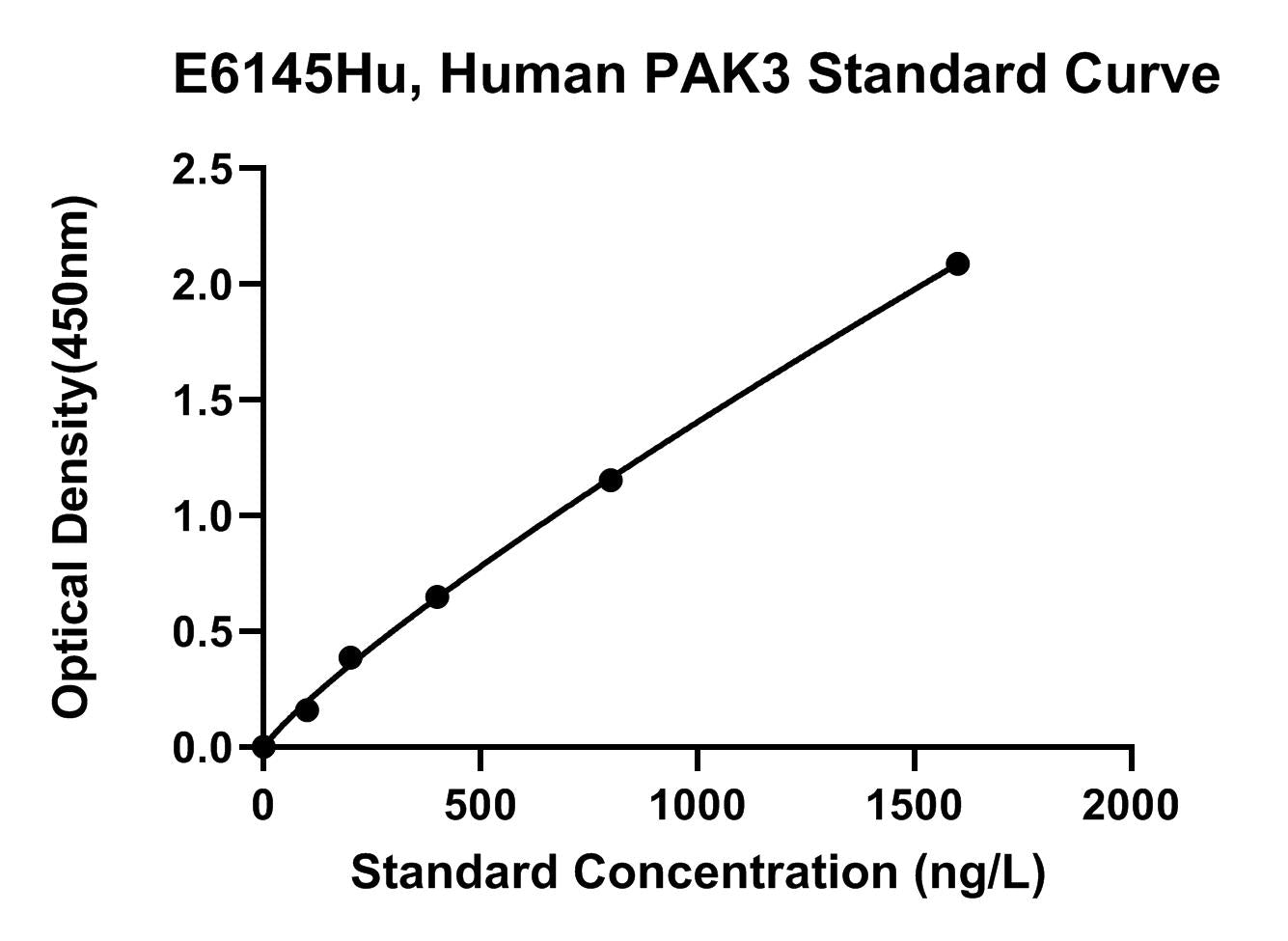
The Human (PAK3) Serine Threonine-protein Kinase Pak 3 ELISA Kit measures Serine/threonine-protein kinase PAK 3 in samples. The plate has been pre-coated with Human PAK3 antibody. PAK3 present in the sample is added and binds to antibodies coated on the wells. And then biotinylated Human PAK3 Antibody is added and binds to PAK3 in the sample. Then Streptavidin-HRP is added and binds to the Biotinylated PAK3 antibody. After incubation unbound Streptavidin-HRP is washed away during a washing step. Substrate solution is then added and color develops in proportion to the amount of Human PAK3. The reaction is terminated by addition of acidic stop solution and absorbance is measured at 450 nm.
Catalog No:
E6145Hu
Regular price
$595.00 USD
Regular price
$458.00 USD
Sale price
$595.00 USD
Unit price
/
per
2.5 weeks
Couldn't load pickup availability
Product Details
Species Reactivity
Human
Sensitivity
7.35 ng/L
Detection Range
15-3000 ng/L
Sample Type
Serum, plasma, cell culture supernates
Incubation(s)
1.5 hour(s)
Research Areas
Neuroscience, Enzyme & Kinase
Background
Serine/threonine protein kinase that plays a role in a variety of different signaling pathways including cytoskeleton regulation, cell migration, or cell cycle regulation. Plays a role in dendrite spine morphogenesis as well as synapse formation and plasticity. Acts as downstream effector of the small GTPases CDC42 and RAC1. Activation by the binding of active CDC42 and RAC1 results in a conformational change and a subsequent autophosphorylation on several serine and/or threonine residues. Phosphorylates MAPK4 and MAPK6 and activates the downstream target MAPKAPK5, a regulator of F-actin polymerization and cell migration. Additionally, phosphorylates TNNI3/troponin I to modulate calcium sensitivity and relaxation kinetics of thin myofilaments. May also be involved in early neuronal development. In hippocampal neurons, necessary for the formation of dendritic spines and excitatory synapses; this function is dependent on kinase activity and may be exerted by the regulation of actomyosin contractility through the phosphorylation of myosin II regulatory light chain (MLC) (By similarity). Source: UniProt Consortium (2025)
Shipping Condition
Shipped on cold gel packs.
Storage Condition and Shelf Life
2-8C
Analyte
Serine/threonine-protein kinase PAK 3
Regulatory Status
For Research Use Only