1
/
of
1
Human PAP (Prostatic Acid Phosphatase) ELISA Kit
Human PAP (Prostatic Acid Phosphatase) ELISA Kit
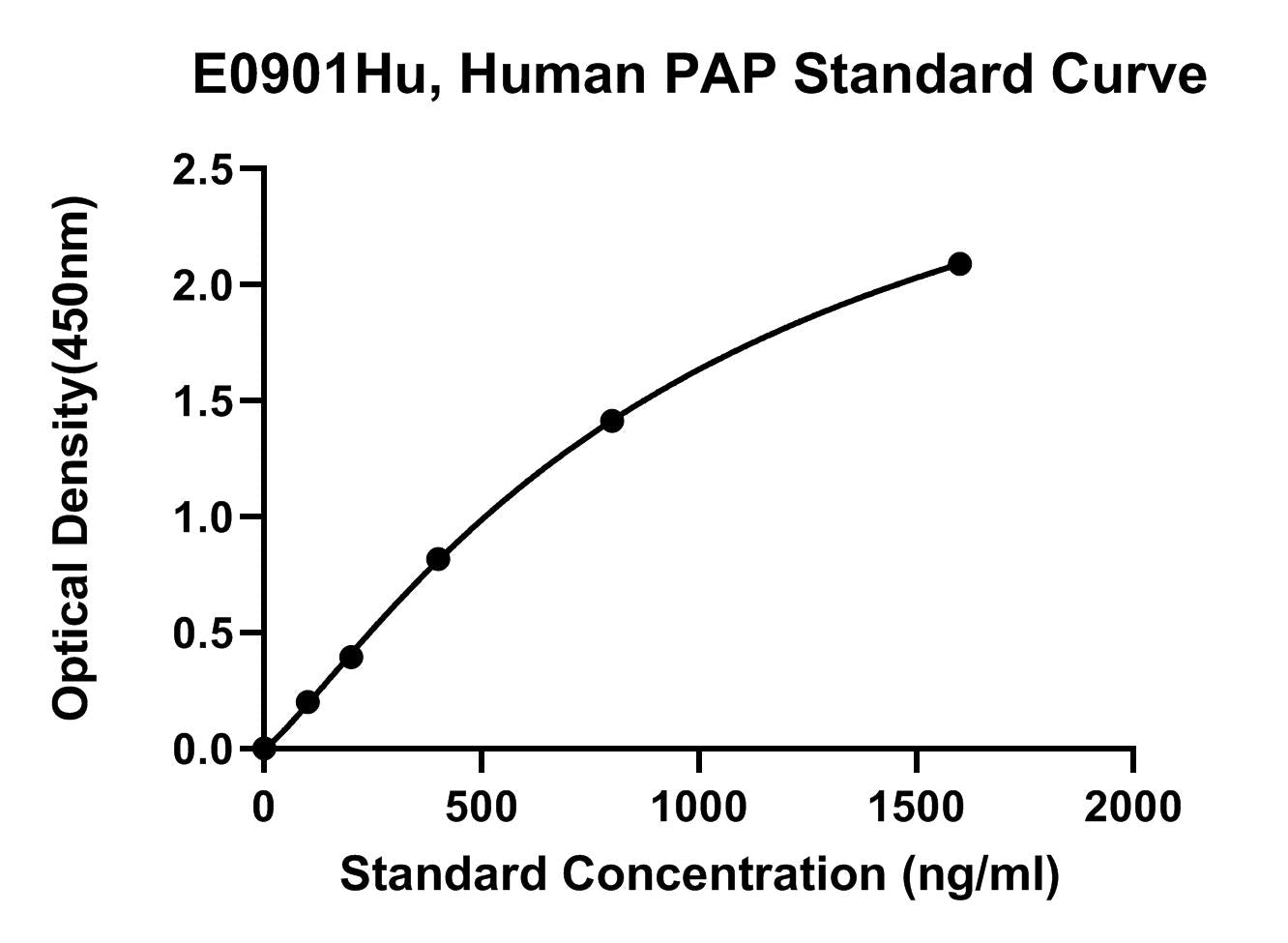
The Human (PAP) Prostatic Acid Phosphatase ELISA Kit measures Prostatic Acid Phosphatase in samples. The plate has been pre-coated with Human PAP antibody. PAP present in the sample is added and binds to antibodies coated on the wells. And then biotinylated Human PAP Antibody is added and binds to PAP in the sample. Then Streptavidin-HRP is added and binds to the Biotinylated PAP antibody. After incubation unbound Streptavidin-HRP is washed away during a washing step. Substrate solution is then added and color develops in proportion to the amount of Human PAP. The reaction is terminated by addition of acidic stop solution and absorbance is measured at 450 nm.
Catalog No:
E0901Hu
Regular price
$595.00 USD
Regular price
$458.00 USD
Sale price
$595.00 USD
Unit price
/
per
2.5 weeks
Couldn't load pickup availability
Product Details
Species Reactivity
Human
Sensitivity
5.64 ng/mL
Detection Range
10-3000 ng/mL
Sample Type
Serum, plasma, cell culture supernates
Incubation(s)
1.5 hour(s)
Research Areas
Enzyme & Kinase
Background
A non-specific tyrosine phosphatase that dephosphorylates a diverse number of substrates under acidic conditions (pH 4-6) including alkyl, aryl, and acyl orthophosphate monoesters and phosphorylated proteins (PubMed:10506173, PubMed:15280042, PubMed:20498373, PubMed:9584846).
Has lipid phosphatase activity and inactivates lysophosphatidic acid in seminal plasma (PubMed:10506173, PubMed:15280042).
Tyrosine phosphatase that acts as a tumor suppressor of prostate cancer through dephosphorylation of ERBB2 and deactivation of MAPK-mediated signaling (PubMed:20498373).
In addition to its tyrosine phosphatase activity has ecto-5'-nucleotidase activity in dorsal root ganglion (DRG) neurons. Generates adenosine from AMP which acts as a pain suppressor (By similarity).
(Microbial infection) Forms amyloid beta-sheet fibrils in semen. These fibrils, termed SEVI (semen-derived enhancer of viral infection) capture HIV virions, attach them to target cells and enhance infection (PubMed:18083097, PubMed:19451623, PubMed:19897482).
SEVI amyloid fibrils are degraded by polyphenol epigallocatechin-3-gallate (EGCG), a constituent of green tea (PubMed:19451623).
Target cell attachment and enhancement of HIV infection is inhibited by surfen (PubMed:19897482).
Also similarly boosts XMRV (xenotropic murine leukemia virus-related virus) infection (PubMed:19403677). Source: UniProt Consortium (2025)
Shipping Condition
Shipped on cold gel packs.
Storage Condition and Shelf Life
2-8C
Analyte
Prostatic Acid Phosphatase
Regulatory Status
For Research Use Only