1
/
of
1
Human PTN (Pleiotrophin) ELISA Kit
Human PTN (Pleiotrophin) ELISA Kit
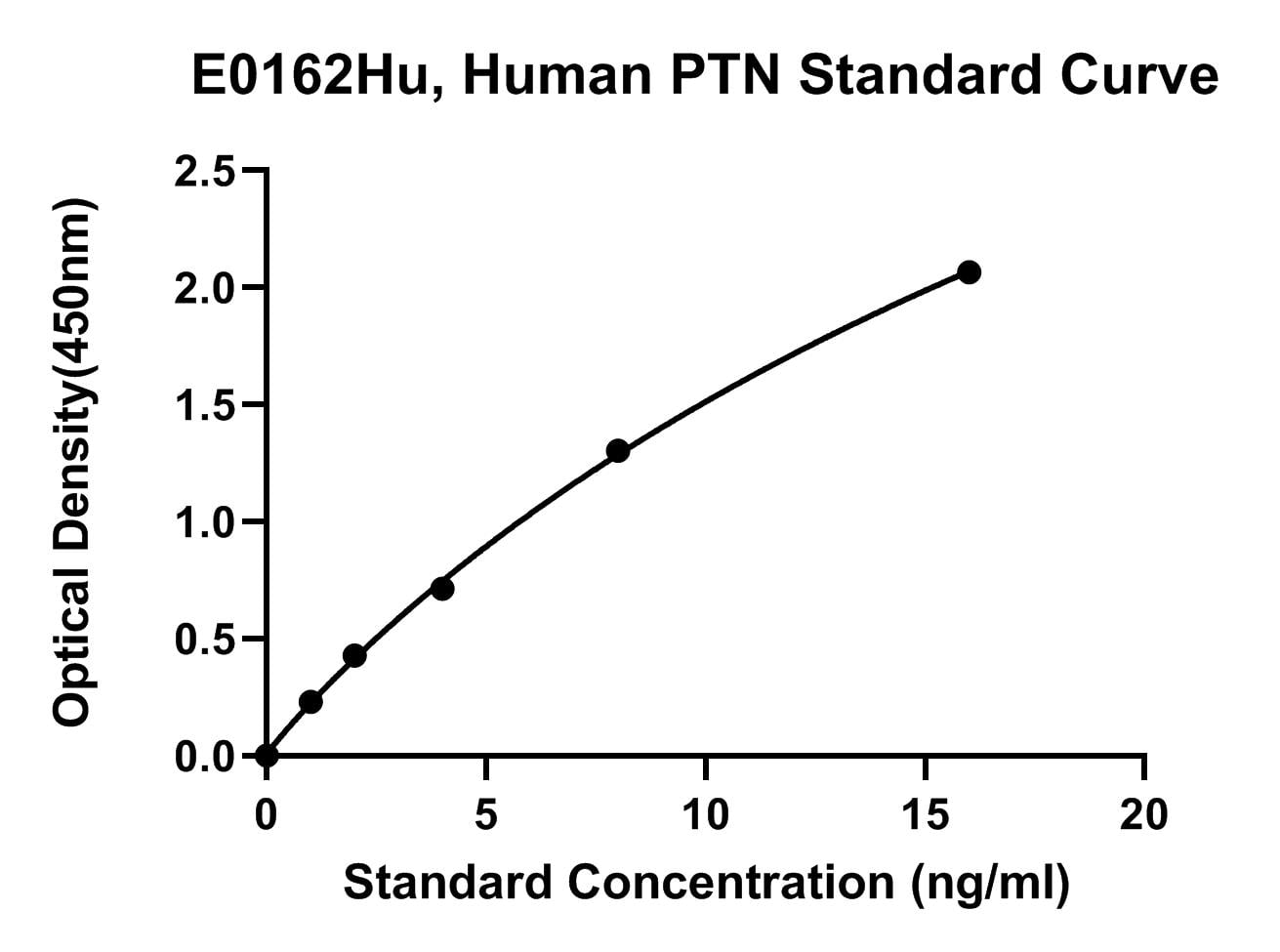
The Human (PTN) Pleiotrophin ELISA Kit measures Pleiotrophin in samples. The plate has been pre-coated with Human PTN antibody. PTN present in the sample is added and binds to antibodies coated on the wells. And then biotinylated Human PTN Antibody is added and binds to PTN in the sample. Then Streptavidin-HRP is added and binds to the Biotinylated PTN antibody. After incubation unbound Streptavidin-HRP is washed away during a washing step. Substrate solution is then added and color develops in proportion to the amount of Human PTN. The reaction is terminated by addition of acidic stop solution and absorbance is measured at 450 nm.
Catalog No:
E0162Hu
Regular price
$595.00 USD
Regular price
$458.00 USD
Sale price
$595.00 USD
Unit price
/
per
2.5 weeks
Couldn't load pickup availability
Product Details
Species Reactivity
Human
Sensitivity
0.026 ng/mL
Detection Range
0.05-30 ng/mL
Sample Type
Serum, plasma, cell culture supernates
Incubation(s)
1.5 hour(s)
Research Areas
Cancer
Background
Secreted growth factor that mediates its signal through cell-surface proteoglycan and non-proteoglycan receptors (PubMed: 16814777, PubMed: 11278720, PubMed: 19141530). Binds cell-surface proteoglycan receptor via their chondroitin sulfate (CS) groups (PubMed: 26896299, PubMed: 27445335). Thereby regulates many processes like cell proliferation, cell survival, cell growth, cell differentiation and cell migration in several tissues namely neuron and bone (PubMed: 1733956, PubMed: 1768439, PubMed: 11278720, PubMed: 19141530, PubMed: 27445335, PubMed: 30667096, PubMed: 19442624). Also plays a role in synaptic plasticity and learning-related behavior by inhibiting long-term synaptic potentiation (By similarity). Binds PTPRZ1, leading to neutralization of the negative charges of the CS chains of PTPRZ1, inducing PTPRZ1 clustering, thereby causing the dimerization and inactivation of its phosphatase activity leading to increased tyrosine phosphorylation of each of the PTPRZ1 substrates like ALK, CTNNB1 or AFAP1L2 in order to activate the PI3K-AKT pathway (PubMed: 17681947, PubMed: 27445335, PubMed: 30667096, PubMed: 16814777, PubMed: 10706604). Through PTPRZ1 binding controls oligodendrocyte precursor cell differentiation by enhancing the phosphorylation of AFAP1L2 in order to activate the PI3K-AKT pathway (PubMed: 27445335, PubMed: 30667096). Forms a complex with PTPRZ1 and integrin alpha-V/beta-3 (ITGAV:ITGB3) that stimulates endothelial cell migration through SRC dephosphorylation and activation that consequently leads to ITGB3 'Tyr-773' phosphorylation (PubMed: 19141530). In adult hippocampus promotes dendritic arborization, spine development, and functional integration and connectivity of newborn granule neurons through ALK by activating AKT signaling pathway (By similarity). Binds GPC2 and chondroitin sulfate proteoglycans (CSPGs) at the neuron surface, leading to abrogation of binding between PTPRS and CSPGs and neurite outgrowth promotion (By similarity). Binds SDC3 and mediates bone formation by recruiting and attaching osteoblasts/osteoblast precursors to the sites for new bone deposition (By similarity). Binds ALK and promotes cell survival and cell proliferation through MAPK pathway activation (PubMed: 11278720). Inhibits proliferation and enhances differentiation of neural stem cells by inhibiting FGF2-induced fibroblast growth factor receptor signaling pathway (By similarity). Mediates regulatory mechanisms in normal hemostasis and in hematopoietic regeneration and in maintaining the balance of myeloid and lymphoid regeneration (By similarity). In addition may play a role in the female reproductive system, auditory response and the progesterone-induced decidualization pathway (By similarity). Source: UniProt Consortium (2025)
Shipping Condition
Shipped on cold gel packs.
Storage Condition and Shelf Life
2-8C
Analyte
Pleiotrophin
Regulatory Status
For Research Use Only