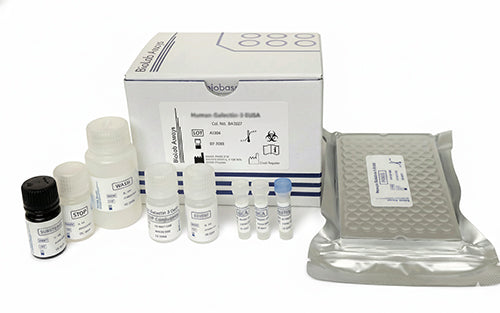
The Proguanylin ELISA is an enzyme immunoassay for the quantitative determination of Proguanylin in human serum and plasma.
The microtiter plate is coated with the antibody specifically binding the Proguanylin. The human serum or plasma is incubated in the plate with the capture antibody. The specimen is washed out and the specifically bound protein is incubated with biotin-labelled detection antibody. Following another washing step, Streptavidin-HRP conjugate is added into the well. Unbound reagent is then washed out. Horseradish peroxidase (HRP) bound in the complex reacts with the chromogenic substrate (TMB) creating the blue colour. The reaction is stopped by addition of STOP solution (H2SO4). The absorbance values are measured at 450 nm (optionally 450/630 nm) and are proportional to the concentration of Proguanylin in the specimen. The concentration of Proguanylin in unknown samples is determined from the calibration curve which is created by plotting the absorbance values against the standard concentration values.
Vendor: BioLab Assays
Catalog No:BA3007
Regular price
$560.00 USD
Regular price
$560.00 USD
Sale price
$560.00 USD
Unit price/ per
Sale
Sold out
2 weeks
Couldn't load pickup availability
Product Details
VendorBioLab Assays
Species ReactivityHuman
Sensitivity5 pg/mL
Detection Range0.156 - 10 ng/mL
Sample TypeSerum, Plasma
Sample Size10 uL
Incubation(s)2.5 hour(s)
Research AreasEndocrinology
BackgroundProguanylin (guanylate cyclase activator 2A, guanylate cyclase-activating protein 1), is a precursor to the hormone guanylin, and plays a significant role in various physiological processes in the kidney and intestine through activation of guanylate cyclase C receptor. In Crohn's disease, serum proguanylin levels are notably reduced compared to healthy individuals, and levels increase following anti-inflammatory treatment, suggesting its potential as a biomarker for disease activity and therapeutic response. In the context of hypertension, elevated proguanylin levels have been observed in individuals with high blood pressure, indicating a possible role in sodium metabolism and blood pressure regulation.