1
/
of
1
Canine APOE (Apolipoprotein E) ELISA Kit
Canine APOE (Apolipoprotein E) ELISA Kit
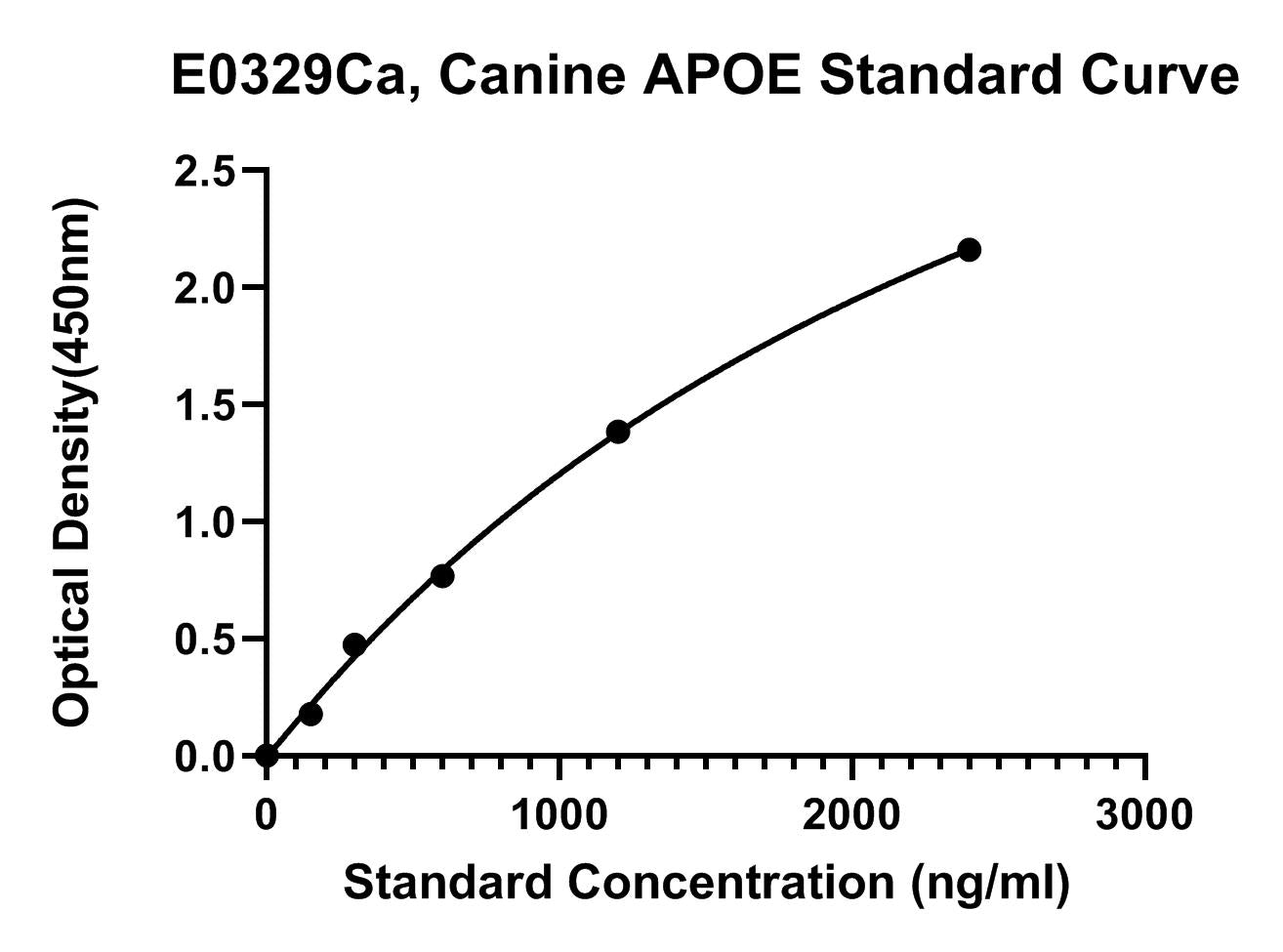
The Canine (APOE) Apolipoprotein E ELISA Kit measures Apolipoprotein E in Canine samples. The plate has been pre-coated with Canine APOE antibody. APOE present in the sample is added and binds to antibodies coated on the wells. And then biotinylated Canine APOE Antibody is added and binds to APOE in the sample. Then Streptavidin-HRP is added and binds to the Biotinylated APOE antibody. After incubation unbound Streptavidin-HRP is washed away during a washing step. Substrate solution is then added and color develops in proportion to the amount of Canine APOE. The reaction is terminated by addition of acidic stop solution and absorbance is measured at 450 nm.
Catalog No:
E0329Ca
Regular price
$618.00 USD
Regular price
$475.00 USD
Sale price
$618.00 USD
Unit price
/
per
2.5 weeks
Couldn't load pickup availability
Product Details
Species Reactivity
Canine
Sensitivity
9.91 ng/mL
Detection Range
20-4500 ng/mL
Sample Type
Serum, plasma, cell culture supernates
Incubation(s)
1.5 hour(s)
Research Areas
Signal Transduction, Cardiovascular
Background
APOE is an apolipoprotein, a protein associating with lipid particles, that mainly functions in lipoprotein-mediated lipid transport between organs via the plasma and interstitial fluids. APOE is a core component of plasma lipoproteins and is involved in their production, conversion and clearance. Apoliproteins are amphipathic molecules that interact both with lipids of the lipoprotein particle core and the aqueous environment of the plasma. As such, APOE associates with chylomicrons, chylomicron remnants, very low density lipoproteins (VLDL) and intermediate density lipoproteins (IDL) but shows a preferential binding to high-density lipoproteins (HDL). It also binds a wide range of cellular receptors including the LDL receptor/LDLR and the very low-density lipoprotein receptor/VLDLR that mediate the cellular uptake of the APOE-containing lipoprotein particles. Finally, APOE has also a heparin-binding activity and binds heparan-sulfate proteoglycans on the surface of cells, a property that supports the capture and the receptor-mediated uptake of APOE-containing lipoproteins by cells. Source: UniProt Consortium (2025)
Shipping Condition
Shipped on cold gel packs.
Storage Condition and Shelf Life
2-8C
Analyte
Apolipoprotein E
Regulatory Status
For Research Use Only