1
/
of
1
Equine MET (Hepatocyte Growth Factor Receptor) ELISA Kit
Equine MET (Hepatocyte Growth Factor Receptor) ELISA Kit
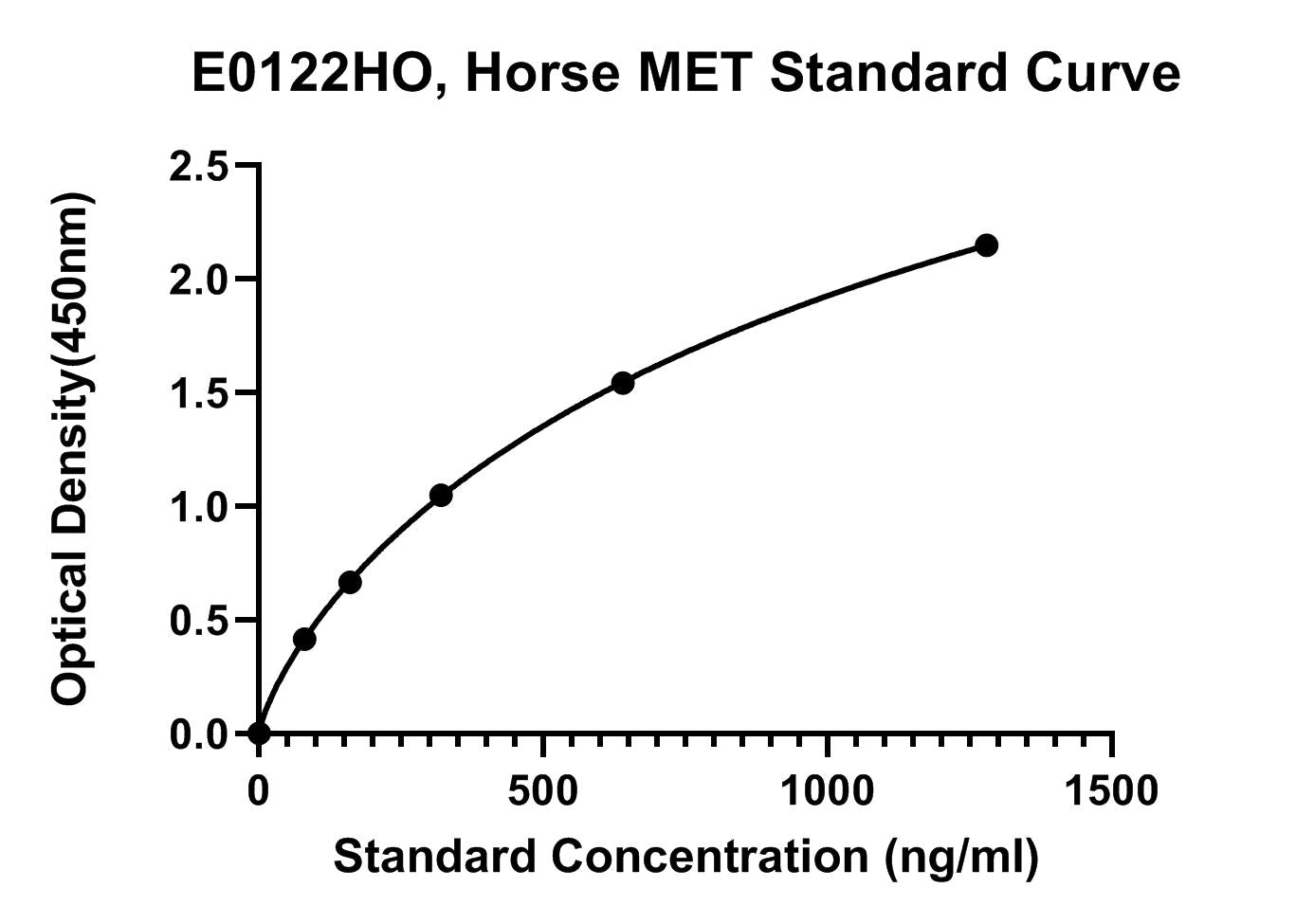
The Equine (MET) Hepatocyte Growth Factor Receptor ELISA Kit measures Hepatocyte Growth Factor Receptor in Equine samples. The plate has been pre-coated with Equine MET antibody. MET present in the sample is added and binds to antibodies coated on the wells. And then biotinylated Equine MET Antibody is added and binds to MET in the sample. Then Streptavidin-HRP is added and binds to the Biotinylated MET antibody. After incubation unbound Streptavidin-HRP is washed away during a washing step. Substrate solution is then added and color develops in proportion to the amount of Equine MET. The reaction is terminated by addition of acidic stop solution and absorbance is measured at 450 nm.
Catalog No:
E0122HO
Regular price
$647.00 USD
Regular price
$498.00 USD
Sale price
$647.00 USD
Unit price
/
per
2.5 weeks
Couldn't load pickup availability
Product Details
Species Reactivity
Equine
Sensitivity
5.29 ng/mL
Detection Range
10-2000 ng/mL
Sample Type
Serum, plasma, cell culture supernates
Incubation(s)
1.5 hour(s)
Research Areas
Hepatology
Background
Receptor tyrosine kinase that transduces signals from the extracellular matrix into the cytoplasm by binding to hepatocyte growth factor/HGF ligand. Regulates many physiological processes including proliferation, scattering, morphogenesis and survival. Ligand binding at the cell surface induces autophosphorylation of MET on its intracellular domain that provides docking sites for downstream signaling molecules. Following activation by ligand, interacts with the PI3-kinase subunit PIK3R1, PLCG1, SRC, GRB2, STAT3 or the adapter GAB1. Recruitment of these downstream effectors by MET leads to the activation of several signaling cascades including the RAS-ERK, PI3 kinase-AKT, or PLCgamma-PKC. The RAS-ERK activation is associated with the morphogenetic effects while PI3K/AKT coordinates prosurvival effects. During embryonic development, MET signaling plays a role in gastrulation, development and migration of muscles and neuronal precursors, angiogenesis and kidney formation. In adults, participates in wound healing as well as organ regeneration and tissue remodeling. Promotes also differentiation and proliferation of hematopoietic cells (By similarity). Source: UniProt Consortium (2025)
Shipping Condition
Shipped on cold gel packs.
Storage Condition and Shelf Life
2-8C
Analyte
Hepatocyte Growth Factor Receptor
Regulatory Status
For Research Use Only