1
/
of
1
Human AP (Apelin) ELISA Kit
Human AP (Apelin) ELISA Kit
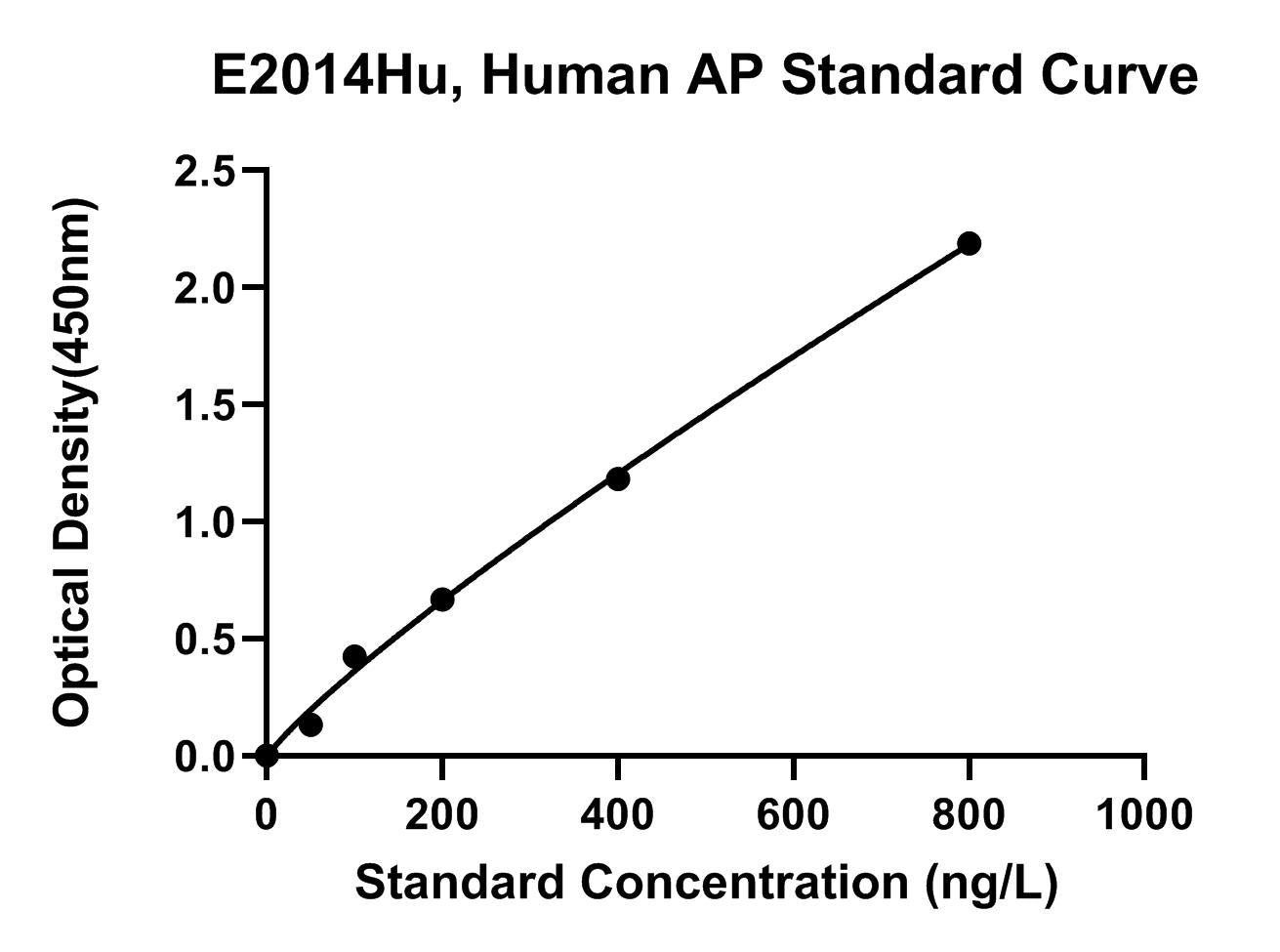
The Human (AP) Apelin ELISA Kit measures Apelin in samples. The plate has been pre-coated with Human APLN antibody. APLN present in the sample is added and binds to antibodies coated on the wells. And then biotinylated Human APLN Antibody is added and binds to APLN in the sample. Then Streptavidin-HRP is added and binds to the Biotinylated APLN antibody. After incubation unbound Streptavidin-HRP is washed away during a washing step. Substrate solution is then added and color develops in proportion to the amount of Human APLN. The reaction is terminated by addition of acidic stop solution and absorbance is measured at 450 nm.
Catalog No:
E2014Hu
Regular price
$595.00 USD
Regular price
$458.00 USD
Sale price
$595.00 USD
Unit price
/
per
2.5 weeks
Couldn't load pickup availability
Product Details
Species Reactivity
Human
Sensitivity
3.47 ng/L
Detection Range
7-1500 ng/L
Sample Type
Serum, plasma, cell culture supernates
Incubation(s)
1.5 hour(s)
Research Areas
Neuroscience
Background
Endogenous ligand for the apelin receptor (APLNR) (PubMed: 10525157). Drives internalization of the apelin receptor (By similarity). Apelin-36 dissociates more hardly than (pyroglu)apelin-13 from APLNR (By similarity). Hormone involved in the regulation of cardiac precursor cell movements during gastrulation and heart morphogenesis (By similarity). Has an inhibitory effect on cytokine production in response to T-cell receptor/CD3 cross-linking; the oral intake of apelin in the colostrum and the milk might therefore modulate immune responses in neonates (By similarity). Plays a role in early coronary blood vessels formation (By similarity). Mediates myocardial contractility in an ERK1/2-dependent manner (By similarity). May also have a role in the central control of body fluid homeostasis by influencing vasopressin release and drinking behavior (By similarity). (Microbial infection) Endogenous ligand for the apelin receptor (APLNR), an alternative coreceptor with CD4 for HIV-1 infection (PubMed: 11090199). Inhibits HIV-1 entry in cells coexpressing CD4 and APLNR (PubMed: 11090199). Apelin-36 has a greater inhibitory activity on HIV infection than other synthetic apelin derivatives (PubMed: 11090199). Source: UniProt Consortium (2025)
Shipping Condition
Shipped on cold gel packs.
Storage Condition and Shelf Life
2-8C
Analyte
Apelin
Regulatory Status
For Research Use Only