1
/
of
1
Human CD160 (Cd160 Antigen) ELISA Kit
Human CD160 (Cd160 Antigen) ELISA Kit
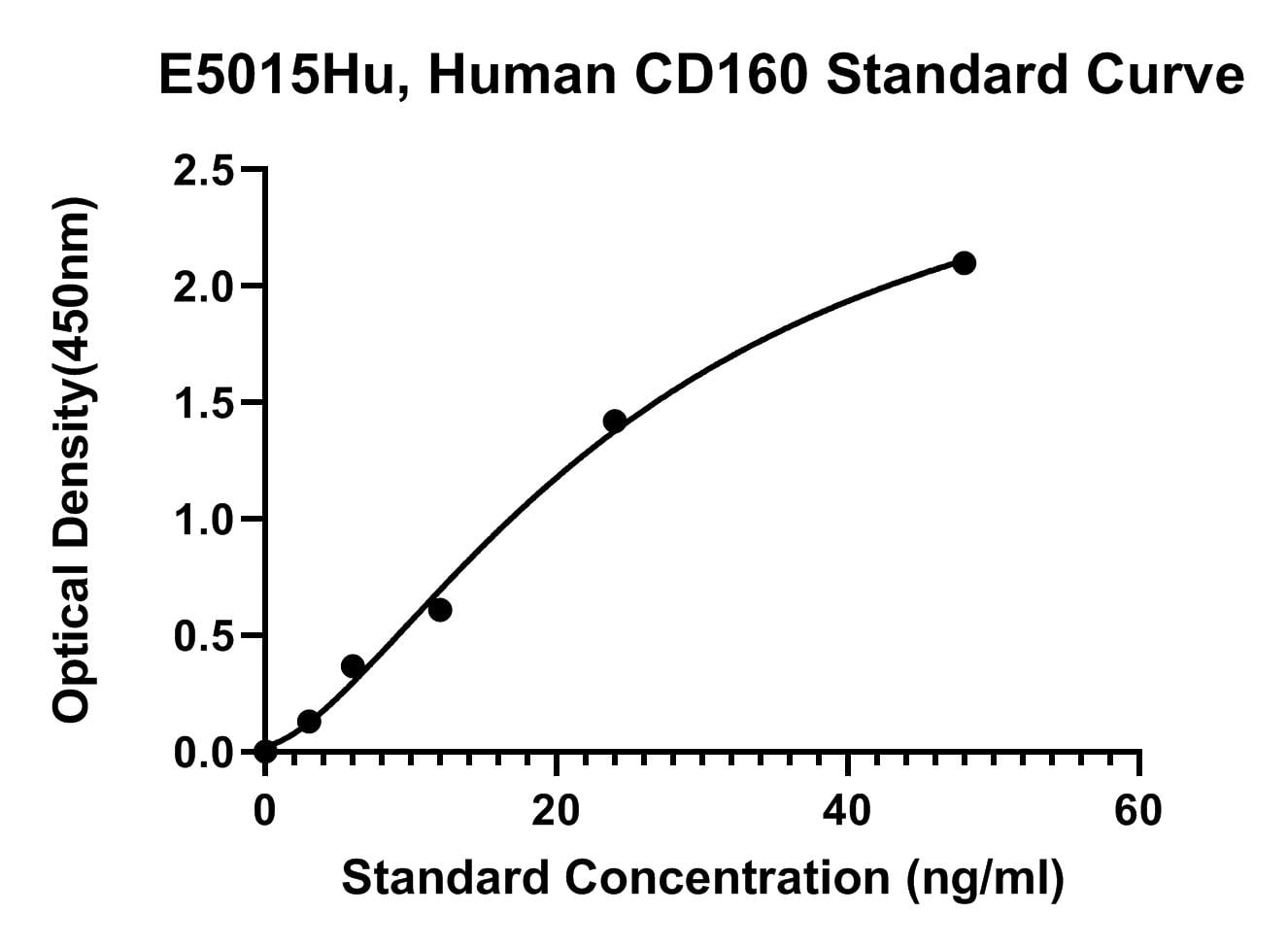
The Human (CD160) Cd160 Antigen ELISA Kit measures Cd160 Antigen in samples. The plate has been pre-coated with Human CD160 antibody. CD160 present in the sample is added and binds to antibodies coated on the wells. And then biotinylated Human CD160 Antibody is added and binds to CD160 in the sample. Then Streptavidin-HRP is added and binds to the Biotinylated CD160 antibody. After incubation unbound Streptavidin-HRP is washed away during a washing step. Substrate solution is then added and color develops in proportion to the amount of Human CD160. The reaction is terminated by addition of acidic stop solution and absorbance is measured at 450 nm.
Catalog No:
E5015Hu
Regular price
$595.00 USD
Regular price
$458.00 USD
Sale price
$595.00 USD
Unit price
/
per
2.5 weeks
Couldn't load pickup availability
Product Details
Species Reactivity
Human
Sensitivity
0.14 ng/mL
Detection Range
0.3-90 ng/mL
Sample Type
Serum, plasma, cell culture supernates
Incubation(s)
1.5 hour(s)
Research Areas
Immunology, CD & Adhesion molecule
Background
[CD160 antigen]: Receptor on immune cells capable to deliver stimulatory or inhibitory signals that regulate cell activation and differentiation. Exists as a GPI-anchored and as a transmembrane form, each likely initiating distinct signaling pathways via phosphoinositol 3-kinase in activated NK cells and via LCK and CD247/CD3 zeta chain in activated T cells (PubMed: 19109136, PubMed: 11978774, PubMed: 17307798). Receptor for both classical and non-classical MHC class I molecules (PubMed: 9973372, PubMed: 12486241). In the context of acute viral infection, recognizes HLA-C and triggers NK cell cytotoxic activity, likely playing a role in anti-viral innate immune response (PubMed: 12486241). On CD8+ T cells, binds HLA-A2-B2M in complex with a viral Peptide and provides a costimulatory signal to activated/memory T cells (PubMed: 9973372). Upon persistent antigen stimulation, such as occurs during chronic viral infection, may progressively inhibit TCR signaling in memory CD8+ T cells, contributing to T cell exhaustion (PubMed: 25255144). On endothelial cells, recognizes HLA-G and controls angiogenesis in immune privileged sites (PubMed: 16809620). Receptor or ligand for TNF superfamily member TNFRSF14, participating in bidirectional cell-cell contact signaling between antigen presenting cells and lymphocytes. Upon ligation of TNFRSF14, provides stimulatory signal to NK cells enhancing IFNG production and anti-tumor immune response (By similarity). On activated CD4+ T cells, interacts with TNFRSF14 and downregulates CD28 costimulatory signaling, restricting memory and alloantigen-specific immune response (PubMed: 18193050). In the context of bacterial infection, acts as a ligand for TNFRSF14 on epithelial cells, triggering the production of antimicrobial proteins and proinflammatory cytokines (By similarity). [CD160 antigen, soluble form]: The soluble GPI-cleaved form, usually released by activated lymphocytes, might play an immune regulatory role by limiting lymphocyte effector functions. Source: UniProt Consortium (2025)
Shipping Condition
Shipped on cold gel packs.
Storage Condition and Shelf Life
2-8C
Analyte
Cd160 Antigen
Regulatory Status
For Research Use Only