1
/
of
1
Human CRYBA4 (Beta-crystallin A4) ELISA Kit
Human CRYBA4 (Beta-crystallin A4) ELISA Kit
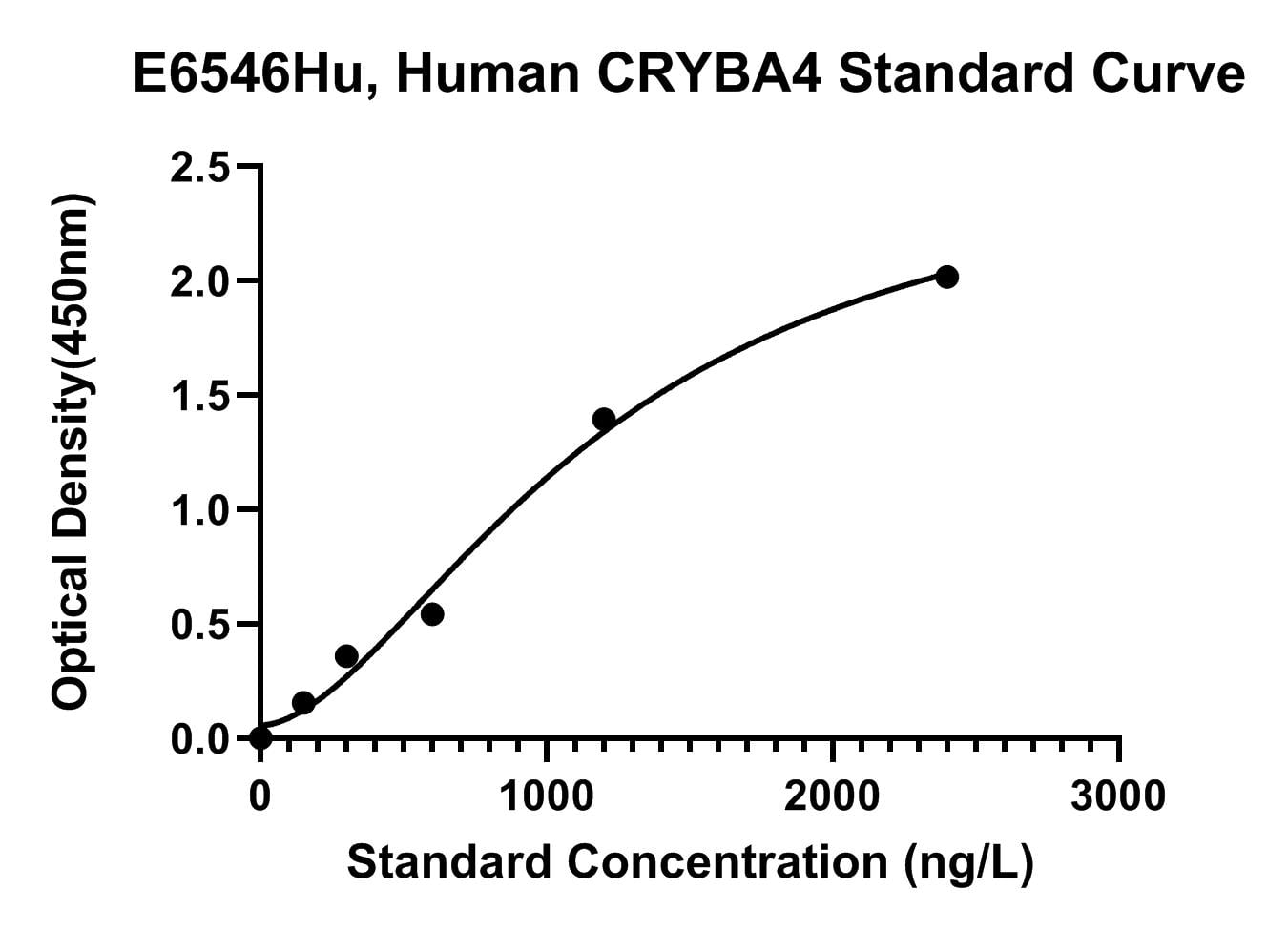
The Human (CRYBA4) Beta-crystallin A4 ELISA Kit measures Beta-crystallin A4 in samples. The plate has been pre-coated with Human CRYBA4 antibody. CRYBA4 present in the sample is added and binds to antibodies coated on the wells. And then biotinylated Human CRYBA4 Antibody is added and binds to CRYBA4 in the sample. Then Streptavidin-HRP is added and binds to the Biotinylated CRYBA4 antibody. After incubation unbound Streptavidin-HRP is washed away during a washing step. Substrate solution is then added and color develops in proportion to the amount of Human CRYBA4. The reaction is terminated by addition of acidic stop solution and absorbance is measured at 450 nm.
Catalog No:
E6546Hu
Regular price
$595.00 USD
Regular price
$458.00 USD
Sale price
$595.00 USD
Unit price
/
per
2.5 weeks
Couldn't load pickup availability
Product Details
Species Reactivity
Human
Sensitivity
10.08 ng/L
Detection Range
20-4500 ng/L
Sample Type
Serum, plasma, cell culture supernates
Incubation(s)
1.5 hour(s)
Background
Beta-crystallin A4 is a protein that in humans is encoded by the CRYBA4 gene. Crystallins are separated into two classes: taxon-specific, or enzyme, and ubiquitous. The latter class constitutes the major proteins of vertebrate eye lens and maintains the transparency and refractive index of the lens. Since lens central fiber cells lose their nuclei during development, these crystallins are made and then retained throughout life, making them extremely stable proteins. Mammalian lens crystallins are divided into alpha, beta, and gamma families; beta and gamma crystallins are also considered as a superfamily. Alpha and beta families are further divided into acidic and basic groups. Seven protein regions exist in crystallins: four homologous motifs, a connecting peptide, and N- and C-terminal extensions. Beta-crystallins, the most heterogeneous, differ by the presence of the C-terminal extension (present in the basic group, none in the acidic group). Beta-crystallins form aggregates of different sizes and are able to self-associate to form dimers or to form heterodimers with other beta-crystallins. This gene, a beta acidic group member, is part of a gene cluster with beta-B1, beta-B2, and beta-B3. Source: UniProt Consortium (2025)
Shipping Condition
Shipped on cold gel packs.
Storage Condition and Shelf Life
2-8C
Analyte
Beta-crystallin A4
Regulatory Status
For Research Use Only