1
/
of
1
Human DDIT4 (DNA Damage-inducible Transcript 4 Protein) ELISA Kit
Human DDIT4 (DNA Damage-inducible Transcript 4 Protein) ELISA Kit
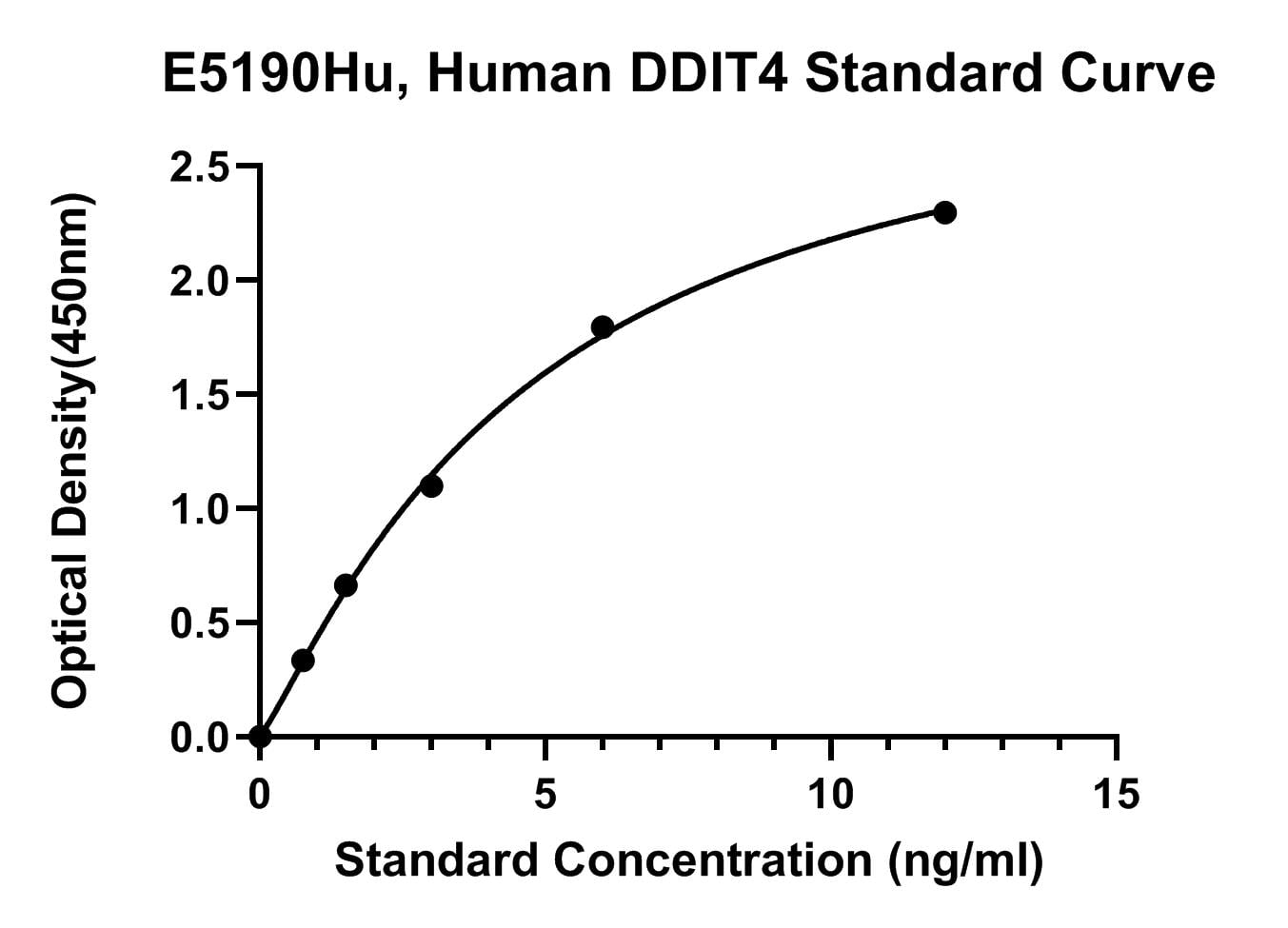
The Human (DDIT4) DNA Damage-inducible Transcript 4 Protein ELISA Kit measures DNA damage-inducible transcript 4 protein in samples. The plate has been pre-coated with Human DDIT4 antibody. DDIT4 present in the sample is added and binds to antibodies coated on the wells. And then biotinylated Human DDIT4 Antibody is added and binds to DDIT4 in the sample. Then Streptavidin-HRP is added and binds to the Biotinylated DDIT4 antibody. After incubation unbound Streptavidin-HRP is washed away during a washing step. Substrate solution is then added and color develops in proportion to the amount of Human DDIT4. The reaction is terminated by addition of acidic stop solution and absorbance is measured at 450 nm.
Catalog No:
E5190Hu
Regular price
$595.00 USD
Regular price
$458.00 USD
Sale price
$595.00 USD
Unit price
/
per
2.5 weeks
Couldn't load pickup availability
Product Details
Species Reactivity
Human
Sensitivity
0.018 ng/mL
Detection Range
0.05-20 ng/mL
Sample Type
Serum, plasma, cell culture supernates
Incubation(s)
1.5 hour(s)
Research Areas
Cardiovascular
Background
Regulates cell growth, proliferation and survival via inhibition of the activity of the mammalian target of rapamycin complex 1 (mTORC1). Inhibition of mTORC1 is mediated by a pathway that involves DDIT4/REDD1, AKT1, the TSC1-TSC2 complex and the GTPase RHEB. Plays an important role in responses to cellular energy levels and cellular stress, including responses to hypoxia and DNA damage. Regulates p53/TP53-mediated apoptosis in response to DNA damage via its effect on mTORC1 activity. Its role in the response to hypoxia depends on the cell type; it mediates mTORC1 inhibition in fibroblasts and thymocytes, but not in hepatocytes (By similarity).
Required for mTORC1-mediated defense against viral protein synthesis and virus replication (By similarity).
Inhibits neuronal differentiation and neurite outgrowth mediated by NGF via its effect on mTORC1 activity. Required for normal neuron migration during embryonic brain development. Plays a role in neuronal cell death. Source: UniProt Consortium (2025)
Shipping Condition
Shipped on cold gel packs.
Storage Condition and Shelf Life
2-8C
Analyte
DNA damage-inducible transcript 4 protein
Regulatory Status
For Research Use Only