1
/
of
1
Human DNASE1L3 (Deoxyribonuclease Gamma) ELISA Kit
Human DNASE1L3 (Deoxyribonuclease Gamma) ELISA Kit
The Human (DNASE1L3) Deoxyribonuclease Gamma ELISA Kit measures Deoxyribonuclease Gamma in samples. The plate has been pre-coated with Human DNASE1L3 antibody. DNASE1L3 present in the sample is added and binds to antibodies coated on the wells. And then biotinylated Human DNASE1L3 Antibody is added and binds to DNASE1L3 in the sample. Then Streptavidin-HRP is added and binds to the Biotinylated DNASE1L3 antibody. After incubation unbound Streptavidin-HRP is washed away during a washing step. Substrate solution is then added and color develops in proportion to the amount of Human DNASE1L3. The reaction is terminated by addition of acidic stop solution and absorbance is measured at 450 nm.
Catalog No:
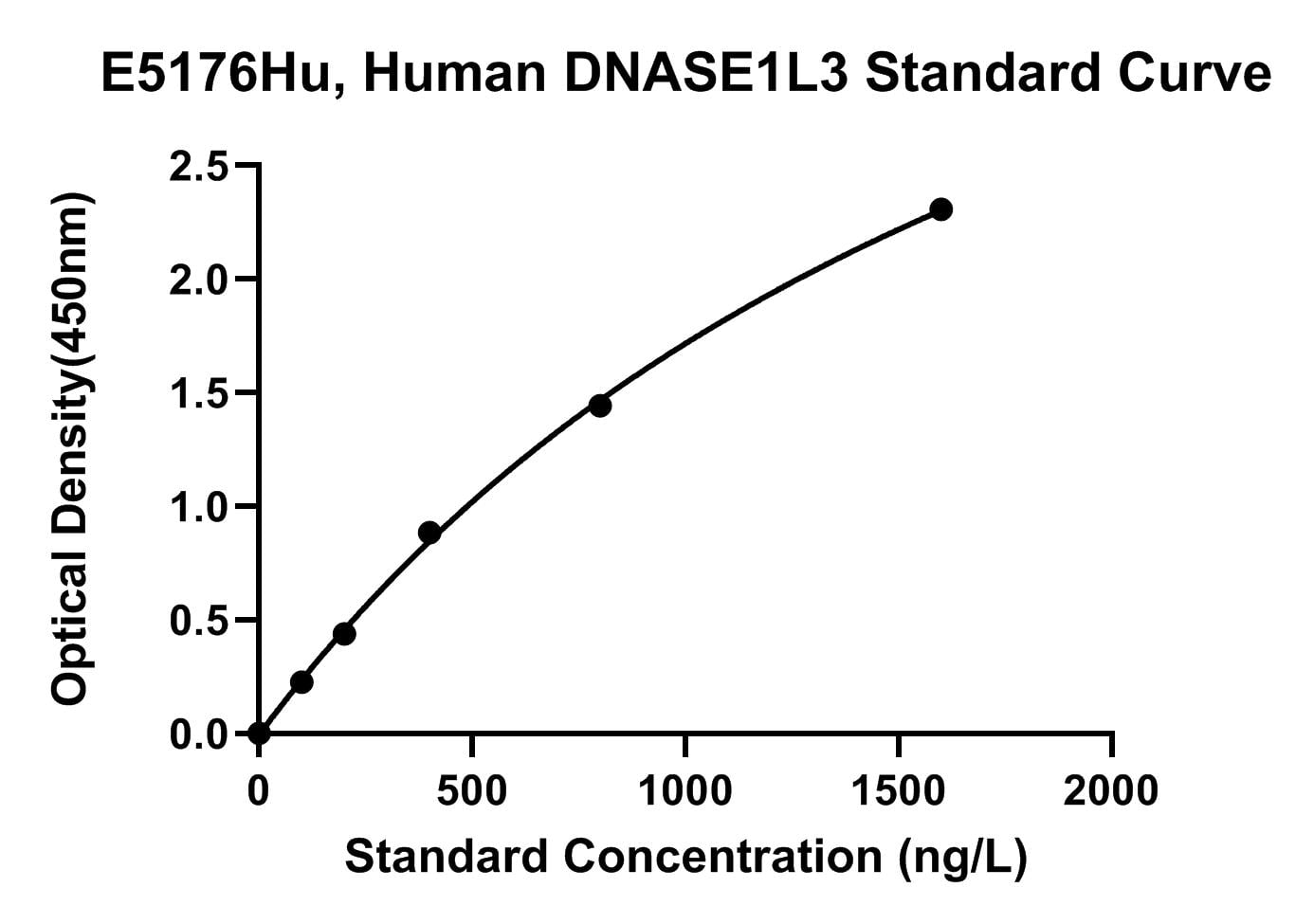
E5176Hu
Regular price
$595.00 USD
Regular price
$458.00 USD
Sale price
$595.00 USD
Unit price
/
per
2.5 weeks
Couldn't load pickup availability
Product Details
Species Reactivity
Human
Sensitivity
7.55 ng/L
Detection Range
15-3000 ng/L
Sample Type
Serum, plasma, cell culture supernates
Incubation(s)
1.5 hour(s)
Research Areas
Epigenetics and Nuclear Signaling
Background
Has DNA hydrolytic activity. Is capable of both single- and double-stranded DNA cleavage, producing DNA fragments with 3'-OH ends (By similarity). Can cleave chromatin to nucleosomal units and cleaves nucleosomal and liposome-coated DNA (PubMed: 9070308, PubMed: 9714828, PubMed: 14646506, PubMed: 10807908, PubMed: 27293190). Acts in internucleosomal DNA fragmentation (INDF) during apoptosis and necrosis (PubMed: 23229555, PubMed: 24312463). The role in apoptosis includes myogenic and neuronal differentiation, and BCR-mediated clonal deletion of self-reactive B cells (By similarity). Is active on chromatin in apoptotic cell-derived membrane-coated microparticles and thus suppresses anti-DNA autoimmunity (PubMed: 27293190). Together with DNASE1, plays a key role in degrading neutrophil extracellular traps (NETs) (By similarity). NETs are mainly composed of DNA fibers and are released by neutrophils to bind pathogens during inflammation (By similarity). Degradation of intravascular NETs by DNASE1 and DNASE1L3 is required to prevent formation of clots that obstruct blood vessels and cause organ damage following inflammation (By similarity). Source: UniProt Consortium (2025)
Shipping Condition
Shipped on cold gel packs.
Storage Condition and Shelf Life
2-8C
Analyte
Deoxyribonuclease Gamma
Regulatory Status
For Research Use Only