1
/
of
1
Human DPP-4 (Dieptidyl Peptidase 4) ELISA Kit
Human DPP-4 (Dieptidyl Peptidase 4) ELISA Kit
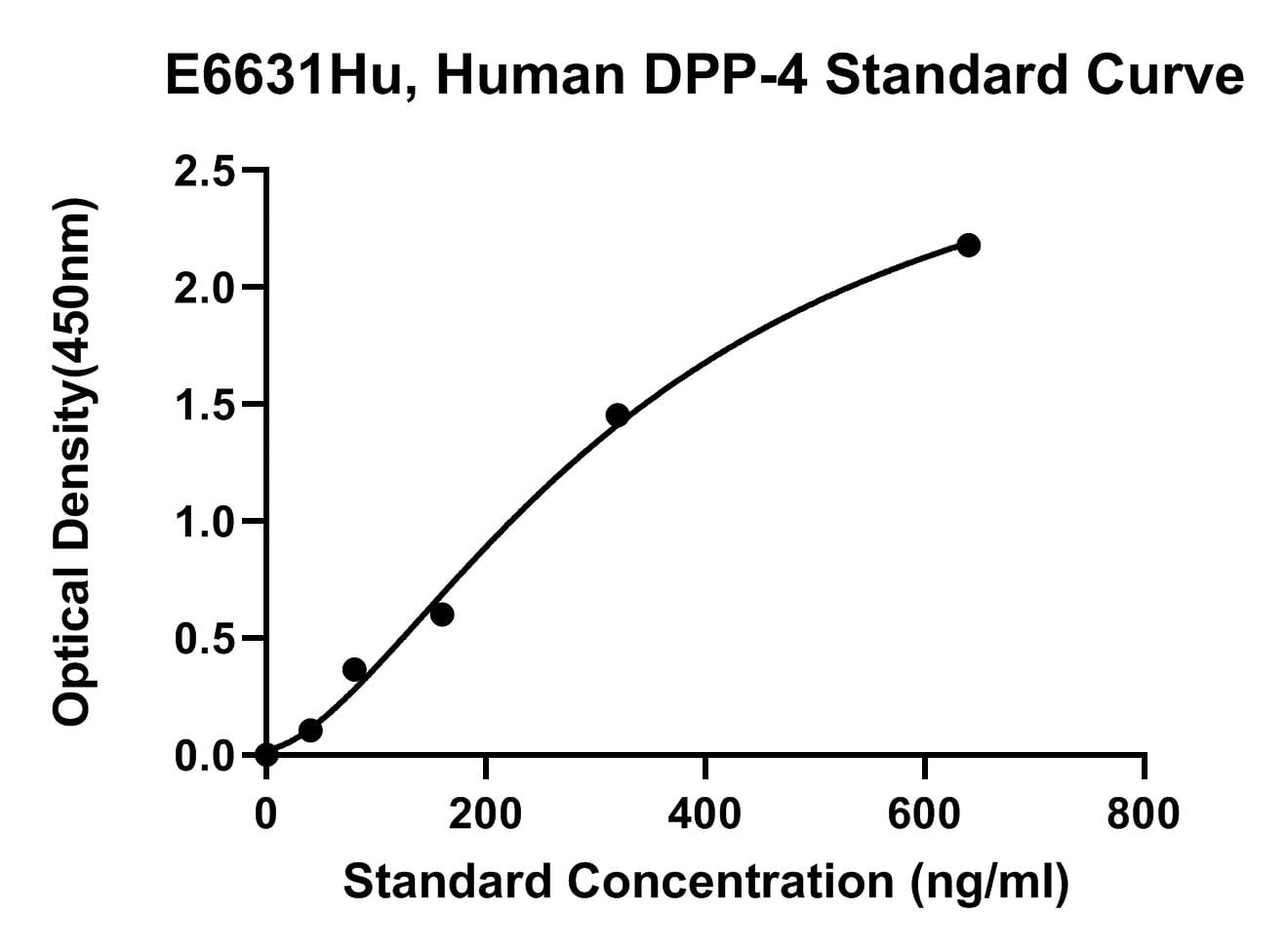
The Human (DPP-4) Dieptidyl Peptidase 4 ELISA Kit measures Dieptidyl Peptidase 4 in samples. The plate has been pre-coated with Human DPP4 antibody. DPP4 present in the sample is added and binds to antibodies coated on the wells. And then biotinylated Human DPP4 Antibody is added and binds to DPP4 in the sample. Then Streptavidin-HRP is added and binds to the Biotinylated DPP4 antibody. After incubation unbound Streptavidin-HRP is washed away during a washing step. Substrate solution is then added and color develops in proportion to the amount of Human DPP4. The reaction is terminated by addition of acidic stop solution and absorbance is measured at 450 nm.
Catalog No:
E6631Hu
Regular price
$595.00 USD
Regular price
$458.00 USD
Sale price
$595.00 USD
Unit price
/
per
2.5 weeks
Couldn't load pickup availability
Product Details
Species Reactivity
Human
Sensitivity
2.67 ng/mL
Detection Range
5-1000 ng/mL
Sample Type
Serum, plasma, cell culture supernates
Incubation(s)
1.5 hour(s)
Research Areas
Immunology
Background
Cell surface glycoprotein receptor involved in the costimulatory signal essential for T-cell receptor (TCR)-mediated T-cell activation (PubMed: 10951221, PubMed: 10900005, PubMed: 11772392, PubMed: 17287217). Acts as a positive regulator of T-cell coactivation, by binding at least ADA, CAV1, IGF2R, and PTPRC (PubMed: 10951221, PubMed: 10900005, PubMed: 11772392, PubMed: 14691230). Its binding to CAV1 and CARD11 induces T-cell proliferation and NF-kappa-B activation in a T-cell receptor/CD3-dependent manner (PubMed: 17287217). Its interaction with ADA also regulates lymphocyte-epithelial cell adhesion (PubMed: 11772392). In association with FAP is involved in the pericellular proteolysis of the extracellular matrix (ECM), the migration and invasion of endothelial cells into the ECM (PubMed: 16651416, PubMed: 10593948). May be involved in the promotion of lymphatic endothelial cells adhesion, migration and tube formation (PubMed: 18708048). When overexpressed, enhanced cell proliferation, a process inhibited by GPC3 (PubMed: 17549790). Acts also as a serine exopeptidase with a dipeptidyl peptidase activity that regulates various physiological processes by cleaving Peptides in the circulation, including many chemokines, mitogenic growth factors, neuropeptides and Peptide hormones such as brain natriuretic Peptide 32 (PubMed: 16254193, PubMed: 10570924). Removes N-terminal dipeptides sequentially from polypeptides having unsubstituted N-termini provided that the penultimate residue is proline (PubMed: 10593948). (Microbial infection) Acts as a receptor for human coronavirus MERS-CoV-2. Source: UniProt Consortium (2025)
Shipping Condition
Shipped on cold gel packs.
Storage Condition and Shelf Life
2-8C
Analyte
Dieptidyl Peptidase 4
Regulatory Status
For Research Use Only