1
/
of
1
Human FLCN (Folliculin) ELISA Kit
Human FLCN (Folliculin) ELISA Kit
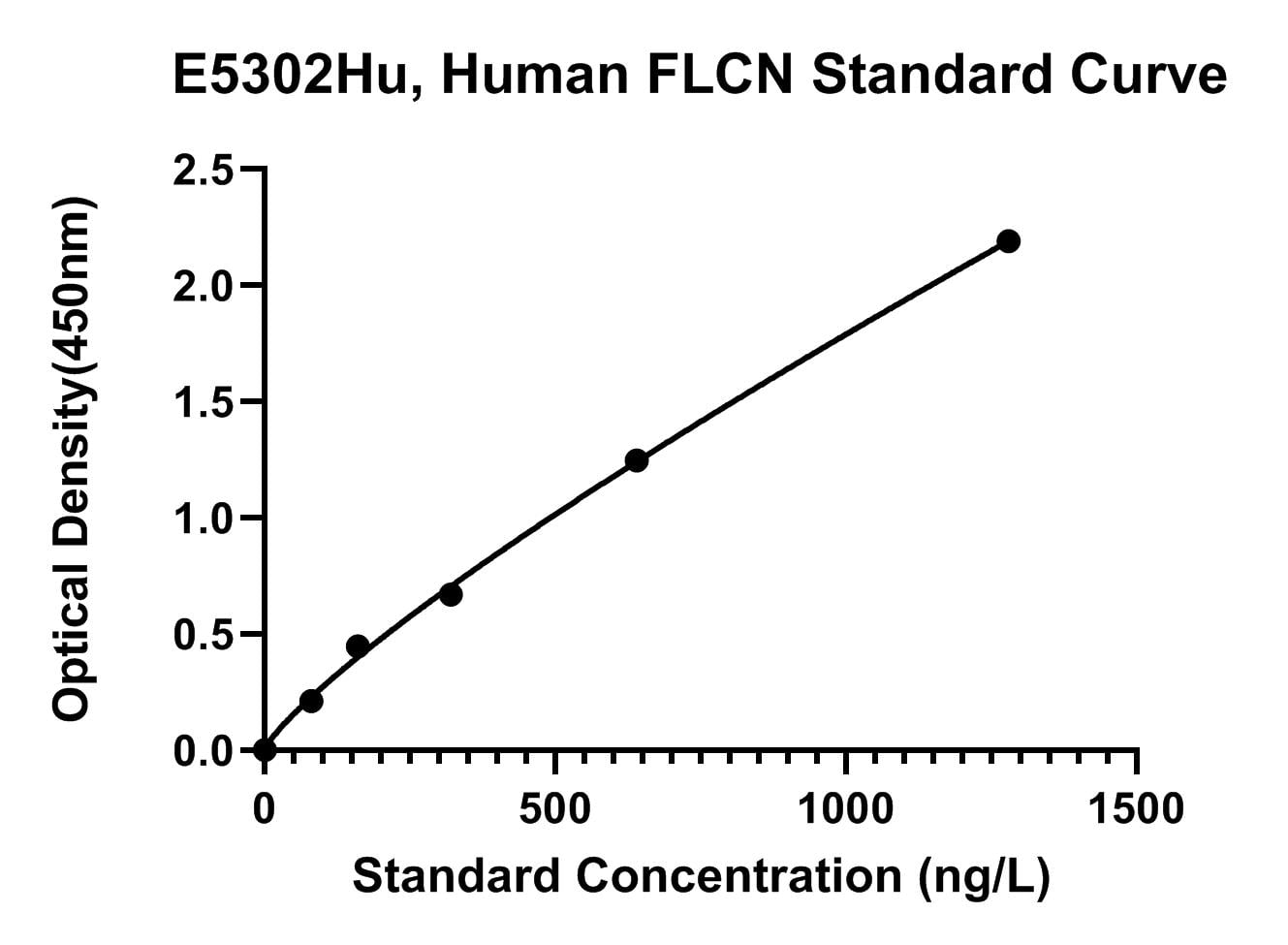
The Human (FLCN) Folliculin ELISA Kit measures Folliculin in samples. The plate has been pre-coated with Human FLCN antibody. FLCN present in the sample is added and binds to antibodies coated on the wells. And then biotinylated Human FLCN Antibody is added and binds to FLCN in the sample. Then Streptavidin-HRP is added and binds to the Biotinylated FLCN antibody. After incubation unbound Streptavidin-HRP is washed away during a washing step. Substrate solution is then added and color develops in proportion to the amount of Human FLCN. The reaction is terminated by addition of acidic stop solution and absorbance is measured at 450 nm.
Catalog No:
E5302Hu
Regular price
$595.00 USD
Regular price
$458.00 USD
Sale price
$595.00 USD
Unit price
/
per
2.5 weeks
Couldn't load pickup availability
Product Details
Species Reactivity
Human
Sensitivity
5.29 ng/L
Detection Range
10-2000 ng/L
Sample Type
Serum, plasma, cell culture supernates
Incubation(s)
1.5 hour(s)
Research Areas
Cancer
Background
GTPase-activating protein that plays a key role in the cellular response to amino acid availability through regulation of the mTORC1 signaling cascade controlling the MiT/TFE factors TFEB and TFE3 (PubMed: 17028174, PubMed: 18663353, PubMed: 21209915, PubMed: 24081491, PubMed: 24095279, PubMed: 31704029, PubMed: 31672913). Activates mTORC1 by acting as a GTPase-activating protein: specifically stimulates GTP hydrolysis by RRAGC/RagC or RRAGD/RagD, promoting the conversion to the GDP-bound state of RRAGC/RagC or RRAGD/RagD, and thereby activating the kinase activity of mTORC1 (PubMed: 24095279, PubMed: 31704029, PubMed: 31672913). The GTPase-activating activity is inhibited during starvation and activated in presence of nutrients (PubMed: 31672913). Acts as a key component for mTORC1-dependent control of the MiT/TFE factors TFEB and TFE3, while it is not involved in mTORC1-dependent phosphorylation of canonical RPS6KB1/S6K1 and EIF4EBP1/4E-BP1 (PubMed: 21209915, PubMed: 24081491, PubMed: 31672913). In low-amino acid conditions, the lysosomal folliculin complex (LFC) is formed on the membrane of lysosomes, which inhibits the GTPase-activating activity of FLCN, inactivates mTORC1 and maximizes nuclear translocation of TFEB and TFE3 (PubMed: 31672913). Upon amino acid restimulation, RRAGA/RagA (or RRAGB/RagB) nucleotide exchange promotes disassembly of the LFC complex and liberates the GTPase-activating activity of FLCN, leading to activation of mTORC1 and subsequent cytoplasmic retention of TFEB and TFE3 (PubMed: 31672913). Indirectly acts as a positive regulator of Wnt signaling by promoting mTOR-dependent cytoplasmic retention of MiT/TFE factor TFE3 (PubMed: 31272105). Required for the exit of hematopoietic stem cell from pluripotency by promoting mTOR-dependent cytoplasmic retention of TFE3, thereby increasing Wnt signaling (PubMed: 30733432). Acts as an inhibitor of browning of adipose tissue by regulating mTOR-dependent cytoplasmic retention of TFE3 (By similarity). In response to flow stress, regulates STK11/LKB1 accumulation and mTORC1 activation through primary cilia: may act by recruiting STK11/LKB1 to primary cilia for activation of AMPK resided at basal bodies, causing mTORC1 down-regulation (PubMed: 27072130). Together with FNIP1 and/or FNIP2, regulates autophagy: following phosphorylation by ULK1, interacts with GABARAP and promotes autophagy (PubMed: 25126726). Required for starvation-induced perinuclear clustering of lysosomes by promoting association of RILP with its effector RAB34 (PubMed: 27113757). Source: UniProt Consortium (2025)
Shipping Condition
Shipped on cold gel packs.
Storage Condition and Shelf Life
2-8C
Analyte
Folliculin
Regulatory Status
For Research Use Only