1
/
of
1
Human GSDMD (Gasdermin D) ELISA Kit
Human GSDMD (Gasdermin D) ELISA Kit
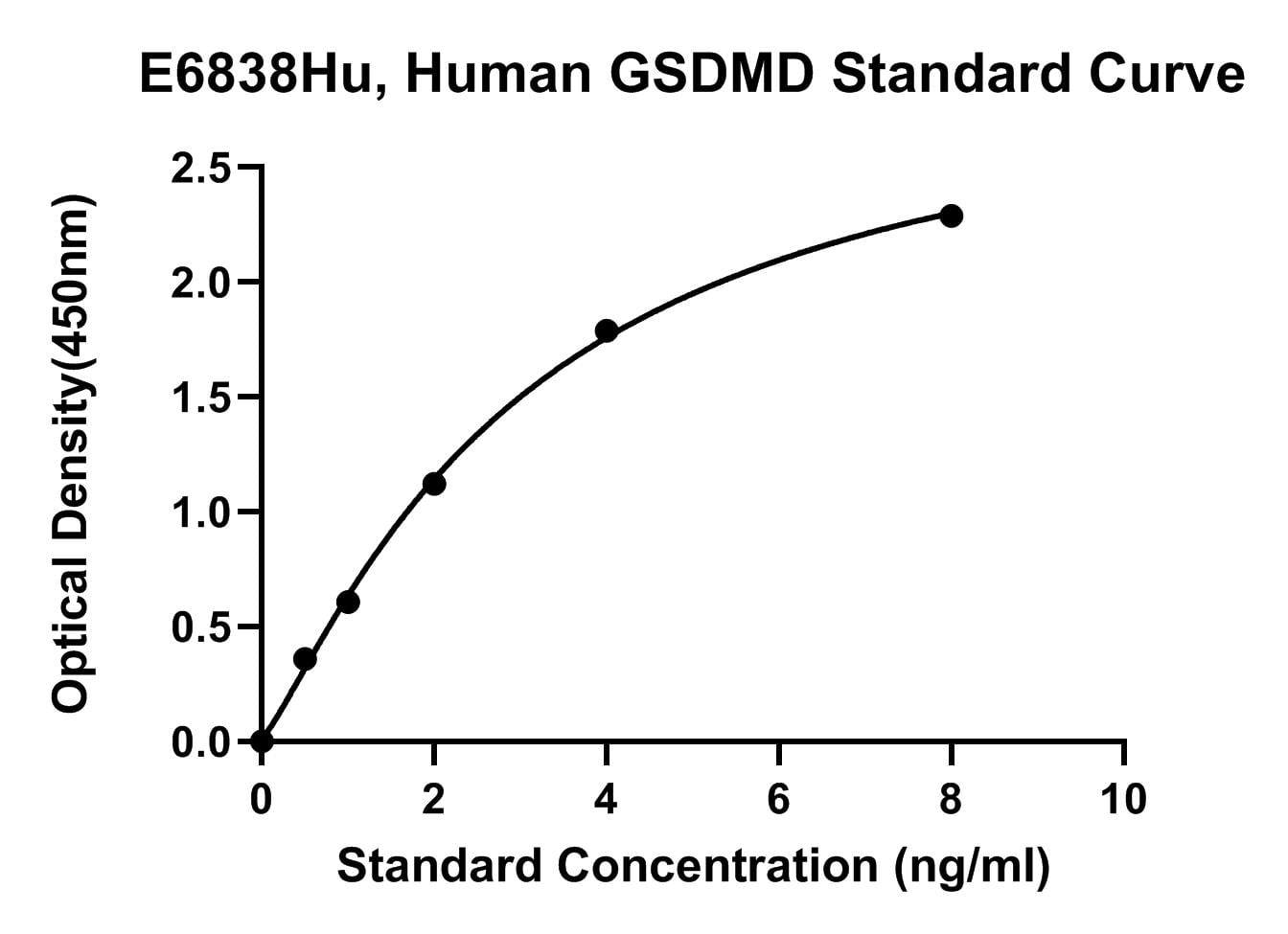
The Human (GSDMD) Gasdermin D ELISA Kit measures Gasdermin D in samples. The plate has been pre-coated with Human GSDMD antibody. GSDMD present in the sample is added and binds to antibodies coated on the wells. And then biotinylated Human GSDMD Antibody is added and binds to GSDMD in the sample. Then Streptavidin-HRP is added and binds to the Biotinylated GSDMD antibody. After incubation unbound Streptavidin-HRP is washed away during a washing step. Substrate solution is then added and color develops in proportion to the amount of Human GSDMD. The reaction is terminated by addition of acidic stop solution and absorbance is measured at 450 nm.
Catalog No:
E6838Hu
Regular price
$595.00 USD
Regular price
$458.00 USD
Sale price
$595.00 USD
Unit price
/
per
2.5 weeks
Couldn't load pickup availability
Product Details
Species Reactivity
Human
Sensitivity
0.017 ng/mL
Detection Range
0.05-15 ng/mL
Sample Type
Serum, plasma, cell culture supernates
Incubation(s)
1.5 hour(s)
Background
[Gasdermin-D]: Precursor of a pore-forming protein that plays a key role in host defense against pathogen infection and danger signals (PubMed: 26375003, PubMed: 26375259, PubMed: 27281216). This form constitutes the precursor of the pore-forming protein: upon cleavage, the released N-terminal moiety (Gasdermin-D, N-terminal) binds to membranes and forms pores, triggering pyroptosis (PubMed: 26375003, PubMed: 26375259, PubMed: 27281216). [Gasdermin-D, N-terminal]: Promotes pyroptosis in response to microbial infection and danger signals (PubMed: 26375003, PubMed: 26375259, PubMed: 27418190, PubMed: 28392147, PubMed: 32820063). Produced by the cleavage of gasdermin-D by inflammatory caspases CASP1, CASP4 or CASP5 in response to canonical, as well as non-canonical (such as cytosolic LPS) inflammasome activators (PubMed: 26375003, PubMed: 26375259, PubMed: 27418190). After cleavage, moves to the plasma membrane where it strongly binds to inner leaflet lipids, including monophosphorylated phosphatidylinositols, such as phosphatidylinositol 4-phosphate, bisphosphorylated phosphatidylinositols, such as phosphatidylinositol (4,5)-bisphosphate, as well as phosphatidylinositol (3,4,5)-bisphosphate, and more weakly to phosphatidic acid and phosphatidylserine (PubMed: 27281216, PubMed: 29898893). Homooligomerizes within the membrane and forms pores of 10-15 nanometers (nm) of inner diameter, allowing the release of mature IL1B and triggering pyroptosis (PubMed: 27418190, PubMed: 27281216, PubMed: 29898893). Exhibits bactericidal activity (PubMed: 27281216). Gasdermin-D, N-terminal released from pyroptotic cells into the extracellular milieu rapidly binds to and kills both Gram-negative and Gram-positive bacteria, without harming neighboring mammalian cells, as it does not disrupt the plasma membrane from the outside due to lipid-binding specificity (PubMed: 27281216). Under cell culture conditions, also active against intracellular bacteria, such as Listeria monocytogenes (By similarity). Also active in response to MAP3K7/TAK1 inactivation by Yersinia toxin YopJ, which triggers cleavage by CASP8 and subsequent activation (By similarity). Strongly binds to bacterial and mitochondrial lipids, including cardiolipin (PubMed: 27281216). Does not bind to unphosphorylated phosphatidylinositol, phosphatidylethanolamine nor phosphatidylcholine (PubMed: 27281216). Source: UniProt Consortium (2025)
Shipping Condition
Shipped on cold gel packs.
Storage Condition and Shelf Life
2-8C
Analyte
Gasdermin D
Regulatory Status
For Research Use Only