Skip to product information
1 of 1

Human PTPRJ (Receptor-type Tyrosine-protein Phosphatase Eta) ELISA Kit

Human PTPRJ (Receptor-type Tyrosine-protein Phosphatase Eta) ELISA Kit

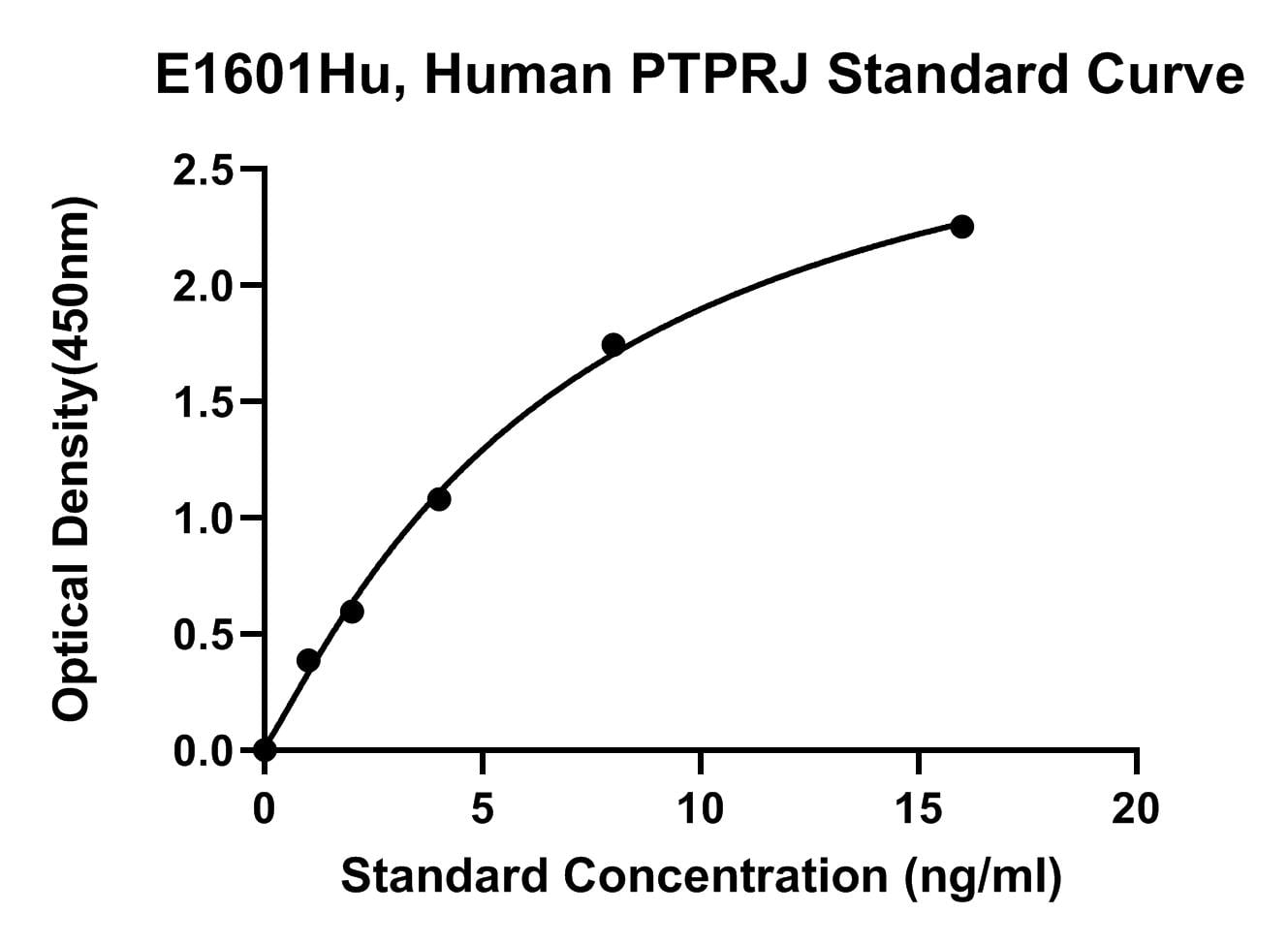
The Human (PTPRJ) Receptor-type Tyrosine-protein Phosphatase Eta ELISA Kit measures Receptor-type tyrosine-protein phosphatase eta in samples. The plate has been pre-coated with Human PTPRJ antibody. PTPRJ present in the sample is added and binds to antibodies coated on the wells. And then biotinylated Human PTPRJ Antibody is added and binds to PTPRJ in the sample. Then Streptavidin-HRP is added and binds to the Biotinylated PTPRJ antibody. After incubation unbound Streptavidin-HRP is washed away during a washing step. Substrate solution is then added and color develops in proportion to the amount of Human PTPRJ. The reaction is terminated by addition of acidic stop solution and absorbance is measured at 450 nm.

Catalog No: E1601Hu
Regular price $595.00 USD
Regular price $458.00 USD Sale price $595.00 USD
Sale Sold out
Packaging
2.5 weeks
Download PDF

Product Details

Species Reactivity Human
Sensitivity 0.029 ng/mL
Detection Range 0.05-30 ng/mL
Sample Type Serum, plasma, cell culture supernates
Incubation(s) 1.5 hour(s)
Research Areas Signal Transduction, Enzyme & Kinase
Background Tyrosine phosphatase which dephosphorylates or contributes to the dephosphorylation of CTNND1, FLT3, PDGFRB, MET, RET (variant MEN2A), KDR, LYN, SRC, MAPK1, MAPK3, EGFR, TJP1, OCLN, PIK3R1 and PIK3R2. Plays a role in cell adhesion, migration, proliferation and differentiation. Involved in vascular development. Regulator of macrophage adhesion and spreading. Positively affects cell-matrix adhesion. Positive regulator of platelet activation and thrombosis. Negative regulator of cell proliferation. Negative regulator of PDGF-stimulated cell migration; through dephosphorylation of PDGFR. Positive regulator of endothelial cell survival, as well as of VEGF-induced SRC and AKT activation; through KDR dephosphorylation. Negative regulator of EGFR signaling pathway; through EGFR dephosphorylation. Enhances the barrier function of epithelial junctions during reassembly. Negatively regulates T-cell receptor (TCR) signaling. Upon T-cell TCR activation, it is up-regulated and excluded from the immunological synapses, while upon T-cell-antigen presenting cells (APC) disengagement, it is no longer excluded and can dephosphorylate PLCG1 and LAT to down-regulate prolongation of signaling. Source: UniProt Consortium (2025)
Shipping Condition Shipped on cold gel packs.
Storage Condition and Shelf Life 2-8C
Analyte Receptor-type tyrosine-protein phosphatase eta
Regulatory Status For Research Use Only
View full details

Inquire about this product