1
/
of
1
Human SLC25A5 ELISA Kit
Human SLC25A5 ELISA Kit
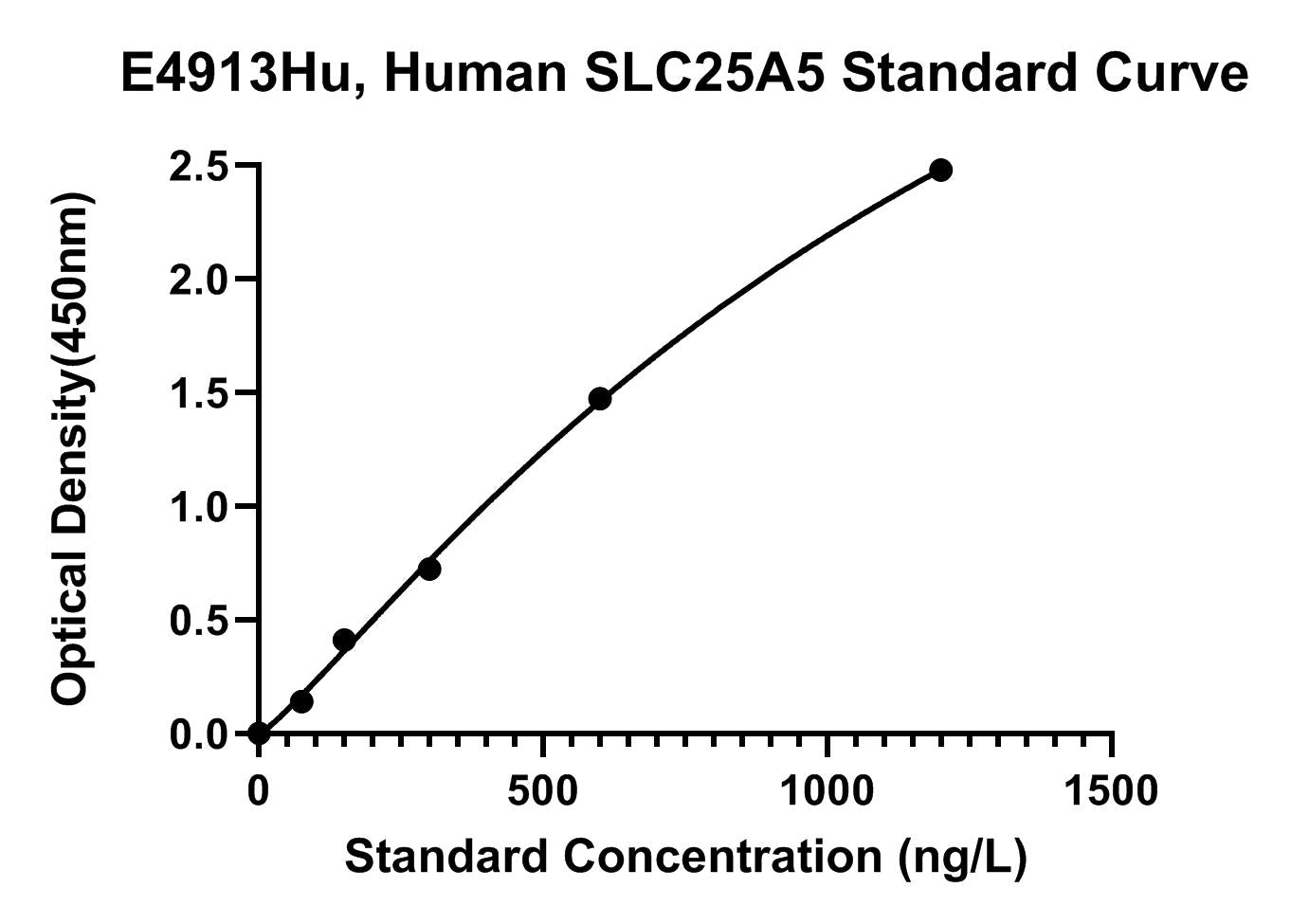
The Human SLC25A5 ELISA Kit measures ADP/ATP translocase 2 in samples. The plate has been pre-coated with Human SLC25A5 antibody. SLC25A5 present in the sample is added and binds to antibodies coated on the wells. And then biotinylated Human SLC25A5 Antibody is added and binds to SLC25A5 in the sample. Then Streptavidin-HRP is added and binds to the Biotinylated SLC25A5 antibody. After incubation unbound Streptavidin-HRP is washed away during a washing step. Substrate solution is then added and color develops in proportion to the amount of Human SLC25A5. The reaction is terminated by addition of acidic stop solution and absorbance is measured at 450 nm.
Catalog No:
E4913Hu
Regular price
$595.00 USD
Regular price
$458.00 USD
Sale price
$595.00 USD
Unit price
/
per
2.5 weeks
Couldn't load pickup availability
Product Details
Species Reactivity
Human
Sensitivity
5.47 ng/L
Detection Range
10-2000 ng/L
Sample Type
Serum, plasma, cell culture supernates
Incubation(s)
1.5 hour(s)
Research Areas
Tags and Cell Markers
Background
ADP:ATP antiporter that mediates import of ADP into the mitochondrial matrix for ATP synthesis, and export of ATP out to fuel the cell (By similarity).
Cycles between the cytoplasmic-open state (c-state) and the matrix-open state (m-state): operates by the alternating access mechanism with a single substrate-binding site intermittently exposed to either the cytosolic (c-state) or matrix (m-state) side of the inner mitochondrial membrane (By similarity).
In addition to its ADP:ATP antiporter activity, also involved in mitochondrial uncoupling and mitochondrial permeability transition pore (mPTP) activity (By similarity).
Plays a role in mitochondrial uncoupling by acting as a proton transporter: proton transport uncouples the proton flows via the electron transport chain and ATP synthase to reduce the efficiency of ATP production and cause mitochondrial thermogenesis (By similarity).
Proton transporter activity is inhibited by ADP:ATP antiporter activity, suggesting that SLC25A5/ANT2 acts as a master regulator of mitochondrial energy output by maintaining a delicate balance between ATP production (ADP:ATP antiporter activity) and thermogenesis (proton transporter activity) (By similarity).
Proton transporter activity requires free fatty acids as cofactor, but does not transport it (By similarity).
Probably mediates mitochondrial uncoupling in tissues that do not express UCP1 (By similarity).
Also plays a key role in mPTP opening, a non-specific pore that enables free passage of the mitochondrial membranes to solutes of up to 1.5 kDa, and which contributes to cell death (PubMed:31883789).
It is however unclear if SLC25A5/ANT2 constitutes a pore-forming component of mPTP or regulates it (By similarity).
Acts as a regulator of mitophagy independently of ADP:ATP antiporter activity: promotes mitophagy via interaction with TIMM44, leading to inhibit the presequence translocase TIMM23, thereby promoting stabilization of PINK1 (By similarity).
As part of the mitotic spindle-associated MMXD complex it may play a role in chromosome segregation (PubMed:20797633). Source: UniProt Consortium (2025)
Shipping Condition
Shipped on cold gel packs.
Storage Condition and Shelf Life
2-8C
Analyte
ADP/ATP translocase 2
Regulatory Status
For Research Use Only