1
/
of
1
Human SQSTM1 (Sequestosome-1) ELISA Kit
Human SQSTM1 (Sequestosome-1) ELISA Kit
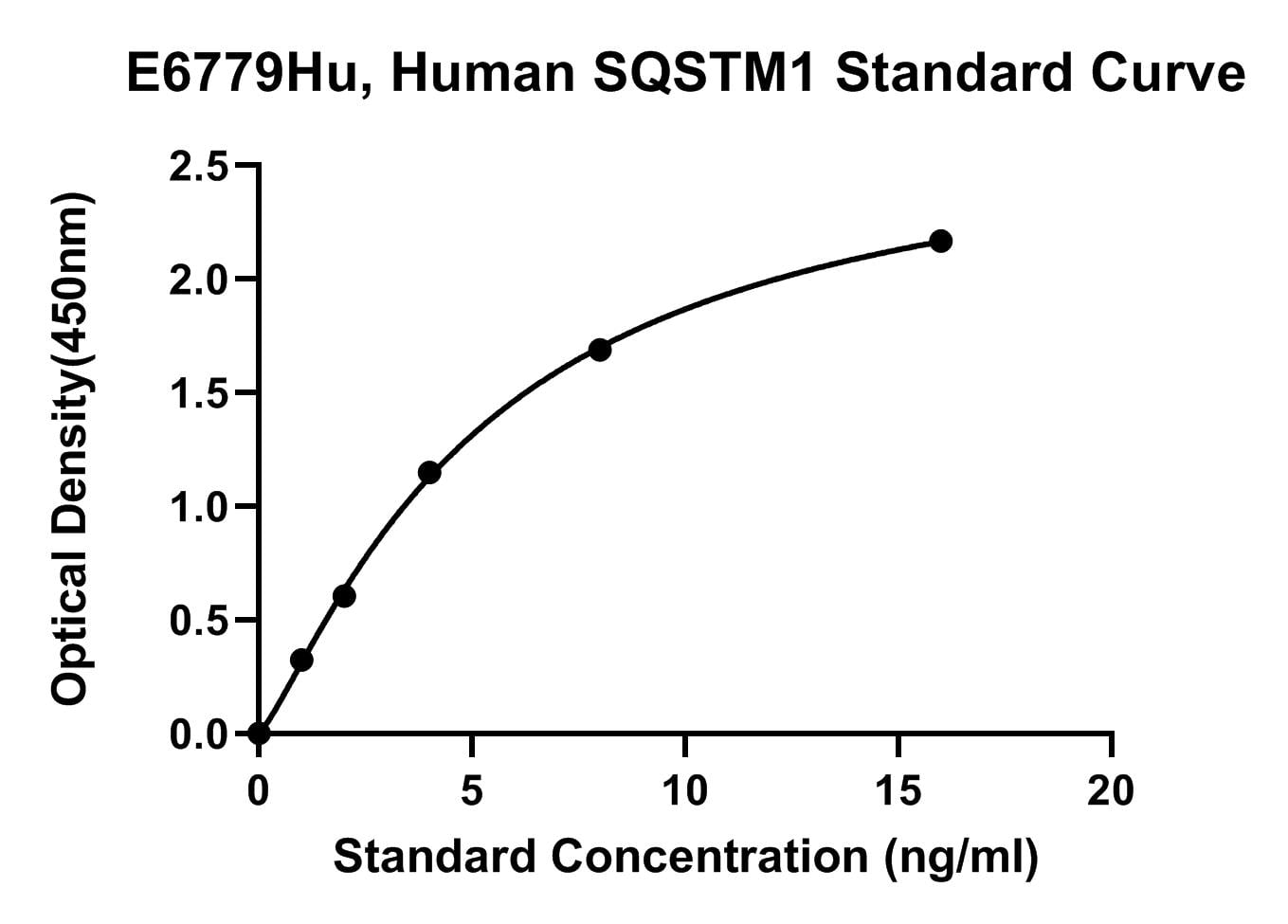
The Human (SQSTM1) Sequestosome-1 ELISA Kit measures Sequestosome-1 in samples. The plate has been pre-coated with Human SQSTM1 antibody. SQSTM1 present in the sample is added and binds to antibodies coated on the wells. And then biotinylated Human SQSTM1 Antibody is added and binds to SQSTM1 in the sample. Then Streptavidin-HRP is added and binds to the Biotinylated SQSTM1 antibody. After incubation unbound Streptavidin-HRP is washed away during a washing step. Substrate solution is then added and color develops in proportion to the amount of Human SQSTM1. The reaction is terminated by addition of acidic stop solution and absorbance is measured at 450 nm.
Catalog No:
E6779Hu
Regular price
$595.00 USD
Regular price
$458.00 USD
Sale price
$595.00 USD
Unit price
/
per
2.5 weeks
Couldn't load pickup availability
Product Details
Species Reactivity
Human
Sensitivity
0.023 ng/mL
Detection Range
0.05-30 ng/mL
Sample Type
Serum, plasma, cell culture supernates
Incubation(s)
1.5 hour(s)
Research Areas
Signal Transduction, Epigenetics and Nuclear Signaling, Cardiovascular, Metabolism, Cancer
Background
Autophagy receptor required for selective macroautophagy (aggrephagy). Functions as a bridge between polyubiquitinated cargo and autophagosomes. Interacts directly with both the cargo to become degraded and an autophagy modifier of the MAP1 LC3 family (PubMed:16286508, PubMed:20168092, PubMed:24128730, PubMed:28404643, PubMed:22622177).
Along with WDFY3, involved in the formation and autophagic degradation of cytoplasmic ubiquitin-containing inclusions (p62 bodies, ALIS/aggresome-like induced structures). Along with WDFY3, required to recruit ubiquitinated proteins to PML bodies in the nucleus (PubMed:24128730, PubMed:20168092).
May regulate the activation of NFKB1 by TNF-alpha, nerve growth factor (NGF) and interleukin-1. May play a role in titin/TTN downstream signaling in muscle cells. May regulate signaling cascades through ubiquitination. Adapter that mediates the interaction between TRAF6 and CYLD (By similarity).
May be involved in cell differentiation, apoptosis, immune response and regulation of K+ channels. Involved in endosome organization by retaining vesicles in the perinuclear cloud: following ubiquitination by RNF26, attracts specific vesicle-associated adapters, forming a molecular bridge that restrains cognate vesicles in the perinuclear region and organizes the endosomal pathway for efficient cargo transport (PubMed:27368102).
Promotes relocalization of 'Lys-63'-linked ubiquitinated STING1 to autophagosomes (PubMed:29496741).
Acts as an activator of the NFE2L2/NRF2 pathway via interaction with KEAP1: interaction inactivates the BCR(KEAP1) complex, promoting nuclear accumulation of NFE2L2/NRF2 and subsequent expression of cytoprotective genes (PubMed:20452972, PubMed:28380357). Source: UniProt Consortium (2025)
Shipping Condition
Shipped on cold gel packs.
Storage Condition and Shelf Life
2-8C
Analyte
Sequestosome-1
Regulatory Status
For Research Use Only