1
/
of
1
Human STIM1 (Stromal Interaction Molecule 1) ELISA Kit
Human STIM1 (Stromal Interaction Molecule 1) ELISA Kit
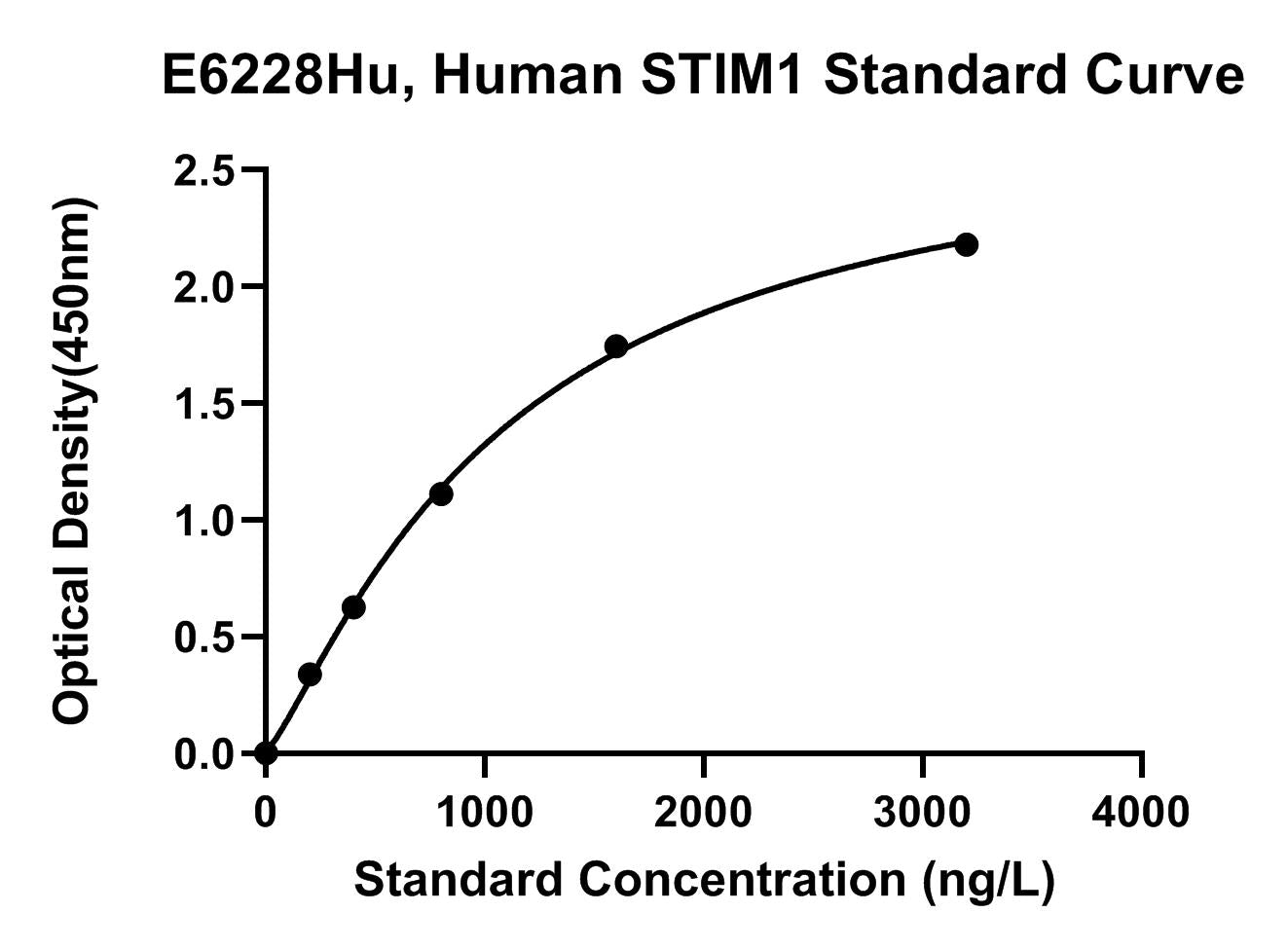
The Human (STIM1) Stromal Interaction Molecule 1 ELISA Kit measures Stromal interaction molecule 1 in samples. The plate has been pre-coated with Human STIM1 antibody. STIM1 present in the sample is added and binds to antibodies coated on the wells. And then biotinylated Human STIM1 Antibody is added and binds to STIM1 in the sample. Then Streptavidin-HRP is added and binds to the Biotinylated STIM1 antibody. After incubation unbound Streptavidin-HRP is washed away during a washing step. Substrate solution is then added and color develops in proportion to the amount of Human STIM1. The reaction is terminated by addition of acidic stop solution and absorbance is measured at 450 nm.
Catalog No:
E6228Hu
Regular price
$595.00 USD
Regular price
$458.00 USD
Sale price
$595.00 USD
Unit price
/
per
2.5 weeks
Couldn't load pickup availability
Product Details
Species Reactivity
Human
Sensitivity
9.26 ng/L
Detection Range
20-6000 ng/L
Sample Type
Serum, plasma, cell culture supernates
Incubation(s)
1.5 hour(s)
Background
Stromal interaction molecule 1 is a protein that in humans is encoded by the STIM1 gene. STIM1 has a single transmembrane domain, and is localized to the endoplasmic reticulum, and to a lesser extent to the plasma membrane. Even though the protein has been identified earlier, its function was unknown until recently. In 2005, it was discovered that STIM1 functions as a calcium sensor in the endoplasmic reticulum. Upon activation of the IP3 receptor, the calcium concentration in the endoplasmic reticulum decreases, which is sensed by STIM1, via its EF hand domain. STIM1 activates the "store-operated" ORAI1 calcium ion channels in the plasma membrane, via intracellular STIM1 movement, clustering under plasma membrane and protein interaction with ORAI isoforms. STIM1-mediated calcium entry is required for thrombin-induced disassembly of VE-cadherin adherens junctions. 2-Aminoethoxydiphenyl borate (2-APB) and 4-chloro-3-ethylphenol (4-CEP) cause STIM1 clustering in a cell and prevent STIM1 moving toward plasma membrane. Source: UniProt Consortium (2025)
Shipping Condition
Shipped on cold gel packs.
Storage Condition and Shelf Life
2-8C
Analyte
Stromal interaction molecule 1
Regulatory Status
For Research Use Only