1
/
of
1
Human TGFB2 (Transforming Growth Factors Beta2) ELISA Kit
Human TGFB2 (Transforming Growth Factors Beta2) ELISA Kit
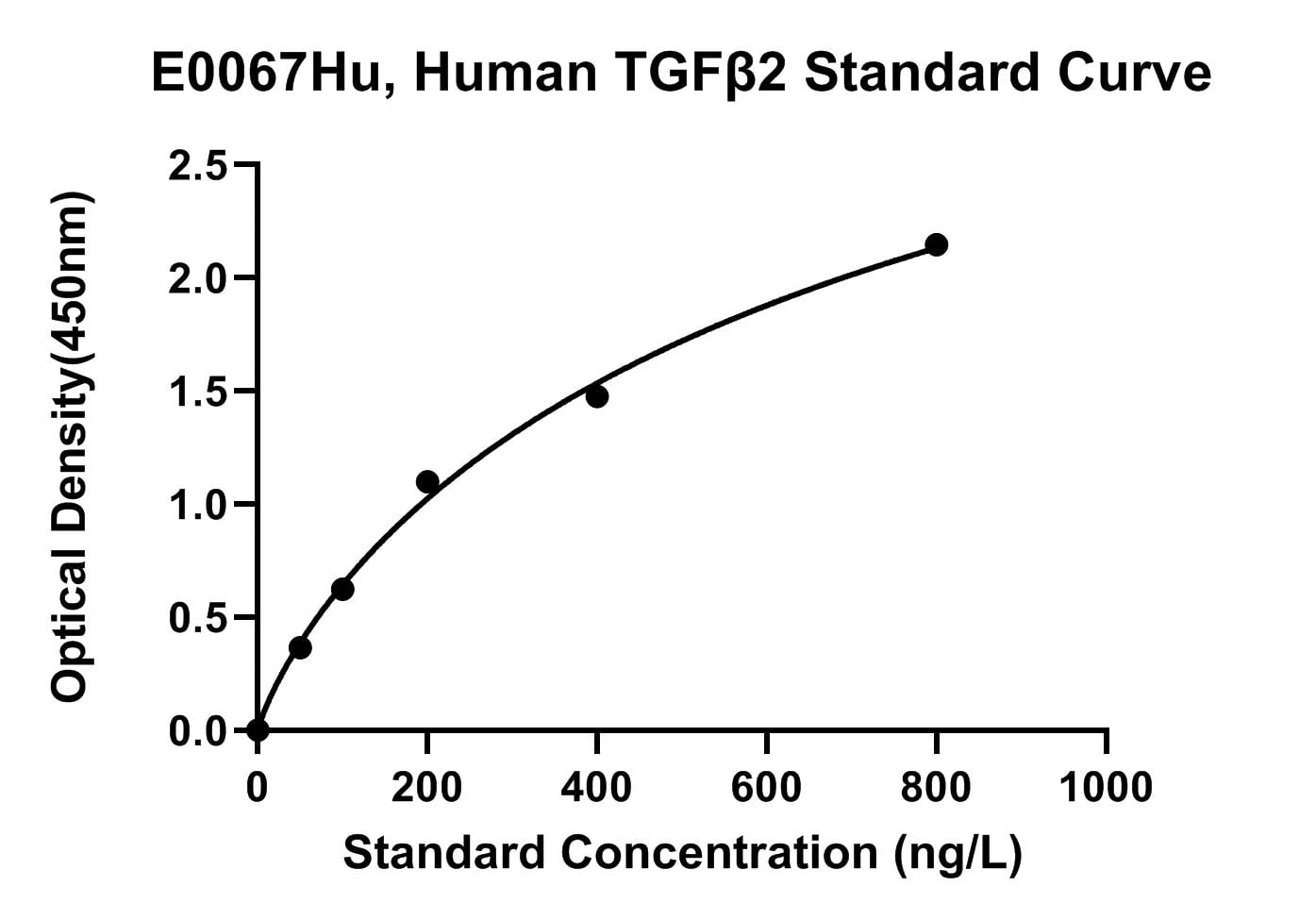
The Human (TGFB2) Transforming Growth Factors Beta2 ELISA Kit measures Transforming Growth Factors beta2 in samples. The plate has been pre-coated with Human TGFB2 antibody. TGFB2 present in the sample is added and binds to antibodies coated on the wells. And then biotinylated Human TGFB2 Antibody is added and binds to TGFB2 in the sample. Then Streptavidin-HRP is added and binds to the Biotinylated TGFB2 antibody. After incubation unbound Streptavidin-HRP is washed away during a washing step. Substrate solution is then added and color develops in proportion to the amount of Human TGFB2. The reaction is terminated by addition of acidic stop solution and absorbance is measured at 450 nm.
Catalog No:
E0067Hu
Regular price
$595.00 USD
Regular price
$458.00 USD
Sale price
$595.00 USD
Unit price
/
per
2.5 weeks
Couldn't load pickup availability
Product Details
Species Reactivity
Human
Sensitivity
3.53 ng/L
Detection Range
7-1500 ng/L
Sample Type
Serum, plasma, cell culture supernates
Incubation(s)
1.5 hour(s)
Research Areas
Signal Transduction
Background
Transforming growth factor beta-2 proprotein: Precursor of the Latency-associated Peptide (LAP) and Transforming growth factor beta-2 (TGF-beta-2) chains, which constitute the regulatory and active subunit of TGF-beta-2, respectively. [Latency-associated Peptide]: Required to maintain the Transforming growth factor beta-2 (TGF-beta-2) chain in a latent state during storage in extracellular matrix (By similarity). Associates non-covalently with TGF-beta-2 and regulates its activation via interaction with 'milieu molecules', such as LTBP1 and LRRC32/GARP, that control activation of TGF-beta-2 (By similarity). Transforming growth factor beta-2: Multifunctional protein that regulates various processes such as angiogenesis and heart development (PubMed: 22772371, PubMed: 22772368). Activation into mature form follows different steps: following cleavage of the proprotein in the Golgi apparatus, Latency-associated Peptide (LAP) and Transforming growth factor beta-2 (TGF-beta-2) chains remain non-covalently linked rendering TGF-beta-2 inactive during storage in extracellular matrix (By similarity). At the same time, LAP chain interacts with 'milieu molecules', such as LTBP1 and LRRC32/GARP, that control activation of TGF-beta-2 and maintain it in a latent state during storage in extracellular milieus (By similarity). Once activated following release of LAP, TGF-beta-2 acts by binding to TGF-beta receptors (TGFBR1 and TGFBR2), which transduce signal (By similarity). Source: UniProt Consortium (2025)
Shipping Condition
Shipped on cold gel packs.
Storage Condition and Shelf Life
2-8C
Analyte
Transforming Growth Factors beta2
Regulatory Status
For Research Use Only