1
/
of
1
Human TPSG1 (Tryptase Gamma) ELISA Kit
Human TPSG1 (Tryptase Gamma) ELISA Kit
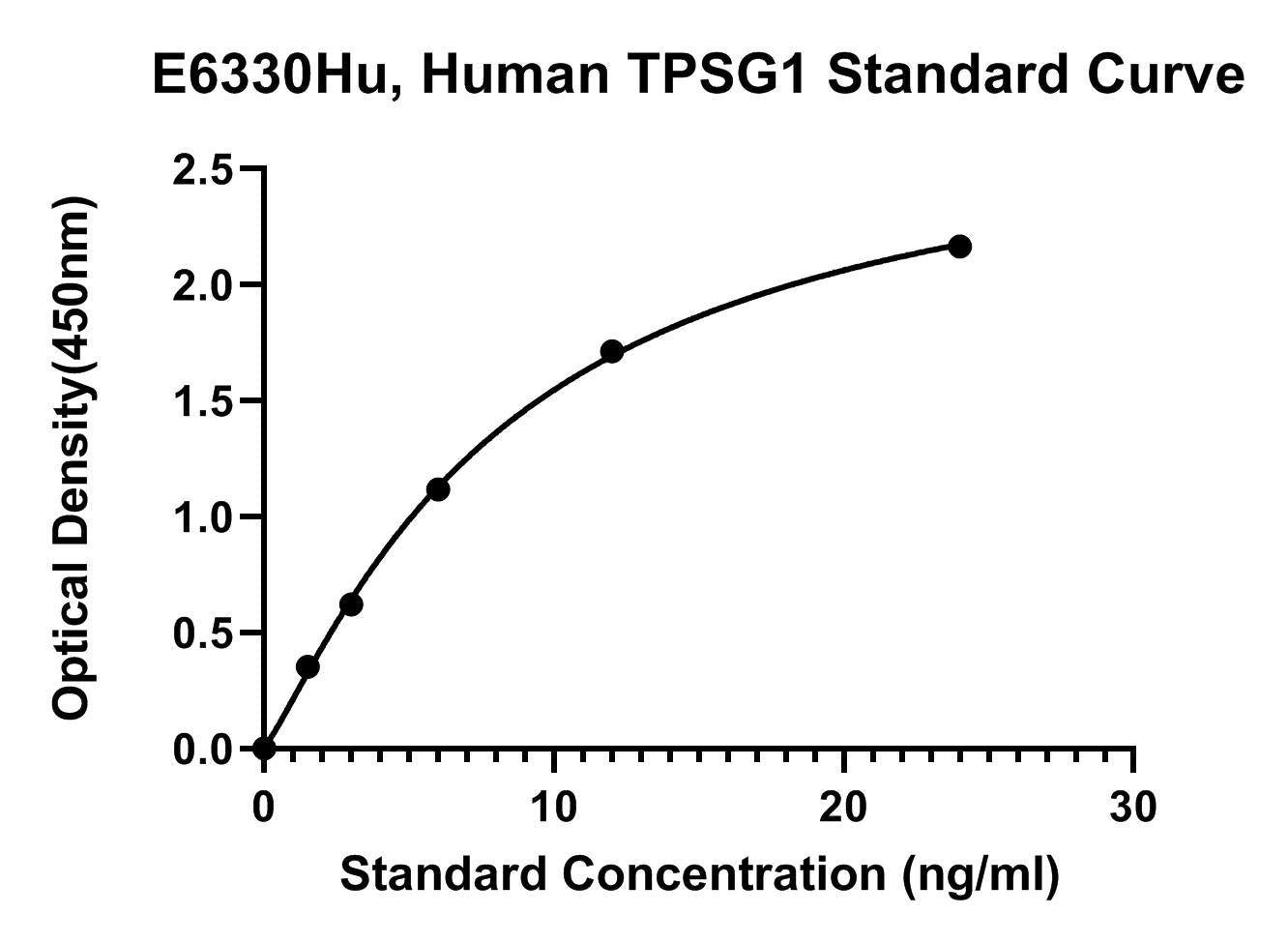
The Human (TPSG1) Tryptase Gamma ELISA Kit measures Tryptase gamma in samples. The plate has been pre-coated with Human TPSG1 antibody. TPSG1 present in the sample is added and binds to antibodies coated on the wells. And then biotinylated Human TPSG1 Antibody is added and binds to TPSG1 in the sample. Then Streptavidin-HRP is added and binds to the Biotinylated TPSG1 antibody. After incubation unbound Streptavidin-HRP is washed away during a washing step. Substrate solution is then added and color develops in proportion to the amount of Human TPSG1. The reaction is terminated by addition of acidic stop solution and absorbance is measured at 450 nm.
Catalog No:
E6330Hu
Regular price
$595.00 USD
Regular price
$458.00 USD
Sale price
$595.00 USD
Unit price
/
per
2.5 weeks
Couldn't load pickup availability
Product Details
Species Reactivity
Human
Sensitivity
0.058 ng/mL
Detection Range
0.1-40 ng/mL
Sample Type
Serum, plasma, cell culture supernates
Incubation(s)
1.5 hour(s)
Research Areas
Tags and Cell Markers
Background
Tryptase gamma, also known as serine protease 31 or transmembrane tryptase, is an enzyme that in humans is encoded by the TPSG1 gene. Tryptases comprise a family of trypsin-like serine proteases, the peptidase family S1. Tryptases are enzymatically active only as heparin-stabilized tetramers, and they are resistant to all known endogenous proteinase inhibitors. Several tryptase genes are clustered on chromosome 16p13.3. There is uncertainty regarding the number of genes in this cluster. Currently four functional genes - alpha I, beta I, beta II and gamma I - have been identified. And beta I has an allelic variant named alpha II, beta II has an allelic variant beta III, also gamma I has an allelic variant gamma II. Beta tryptases appear to be the main isoenzymes expressed in mast cells; whereas in basophils, alpha-tryptases predominant. This gene differs from other members of the tryptase gene family in that it has C-terminal hydrophobic domain, which may serve as a membrane anchor. Tryptases have been implicated as mediators in the pathogenesis of asthma and other allergic and inflammatory disorders. Source: UniProt Consortium (2025)
Shipping Condition
Shipped on cold gel packs.
Storage Condition and Shelf Life
2-8C
Analyte
Tryptase gamma
Regulatory Status
For Research Use Only