1
/
of
1
Mouse ANGPTL3 (Angiopoietin-like Protein 3) ELISA Kit
Mouse ANGPTL3 (Angiopoietin-like Protein 3) ELISA Kit
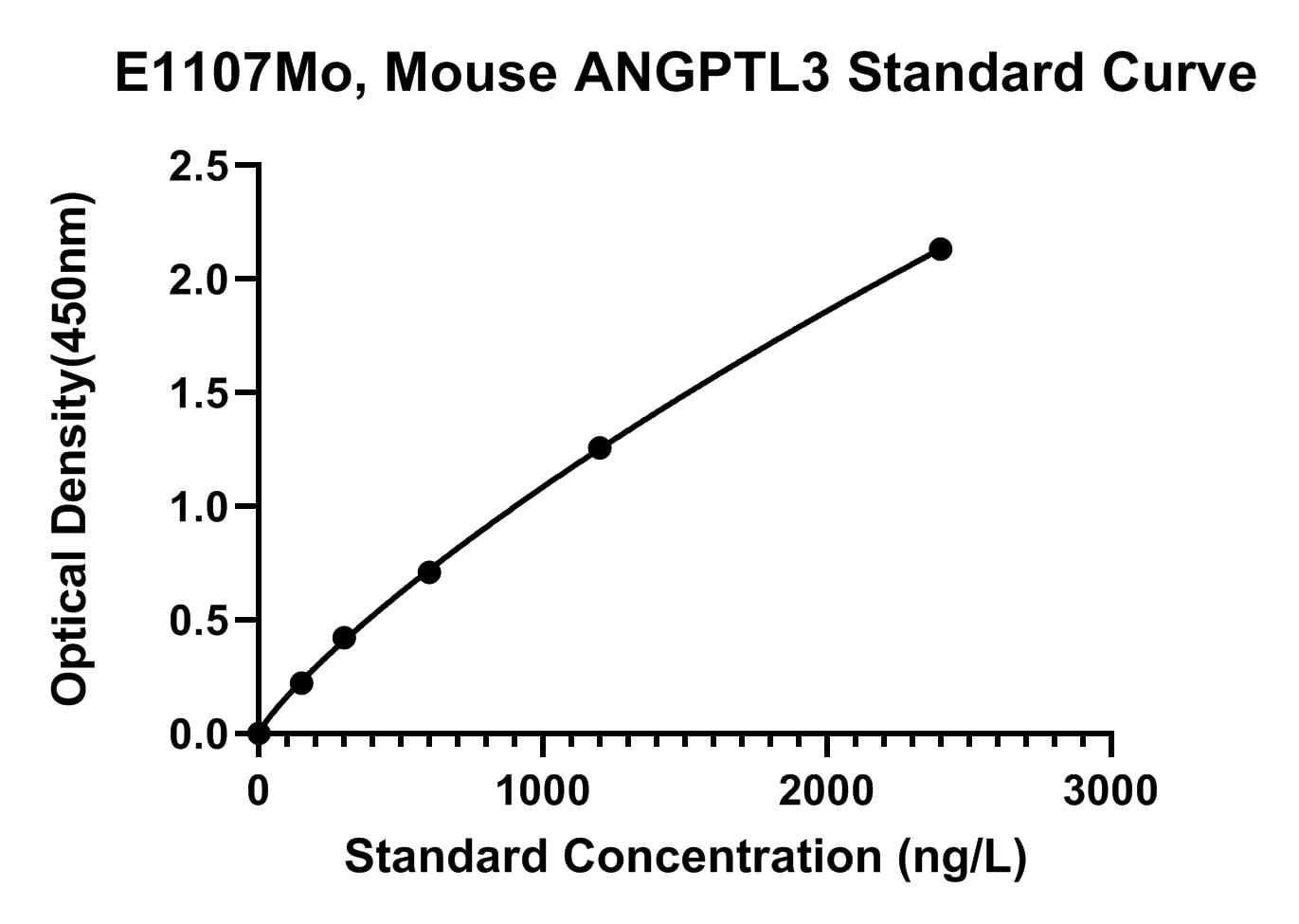
The Mouse (ANGPTL3) Angiopoietin-like Protein 3 ELISA Kit measures Angiopoietin-Like Protein 3 in Mouse samples. The plate has been pre-coated with Mouse ANGPTL3 antibody. ANGPTL3 present in the sample is added and binds to antibodies coated on the wells. And then biotinylated Mouse ANGPTL3 Antibody is added and binds to ANGPTL3 in the sample. Then Streptavidin-HRP is added and binds to the Biotinylated ANGPTL3 antibody. After incubation unbound Streptavidin-HRP is washed away during a washing step. Substrate solution is then added and color develops in proportion to the amount of Mouse ANGPTL3. The reaction is terminated by addition of acidic stop solution and absorbance is measured at 450 nm.
Catalog No:
E1107Mo
Regular price
$595.00 USD
Regular price
$458.00 USD
Sale price
$595.00 USD
Unit price
/
per
2.5 weeks
Couldn't load pickup availability
Product Details
Species Reactivity
Mouse
Sensitivity
9.62 ng/L
Detection Range
20-4500 ng/L
Sample Type
Serum, plasma, cell culture supernates
Incubation(s)
1.5 hour(s)
Research Areas
Cardiovascular
Background
Acts in part as a hepatokine that is involved in regulation of lipid and glucose metabolism (PubMed: 11788823, PubMed: 12671033). Proposed to play a role in the trafficking of energy substrates to either storage or oxidative tissues in response to food intake (PubMed: 26305978). Has a stimulatory effect on plasma triglycerides (TG), which is achieved by suppressing plasma TG clearance via inhibition of LPL activity; the function seems to be specific for the feeding conditions. The inhibition of LPL activity appears to be an indirect mechanism involving recruitment of proprotein convertases PCSK6 and FURIN to LPL leading to cleavage and dissociation of LPL from the cell surface; the function does not require ANGPTL3 proteolytic cleavage but seems to be mediated by the N-terminal domain, and is not inhibited by GPIHBP1 (PubMed: 12909640, PubMed: 16081640, PubMed: 20581395). Can inhibit endothelial lipase, causing increased plasma levels of high density lipoprotein (HDL) cholesterol and phospholipids; the cleaved N-terminal domain is more efficient than the uncleaved proprotein (PubMed: 17681148). Can bind to adipocytes to activate lipolysis, releasing free fatty acids and glycerol (By similarity). Suppresses LPL specifically in oxidative tissues which is required to route very low density lipoprotein (VLDL)-TG to white adipose tissue (WAT) for storage in response to food; the function may involve cooperation with circulating, liver-derived ANGPTL8 and ANGPTL4 expression in WAT (PubMed: 26305978). Contributes to lower plasma levels of low density lipoprotein (LDL)-cholesterol by a mechanism that is independent of the canonical pathway implicating APOE and LDLR (PubMed: 25954050). May stimulate hypothalamic LPL activity (PubMed: 25338813). Involved in angiogenesis (PubMed: 11877390). Binds to endothelial cells via integrin alpha-V/beta-3 (ITGAV:ITGB3), activates FAK, MAPK and Akt signaling pathways and induces cell adhesion and cell migration (By similarity). May increase the motility of podocytes. Secreted from podocytes, may modulate properties of glomerular endothelial cells involving integrin alpha-V/beta-3 and Akt signaling (By similarity). May induce actin filament rearrangements in podocytes implicating integrin alpha-V/beta-3 and Rac1 activation (PubMed: 20633534, PubMed: 24294595, PubMed: 25710887). Binds to hematopoietic stem cells (HSC) and is involved in the regulation of HSC activity probably implicating down-regulation of IKZF1/IKAROS (PubMed: 20959605). Source: UniProt Consortium (2025)
Shipping Condition
Shipped on cold gel packs.
Storage Condition and Shelf Life
2-8C
Analyte
Angiopoietin-Like Protein 3
Regulatory Status
For Research Use Only