1
/
of
1
Mouse CXCL14 (C-X-C Motif Chemokine 14) ELISA Kit
Mouse CXCL14 (C-X-C Motif Chemokine 14) ELISA Kit
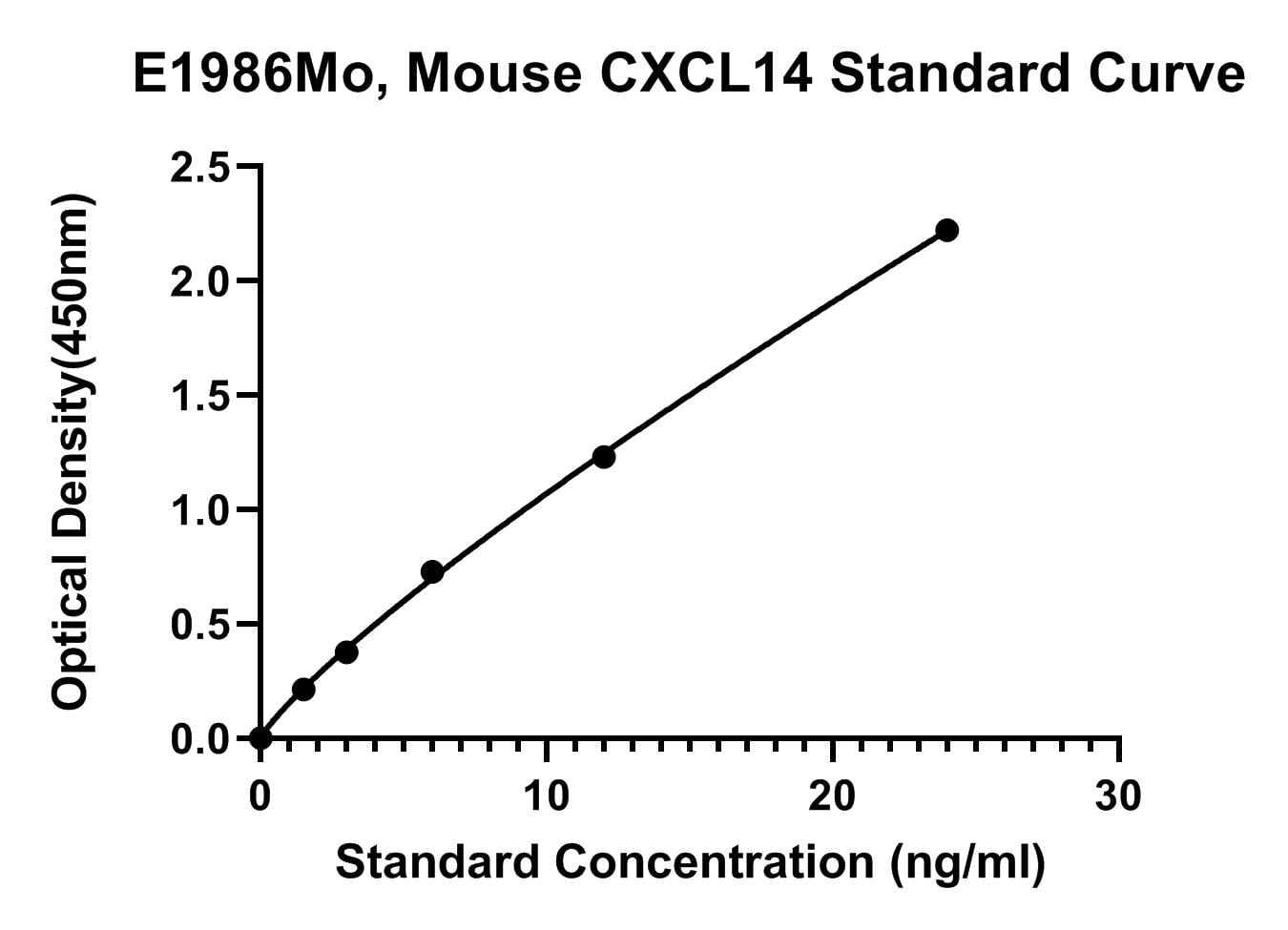
The Mouse (CXCL14) C-X-C Motif Chemokine 14 ELISA Kit measures C-X-C motif chemokine 14 in Mouse samples. The plate has been pre-coated with Mouse CXCL14 antibody. CXCL14 present in the sample is added and binds to antibodies coated on the wells. And then biotinylated Mouse CXCL14 Antibody is added and binds to CXCL14 in the sample. Then Streptavidin-HRP is added and binds to the Biotinylated CXCL14 antibody. After incubation unbound Streptavidin-HRP is washed away during a washing step. Substrate solution is then added and color develops in proportion to the amount of Mouse CXCL14. The reaction is terminated by addition of acidic stop solution and absorbance is measured at 450 nm.
Catalog No:
E1986Mo
Regular price
$595.00 USD
Regular price
$458.00 USD
Sale price
$595.00 USD
Unit price
/
per
2.5 weeks
Couldn't load pickup availability
Product Details
Species Reactivity
Mouse
Sensitivity
0.057 ng/mL
Detection Range
0.1-40 ng/mL
Sample Type
Serum, plasma, cell culture supernates
Incubation(s)
1.5 hour(s)
Research Areas
Immunology
Background
Chemokine (C-X-C motif) ligand 14 (CXCL14) is a small cytokine belonging to the CXC chemokine family that is also known as BRAK (for breast and kidney-expressed chemokine). Mature CXCL14 has many of the conserved features of the CXC chemokine subfamily but has some differences too, such as a shorter N-terminus and five extra amino acids in the region between its third and fourth cysteines. CXCL14 is constitutively expressed at high levels in many normal tissues, where its cellular source is thought to be fibroblasts. However, it is reduced or absent from most cancer cells. This chemokine is chemotactic for monocytes and can activate these cells in the presence of an inflammatory mediator called prostaglandin-E2 (PGE2). It is also a potent chemoattractant and activator of dendritic cells, is implicated in homing of these cells,[4] and can stimulate the migration of activated NK cells. CXCL14 also inhibits angiogenesis, possibly as a result of its ability to block endothelial cell chemotaxis. The gene for CXCL14 contains four exons and is located on chromosome 5 in humans. Source: UniProt Consortium (2025)
Shipping Condition
Shipped on cold gel packs.
Storage Condition and Shelf Life
2-8C
Analyte
C-X-C motif chemokine 14
Regulatory Status
For Research Use Only