1
/
of
1
Mouse GSK3A (Glycogen Synthase Kinase-3 Alpha) ELISA Kit
Mouse GSK3A (Glycogen Synthase Kinase-3 Alpha) ELISA Kit
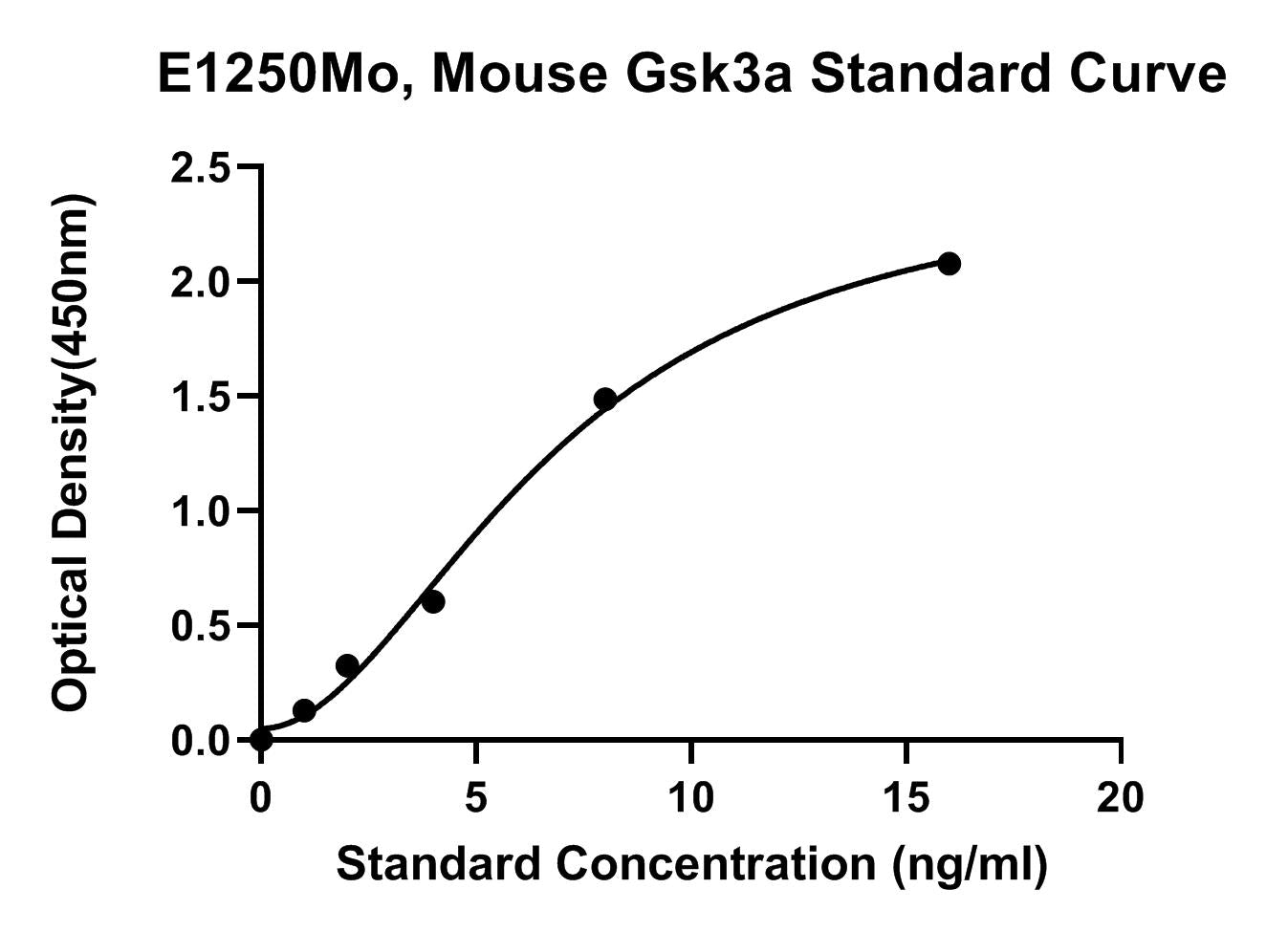
The Mouse (GSK3A) Glycogen Synthase Kinase-3 Alpha ELISA Kit measures Glycogen Synthase Kinase-3 Alpha in Mouse samples. The plate has been pre-coated with Mouse GSK3A antibody. GSK3A present in the sample is added and binds to antibodies coated on the wells. And then biotinylated Mouse GSK3A Antibody is added and binds to GSK3A in the sample. Then Streptavidin-HRP is added and binds to the Biotinylated GSK3A antibody. After incubation unbound Streptavidin-HRP is washed away during a washing step. Substrate solution is then added and color develops in proportion to the amount of Mouse GSK3A. The reaction is terminated by addition of acidic stop solution and absorbance is measured at 450 nm.
Catalog No:
E1250Mo
Regular price
$595.00 USD
Regular price
$458.00 USD
Sale price
$595.00 USD
Unit price
/
per
2.5 weeks
Couldn't load pickup availability
Product Details
Species Reactivity
Mouse
Sensitivity
0.026 ng/mL
Detection Range
0.05-30 ng/mL
Sample Type
Serum, plasma, cell culture supernates
Incubation(s)
1.5 hour(s)
Research Areas
Enzyme & Kinase
Background
Constitutively active protein kinase that acts as a negative regulator in the hormonal control of glucose homeostasis, Wnt signaling and regulation of transcription factors and microtubules, by phosphorylating and inactivating glycogen Synthase (GYS1 or GYS2), CTNNB1/beta-catenin, APC and AXIN1 (PubMed: 15791206, PubMed: 17908561). Requires primed phosphorylation of the majority of its substrates (PubMed: 22539723). Contributes to insulin regulation of glycogen synthesis by phosphorylating and inhibiting GYS1 activity and hence glycogen synthesis (PubMed: 15791206, PubMed: 17908561). Regulates glycogen metabolism in liver, but not in muscle (PubMed: 17908561). May also mediate the development of insulin resistance by regulating activation of transcription factors (By similarity). In Wnt signaling, regulates the level and transcriptional activity of nuclear CTNNB1/beta-catenin (PubMed: 15791206). Facilitates amyloid precursor protein (APP) processing and the generation of APP-derived amyloid plaques found in Alzheimer disease (By similarity). May be involved in the regulation of replication in pancreatic beta-cells (By similarity). Is necessary for the establishment of neuronal polarity and axon outgrowth (PubMed: 17391670). Through phosphorylation of the anti-apoptotic protein MCL1, may control cell apoptosis in response to growth factors deprivation (PubMed: 16543145). Acts as a regulator of autophagy by mediating phosphorylation of KAT5/TIP60 under starvation conditions, leading to activate KAT5/TIP60 acetyltransferase activity and promote acetylation of key autophagy regulators, such as ULK1 and RUBCNL/Pacer (PubMed: 22539723). Negatively regulates extrinsic apoptotic signaling pathway via death domain receptors. Promotes the formation of an anti-apoptotic complex, made of DDX3X, BRIC2 and GSK3B, at death receptors, including TNFRSF10B. The anti-apoptotic function is most effective with weak apoptotic signals and can be overcome by stronger stimulation (By similarity). Source: UniProt Consortium (2025)
Shipping Condition
Shipped on cold gel packs.
Storage Condition and Shelf Life
2-8C
Analyte
Glycogen Synthase Kinase-3 Alpha
Regulatory Status
For Research Use Only