1
/
of
1
Mouse HDAC6 (Histone Deacetylase 6) ELISA Kit
Mouse HDAC6 (Histone Deacetylase 6) ELISA Kit
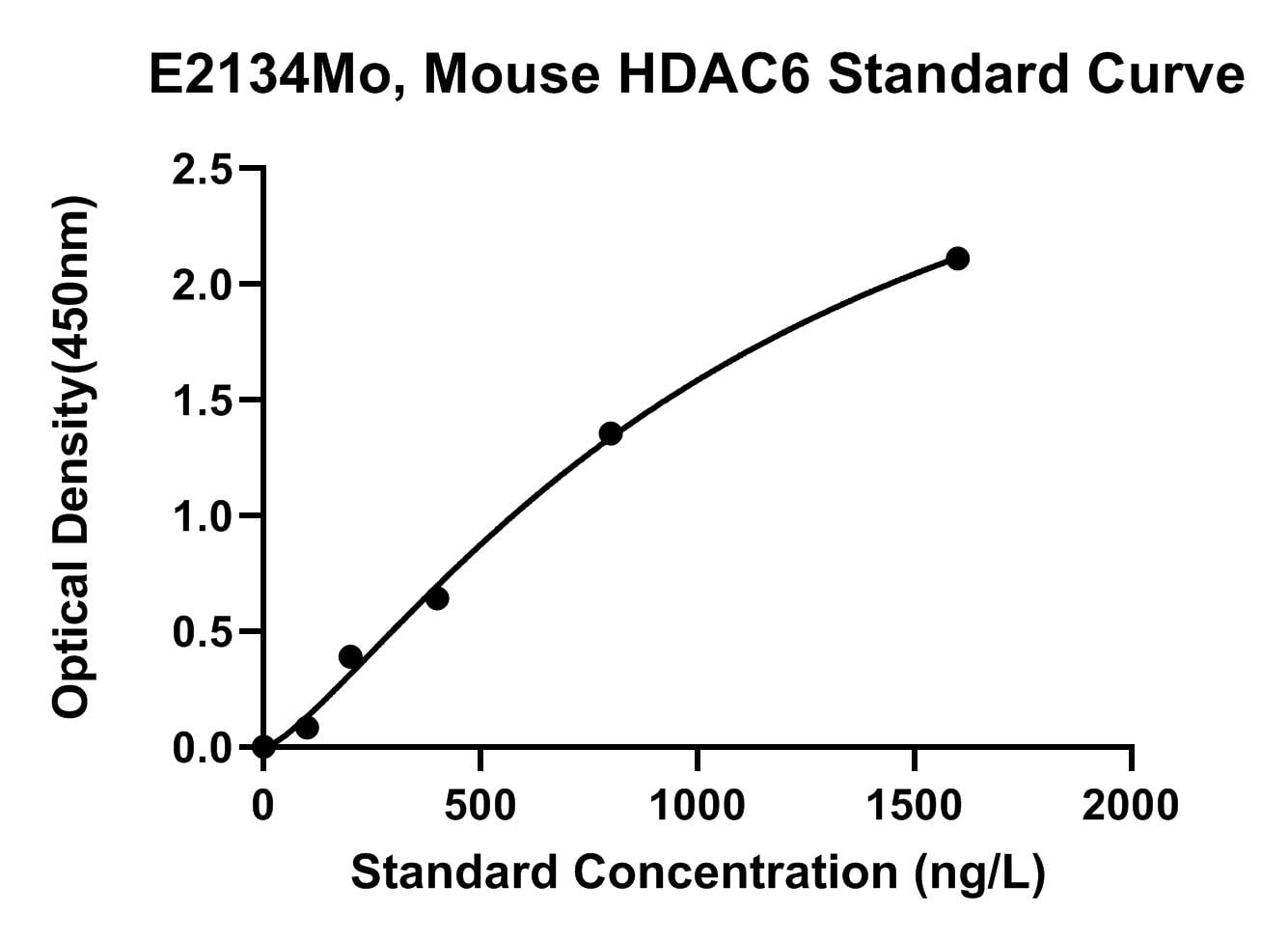
The Mouse (HDAC6) Histone Deacetylase 6 ELISA Kit measures Histone Deacetylase 6 in Mouse samples. The plate has been pre-coated with Mouse HDAC6 antibody. HDAC6 present in the sample is added and binds to antibodies coated on the wells. And then biotinylated Mouse HDAC6 Antibody is added and binds to HDAC6 in the sample. Then Streptavidin-HRP is added and binds to the Biotinylated HDAC6 antibody. After incubation unbound Streptavidin-HRP is washed away during a washing step. Substrate solution is then added and color develops in proportion to the amount of Mouse HDAC6. The reaction is terminated by addition of acidic stop solution and absorbance is measured at 450 nm.
Catalog No:
E2134Mo
Regular price
$595.00 USD
Regular price
$458.00 USD
Sale price
$595.00 USD
Unit price
/
per
2.5 weeks
Couldn't load pickup availability
Product Details
Species Reactivity
Mouse
Sensitivity
7.34 ng/L
Detection Range
15-3000 ng/L
Sample Type
Serum, plasma, cell culture supernates
Incubation(s)
1.5 hour(s)
Research Areas
Epigenetics and Nuclear Signaling
Background
Responsible for the deacetylation of lysine residues on the N-terminal part of the core histones (H2A, H2B, H3 and H4) (PubMed: 9891014). Histone deacetylation gives a tag for epigenetic repression and plays an important role in transcriptional regulation, cell cycle progression and developmental events (PubMed: 9891014). Histone deacetylases act via the formation of large multiprotein complexes (PubMed: 9891014). In addition to histones, deacetylates other proteins: plays a central role in microtubule-dependent cell motility by mediating deacetylation of tubulin (PubMed: 19893491). Promotes deacetylation of CTTN, leading to actin polymerization, promotion of autophagosome-lysosome fusion and completion of autophagy (By similarity). In addition to its protein deacetylase activity, plays a key role in the degradation of misfolded proteins: when misfolded proteins are too abundant to be degraded by the chaperone refolding system and the ubiquitin-proteasome, mediates the transport of misfolded proteins to a cytoplasmic juxtanuclear structure called aggresome (By similarity). Probably acts as an adapter that recognizes polyubiquitinated misfolded proteins and target them to the aggresome, facilitating their clearance by autophagy (PubMed: 22819792). Source: UniProt Consortium (2025)
Shipping Condition
Shipped on cold gel packs.
Storage Condition and Shelf Life
2-8C
Analyte
Histone Deacetylase 6
Regulatory Status
For Research Use Only