1
/
of
1
Mouse HTRA1 (Serine Protease HTRA1) ELISA Kit
Mouse HTRA1 (Serine Protease HTRA1) ELISA Kit
The Mouse (HTRA1) Serine Protease HTRA1 ELISA Kit measures Serine protease HTRA1 in Mouse samples. The plate has been pre-coated with Mouse HTRA1 antibody. HTRA1 present in the sample is added and binds to antibodies coated on the wells. And then biotinylated Mouse HTRA1 Antibody is added and binds to HTRA1 in the sample. Then Streptavidin-HRP is added and binds to the Biotinylated HTRA1 antibody. After incubation unbound Streptavidin-HRP is washed away during a washing step. Substrate solution is then added and color develops in proportion to the amount of Mouse HTRA1. The reaction is terminated by addition of acidic stop solution and absorbance is measured at 450 nm.
Catalog No:
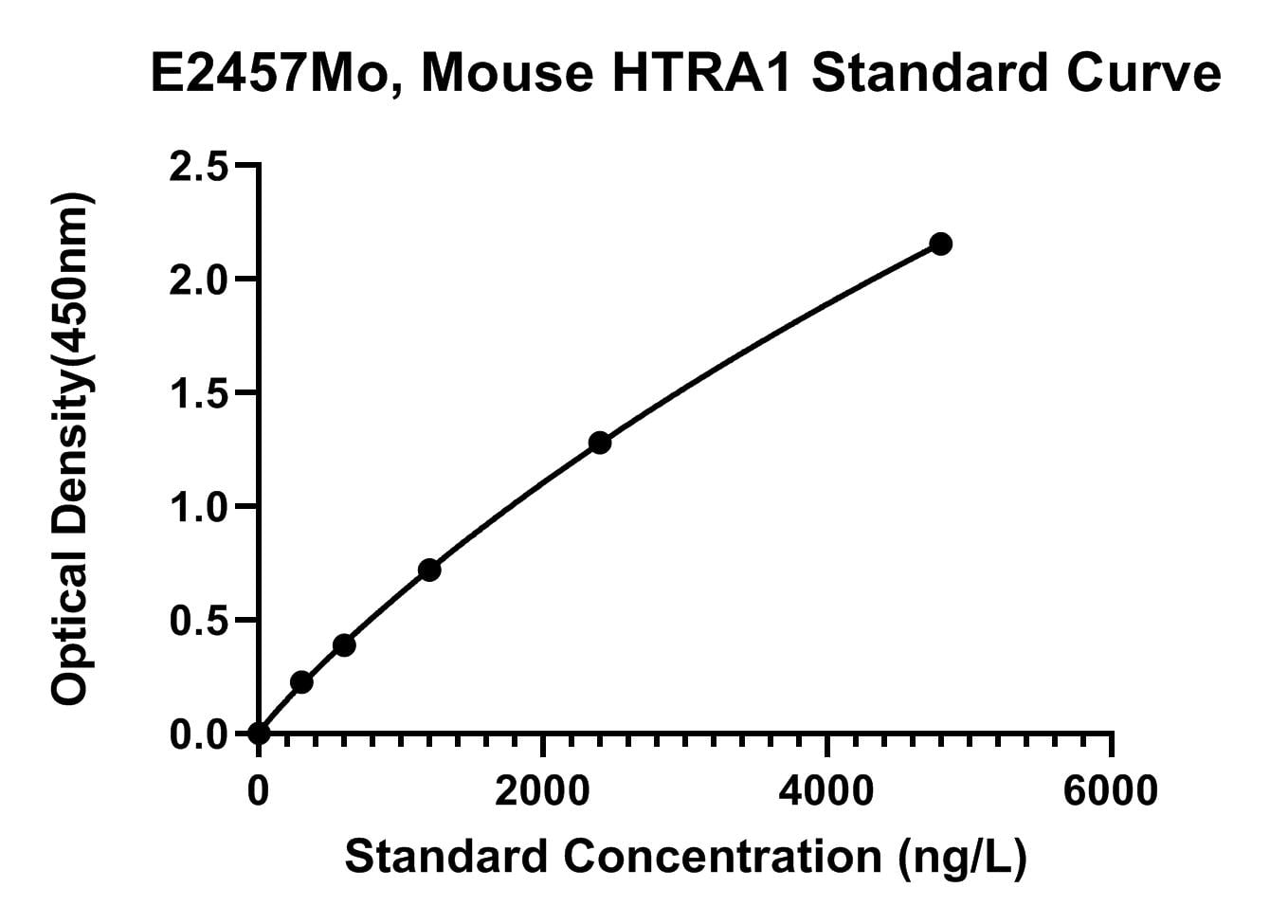
E2457Mo
Regular price
$595.00 USD
Regular price
$458.00 USD
Sale price
$595.00 USD
Unit price
/
per
2.5 weeks
Couldn't load pickup availability
Product Details
Species Reactivity
Mouse
Sensitivity
14.75 ng/L
Detection Range
30-9000 ng/L
Sample Type
Serum, plasma, cell culture supernates
Incubation(s)
1.5 hour(s)
Research Areas
Enzyme & Kinase
Background
Serine protease with a variety of targets, including extracellular matrix proteins such as fibronectin. HTRA1-generated fibronectin fragments further induce synovial cells to up-regulate MMP1 and MMP3 production. May also degrade proteoglycans, such as aggrecan, decorin and fibromodulin. Through cleavage of proteoglycans, may release soluble FGF-glycosaminoglycan complexes that promote the range and intensity of FGF signals in the extracellular space. Regulates the availability of insulin-like growth factors (IGFs) by cleaving IGF-binding proteins. Inhibits signaling mediated by TGF-beta family members. This activity requires the integrity of the catalytic site, but it is unclear whether it leads to the proteolytic degradation of TGF-beta proteins themselves (PubMed:18551132) or not (PubMed:14973287).
By acting on TGF-beta signaling, may regulate many physiological processes, including retinal angiogenesis and neuronal survival and maturation during development. Intracellularly, degrades TSC2, leading to the activation of TSC2 downstream targets. Source: UniProt Consortium (2025)
Shipping Condition
Shipped on cold gel packs.
Storage Condition and Shelf Life
2-8C
Analyte
Serine protease HTRA1
Regulatory Status
For Research Use Only