1
/
of
1
Mouse LIPE (Hormone-sensitive Lipase) ELISA Kit
Mouse LIPE (Hormone-sensitive Lipase) ELISA Kit
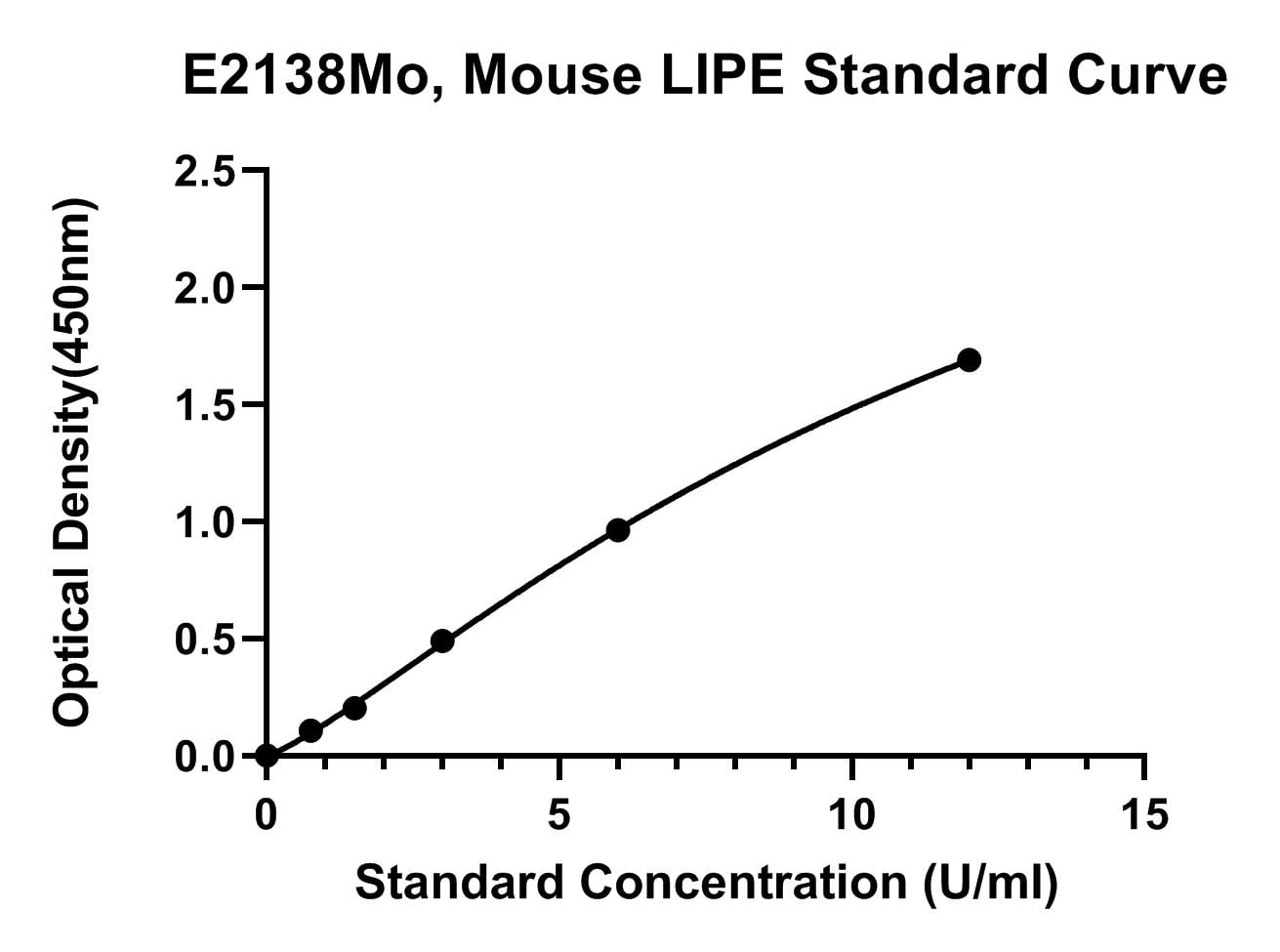
The Mouse (LIPE) Hormone-sensitive Lipase ELISA Kit measures Hormone-Sensitive Lipase in Mouse samples. The plate has been pre-coated with Mouse LIPE antibody. LIPE present in the sample is added and binds to antibodies coated on the wells. And then biotinylated Mouse LIPE Antibody is added and binds to LIPE in the sample. Then Streptavidin-HRP is added and binds to the Biotinylated LIPE antibody. After incubation unbound Streptavidin-HRP is washed away during a washing step. Substrate solution is then added and color develops in proportion to the amount of Mouse LIPE. The reaction is terminated by addition of acidic stop solution and absorbance is measured at 450 nm.
Catalog No:
E2138Mo
Regular price
$595.00 USD
Regular price
$458.00 USD
Sale price
$595.00 USD
Unit price
/
per
2.5 weeks
Couldn't load pickup availability
Product Details
Species Reactivity
Mouse
Sensitivity
0.024 U/mL
Detection Range
0.05-20 U/mL
Sample Type
Serum, plasma, cell culture supernates
Incubation(s)
1.5 hour(s)
Research Areas
Metabolism
Background
Lipase with broad substrate specificity, catalyzing the hydrolysis of triacylglycerols (TAGs), diacylglycerols (DAGs), monoacylglycerols (MAGs), cholesteryl esters and retinyl esters (PubMed: 15550674, PubMed: 20625037, PubMed: 21454566, PubMed: 23066022, PubMed: 23291629). Shows a preferential hydrolysis of DAGs over TAGs and MAGs and of the fatty acid (FA) esters at the sn-1 and sn-2 positions of the glycerol backbone in TAGs (By similarity). Preferentially hydrolyzes FA esters at the sn-3 position of the glycerol backbone in DAGs (PubMed: 23066022). Catalyzes the hydrolysis of 2-arachidonoylglycerol, an endocannabinoid and of 2-acetyl monoalkylglycerol ether, the penultimate precursor of the pathway for de novo synthesis of platelet-activating factor (PubMed: 20625037, PubMed: 21454566). In adipose tissue and heart, it primarily hydrolyzes stored triglycerides to free fatty acids, while in steroidogenic tissues, it principally converts cholesteryl esters to free cholesterol for steroid hormone production (By similarity). Source: UniProt Consortium (2025)
Shipping Condition
Shipped on cold gel packs.
Storage Condition and Shelf Life
2-8C
Analyte
Hormone-Sensitive Lipase
Regulatory Status
For Research Use Only