1
/
of
1
Mouse PL-A2 (Phospholipidase A2) ELISA Kit
Mouse PL-A2 (Phospholipidase A2) ELISA Kit
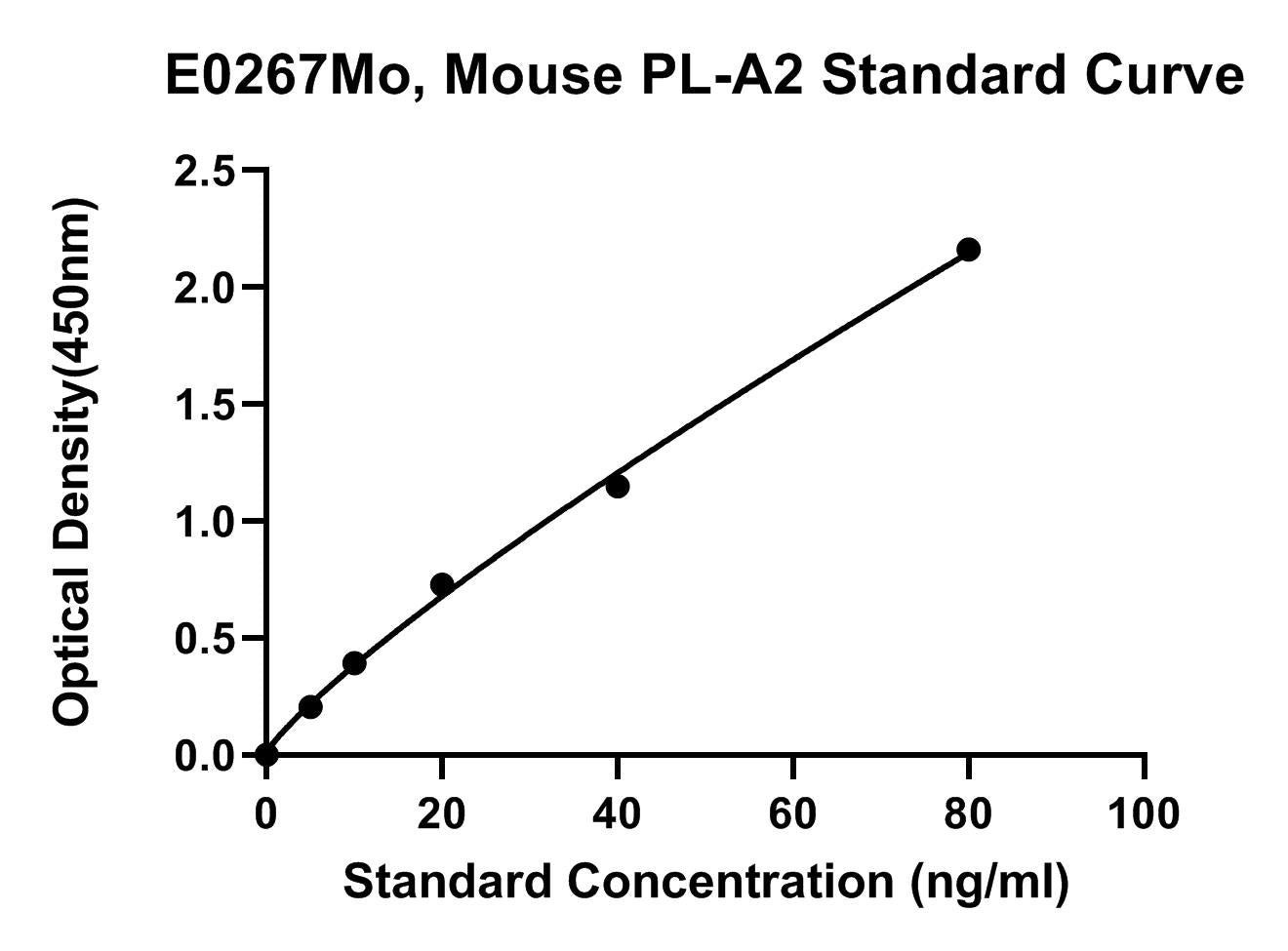
The Mouse (PL-A2) Phospholipidase A2 ELISA Kit measures Phospholipidase A2 in Mouse samples. The plate has been pre-coated with Mouse PLA2G1B antibody. PLA2G1B present in the sample is added and binds to antibodies coated on the wells. And then biotinylated Mouse PLA2G1B Antibody is added and binds to PLA2G1B in the sample. Then Streptavidin-HRP is added and binds to the Biotinylated PLA2G1B antibody. After incubation unbound Streptavidin-HRP is washed away during a washing step. Substrate solution is then added and color develops in proportion to the amount of Mouse PLA2G1B. The reaction is terminated by addition of acidic stop solution and absorbance is measured at 450 nm.
Catalog No:
E0267Mo
Regular price
$595.00 USD
Regular price
$458.00 USD
Sale price
$595.00 USD
Unit price
/
per
2.5 weeks
Couldn't load pickup availability
Product Details
Species Reactivity
Mouse
Sensitivity
0.223 ng/mL
Detection Range
0.5-150 ng/mL
Sample Type
Serum, plasma, cell culture supernates
Incubation(s)
1.5 hour(s)
Research Areas
Lipid and Metabolism, Metabolism
Background
Secretory calcium-dependent phospholipase A2 that primarily targets dietary phospholipids in the intestinal tract (By similarity). Hydrolyzes the ester bond of the fatty acyl group attached at sn-2 position of phospholipids (phospholipase A2 activity) with preference for phosphatidylethanolamines and phosphatidylglycerols over phosphatidylcholines (By similarity). May play a role in the biosynthesis of N-acyl ethanolamines that regulate energy metabolism and inflammation in the intestinal tract. Hydrolyzes N-acyl phosphatidylethanolamines to N-acyl lysophosphatidylethanolamines, which are further cleaved by a lysophospholipase D to release N-acyl ethanolamines (By similarity). May act in an autocrine and paracrine manner (PubMed: 10066760). Upon binding to the PLA2R1 receptor can regulate podocyte survival and glomerular homeostasis (By similarity). Has anti-helminth activity in a process regulated by gut microbiota (PubMed: 29024642). Upon helminth infection of intestinal epithelia, directly affects phosphatidylethanolamine contents in the membrane of helminth larvae, likely controlling an array of phospholipid-mediated cellular processes such as membrane fusion and cell division while providing for better immune recognition, ultimately reducing larvae integrity and infectivity (PubMed: 29024642). Source: UniProt Consortium (2025)
Shipping Condition
Shipped on cold gel packs.
Storage Condition and Shelf Life
2-8C
Analyte
Phospholipidase A2
Regulatory Status
For Research Use Only