1
/
of
1
Mouse RHOA (Transforming Protein Rhoa) ELISA Kit
Mouse RHOA (Transforming Protein Rhoa) ELISA Kit
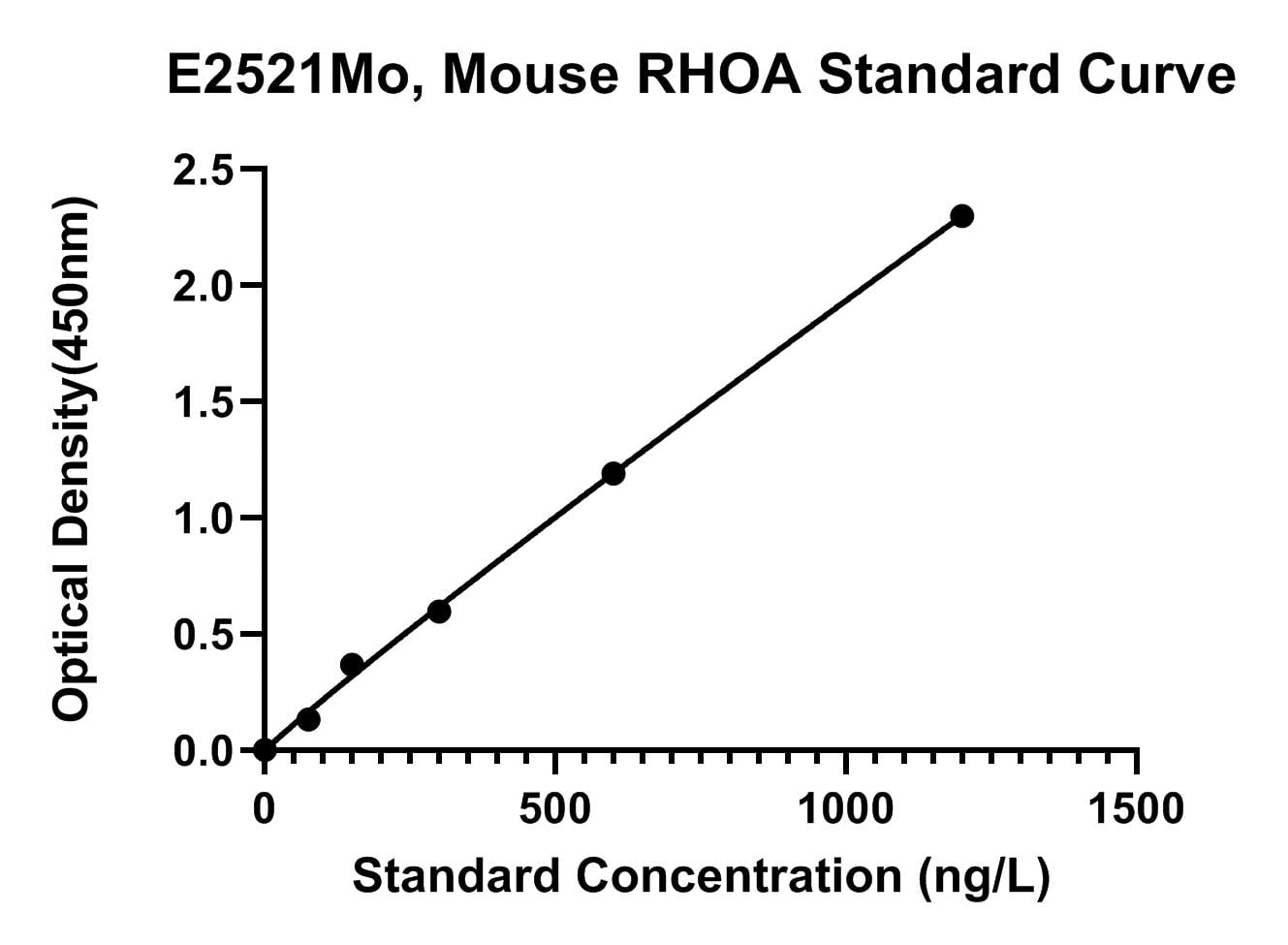
The Mouse (RHOA) Transforming Protein Rhoa ELISA Kit measures Transforming protein RhoA in Mouse samples. The plate has been pre-coated with Mouse RHOA antibody. RHOA present in the sample is added and binds to antibodies coated on the wells. And then biotinylated Mouse RHOA Antibody is added and binds to RHOA in the sample. Then Streptavidin-HRP is added and binds to the Biotinylated RHOA antibody. After incubation unbound Streptavidin-HRP is washed away during a washing step. Substrate solution is then added and color develops in proportion to the amount of Mouse RHOA. The reaction is terminated by addition of acidic stop solution and absorbance is measured at 450 nm.
Catalog No:
E2521Mo
Regular price
$595.00 USD
Regular price
$458.00 USD
Sale price
$595.00 USD
Unit price
/
per
2.5 weeks
Couldn't load pickup availability
Product Details
Species Reactivity
Mouse
Sensitivity
5.23 ng/L
Detection Range
10-2000 ng/L
Sample Type
Serum, plasma, cell culture supernates
Incubation(s)
1.5 hour(s)
Research Areas
Signal Transduction
Background
Small GTPase which cycles between an active GTP-bound and an inactive GDP-bound state (PubMed:14697203).
Mainly associated with cytoskeleton organization, in active state binds to a variety of effector proteins to regulate cellular responses such as cytoskeletal dynamics, cell migration and cell cycle. Regulates a signal transduction pathway linking plasma membrane receptors to the assembly of focal adhesions and actin stress fibers. Involved in a microtubule-dependent signal that is required for the myosin contractile ring formation during cell cycle cytokinesis (By similarity).
Plays an essential role in cleavage furrow formation. Required for the apical junction formation of keratinocyte cell-cell adhesion (PubMed:11777936, PubMed:20974804).
Essential for the SPATA13-mediated regulation of cell migration and adhesion assembly and disassembly. The MEMO1-RHOA-DIAPH1 signaling pathway plays an important role in ERBB2-dependent stabilization of microtubules at the cell cortex. It controls the localization of APC and CLASP2 to the cell membrane, via the regulation of GSK3B activity. In turn, membrane-bound APC allows the localization of the MACF1 to the cell membrane, which is required for microtubule capture and stabilization (By similarity).
Regulates KCNA2 potassium channel activity by reducing its location at the cell surface in response to CHRM1 activation; promotes KCNA2 endocytosis. Acts as an allosteric activator of guanine nucleotide exchange factor ECT2 by binding in its activated GTP-bound form to the PH domain of ECT2 which stimulates the release of PH inhibition and promotes the binding of substrate RHOA to the ECT2 catalytic center (By similarity).
May be an activator of PLCE1 (PubMed:9635436).
In neurons, involved in the inhibiton of the initial spine growth. Upon activation by CaMKII, modulates dendritic spine structural plasticity by relaying CaMKII transient activation to synapse-specific, long-term signaling (By similarity).
Acts as a regulator of platelet alpha-granule release during activation and aggregation of platelets (PubMed:14697203). Source: UniProt Consortium (2025)
Shipping Condition
Shipped on cold gel packs.
Storage Condition and Shelf Life
2-8C
Analyte
Transforming protein RhoA
Regulatory Status
For Research Use Only