1
/
of
1
Mouse TGFBR2 (TGF-beta Receptor Type-2) ELISA Kit
Mouse TGFBR2 (TGF-beta Receptor Type-2) ELISA Kit
The Mouse (TGFBR2) TGF-beta Receptor Type-2 ELISA Kit measures TGF-beta receptor type-2 in Mouse samples. The plate has been pre-coated with Mouse TGFBR2 antibody. TGFBR2 present in the sample is added and binds to antibodies coated on the wells. And then biotinylated Mouse TGFBR2 Antibody is added and binds to TGFBR2 in the sample. Then Streptavidin-HRP is added and binds to the Biotinylated TGFBR2 antibody. After incubation unbound Streptavidin-HRP is washed away during a washing step. Substrate solution is then added and color develops in proportion to the amount of Mouse TGFBR2. The reaction is terminated by addition of acidic stop solution and absorbance is measured at 450 nm.
Catalog No:
E2510Mo
Regular price
$595.00 USD
Regular price
$458.00 USD
Sale price
$595.00 USD
Unit price
/
per
2.5 weeks
Couldn't load pickup availability
Product Details
Species Reactivity
Mouse
Sensitivity
14.66 ng/L
Detection Range
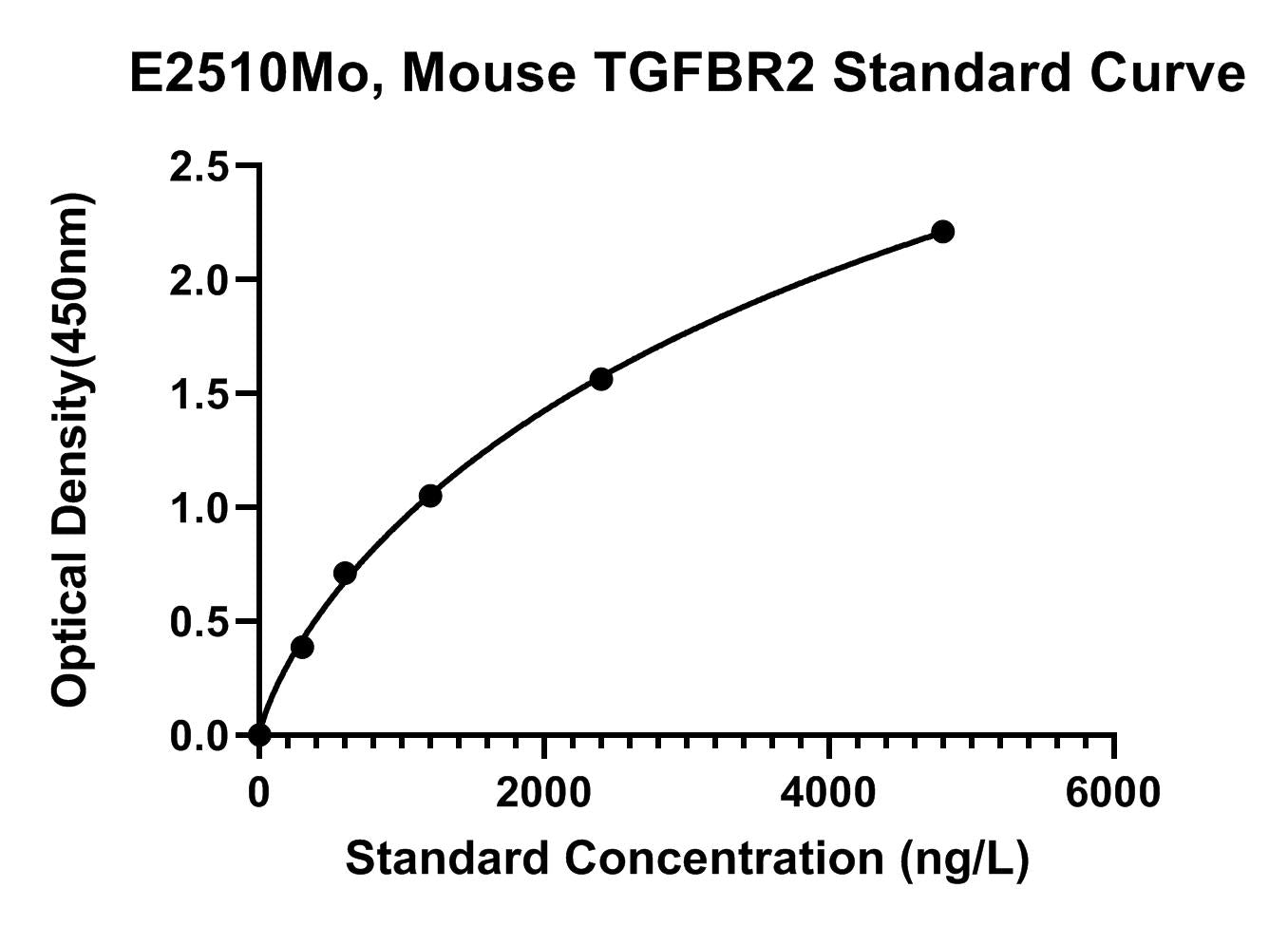
30-9000 ng/L
Sample Type
Serum, plasma, cell culture supernates
Incubation(s)
1.5 hour(s)
Research Areas
Signal Transduction, Cell Biology, Cancer, Developmental Biology
Background
Transmembrane serine/threonine kinase forming with the TGF-beta type I serine/threonine kinase receptor, TGFBR1, the non-promiscuous receptor for the TGF-beta cytokines TGFB1, TGFB2 and TGFB3. Transduces the TGFB1, TGFB2 and TGFB3 signal from the cell surface to the cytoplasm and is thus regulating a plethora of physiological and pathological processes including cell cycle arrest in epithelial and hematopoietic cells, control of mesenchymal cell proliferation and differentiation, wound healing, extracellular matrix production, immunosuppression and carcinogenesis. The formation of the receptor complex composed of 2 TGFBR1 and 2 TGFBR2 molecules symmetrically bound to the cytokine dimer results in the phosphorylation and the activation of TGFRB1 by the constitutively active TGFBR2. Activated TGFBR1 phosphorylates SMAD2 which dissociates from the receptor and interacts with SMAD4. The SMAD2-SMAD4 complex is subsequently translocated to the nucleus where it modulates the transcription of the TGF-beta-regulated genes. This constitutes the canonical SMAD-dependent TGF-beta signaling cascade. Also involved in non-canonical, SMAD-independent TGF-beta signaling pathways (By similarity). Source: UniProt Consortium (2025)
Shipping Condition
Shipped on cold gel packs.
Storage Condition and Shelf Life
2-8C
Analyte
TGF-beta receptor type-2
Regulatory Status
For Research Use Only