1
/
of
1
Mouse UGCG (Ceramide Glucosyltransferase) ELISA Kit
Mouse UGCG (Ceramide Glucosyltransferase) ELISA Kit
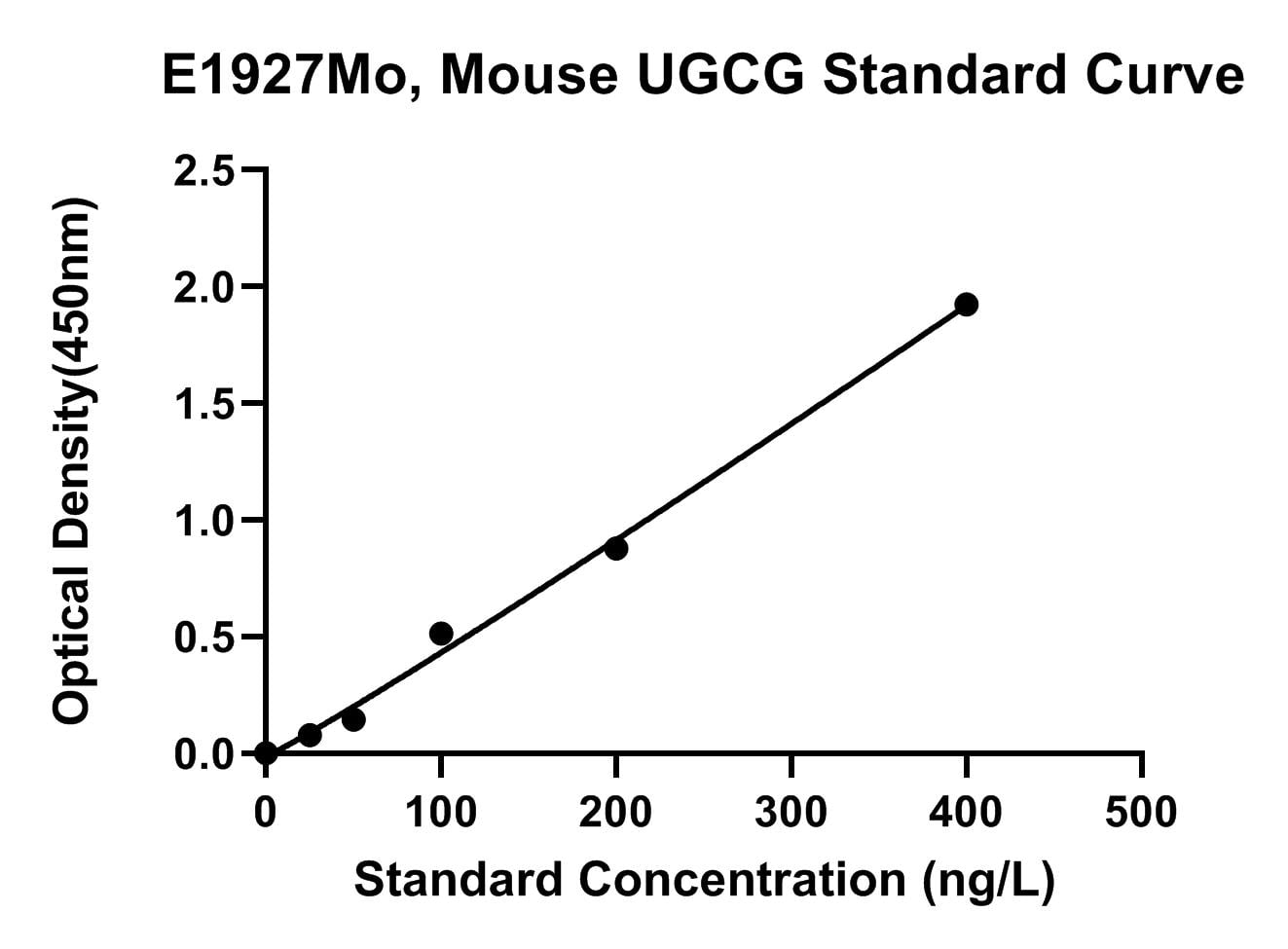
The Mouse (UGCG) Ceramide Glucosyltransferase ELISA Kit measures Ceramide glucosyltransferase in Mouse samples. The plate has been pre-coated with Mouse UGCG antibody. UGCG present in the sample is added and binds to antibodies coated on the wells. And then biotinylated Mouse UGCG Antibody is added and binds to UGCG in the sample. Then Streptavidin-HRP is added and binds to the Biotinylated UGCG antibody. After incubation unbound Streptavidin-HRP is washed away during a washing step. Substrate solution is then added and color develops in proportion to the amount of Mouse UGCG. The reaction is terminated by addition of acidic stop solution and absorbance is measured at 450 nm.
Catalog No:
E1927Mo
Regular price
$595.00 USD
Regular price
$458.00 USD
Sale price
$595.00 USD
Unit price
/
per
2.5 weeks
Couldn't load pickup availability
Product Details
Species Reactivity
Mouse
Sensitivity
0.96 ng/L
Detection Range
2-700 ng/L
Sample Type
Serum, plasma, cell culture supernates
Incubation(s)
1.5 hour(s)
Background
Catalyzes at the cytosolic surface of the Golgi, the initial step of the glucosylceramide-based glycosphingolipid/GSL synthetic pathway, the transfer of glucose from UDP-glucose to ceramide to produce glucosylceramide/GlcCer (PubMed:10430909, PubMed:16109770, PubMed:28373486).
Glucosylceramide is the core component of glycosphingolipids/GSLs, amphipathic molecules consisting of a ceramide lipid moiety embedded in the outer leaflet of the membrane, linked to one of hundreds of different externally oriented oligosaccharide structures (PubMed:10430909).
Glycosphingolipids are essential components of membrane microdomains that mediate membrane trafficking and signal transduction (PubMed:10430909).
They are implicated in many fundamental cellular processes, including growth, differentiation, migration, morphogenesis, cell-to-cell and cell-to-matrix interactions (PubMed:10430909).
They are required for instance in the proper development and functioning of the nervous system (PubMed:16109770).
As an example of their role in signal transduction, they regulate the leptin receptor/LEPR in the leptin-mediated signaling pathway (PubMed:23554574).
They also play an important role in the establishment of the skin barrier regulating keratinocyte differentiation and the proper assembly of the cornified envelope (PubMed:17145749, PubMed:23748427).
The biosynthesis of GSLs is also required for the proper intestinal endocytic uptake of nutritional lipids (PubMed:22851168). Source: UniProt Consortium (2025)
Shipping Condition
Shipped on cold gel packs.
Storage Condition and Shelf Life
2-8C
Analyte
Ceramide glucosyltransferase
Regulatory Status
For Research Use Only