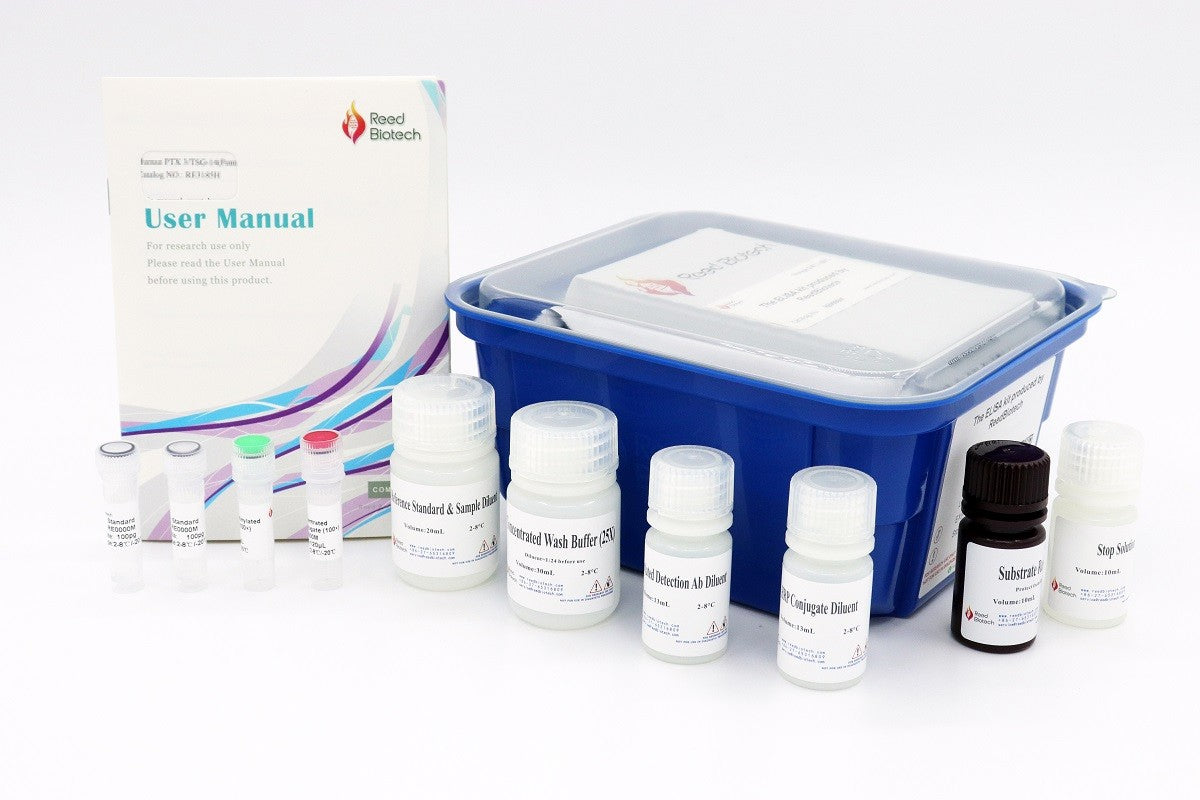
Plant JA (Jasmonic Acid) ELISA Kit
Plant JA (Jasmonic Acid) ELISA Kit
For the quantitative determination of endogenic Plant JA (Jasmonic Acid) concentrations in plant tissues.
Couldn't load pickup availability
Product Details
Key Functions:
1. Defense Response: JA is primarily involved in plant defense mechanisms against herbivores and pathogens. When a plant is damaged (e.g., by insect feeding), JA levels increase locally at the wound site. This triggers the activation of defense genes, including those that produce toxic compounds like protease inhibitors (which deter herbivores) and phytoalexins (antimicrobial compounds). JA signaling also interacts with other plant hormones, including salicylic acid (SA) and ethylene (ET), to fine-tune immune responses.
2. Wound and Stress Responses: JA plays an important role in mediating responses to mechanical damage or stress, such as wounding, drought, or salinity. The hormone helps the plant mount a defense response and adapt to the stress, often by activating protective genes and metabolic pathways that promote survival.
3. Growth and Development: Besides its role in defense, JA also regulates various aspects of plant growth and development, such as flowering, fruit ripening, seed germination, and root growth. In some cases, JA can inhibit growth processes, especially under stressful conditions, but it can also promote processes like lateral root formation and reproductive development.
4. Interaction with Other Hormones: JA interacts with other hormones like abscisic acid (ABA) and auxins to mediate complex responses to stress and development. For instance, JA signaling often cooperates with ABA in regulating drought tolerance.
5. Systemic Response and Signaling: The production of JA in response to local damage or stress is often followed by systemic signaling, meaning that JA not only regulates the site of injury but also activates defense responses in other parts of the plant. This is similar to the role of salicylic acid (SA) in systemic acquired resistance (SAR).
Biosynthesis:
Jasmonic acid is synthesized in plants from linolenic acid, a fatty acid present in the cell membrane. This synthesis is catalyzed by enzymes in the lipoxygenase pathway, which leads to the production of jasmonic acid and its derivatives. The production of JA can be triggered by mechanical damage, herbivory, or pathogen infection. (Description enhanced by AI using Wikipedia and other resources as references)