1
/
of
1
Rat APP (Amyloid Beta A4 Protein) ELISA Kit
Rat APP (Amyloid Beta A4 Protein) ELISA Kit
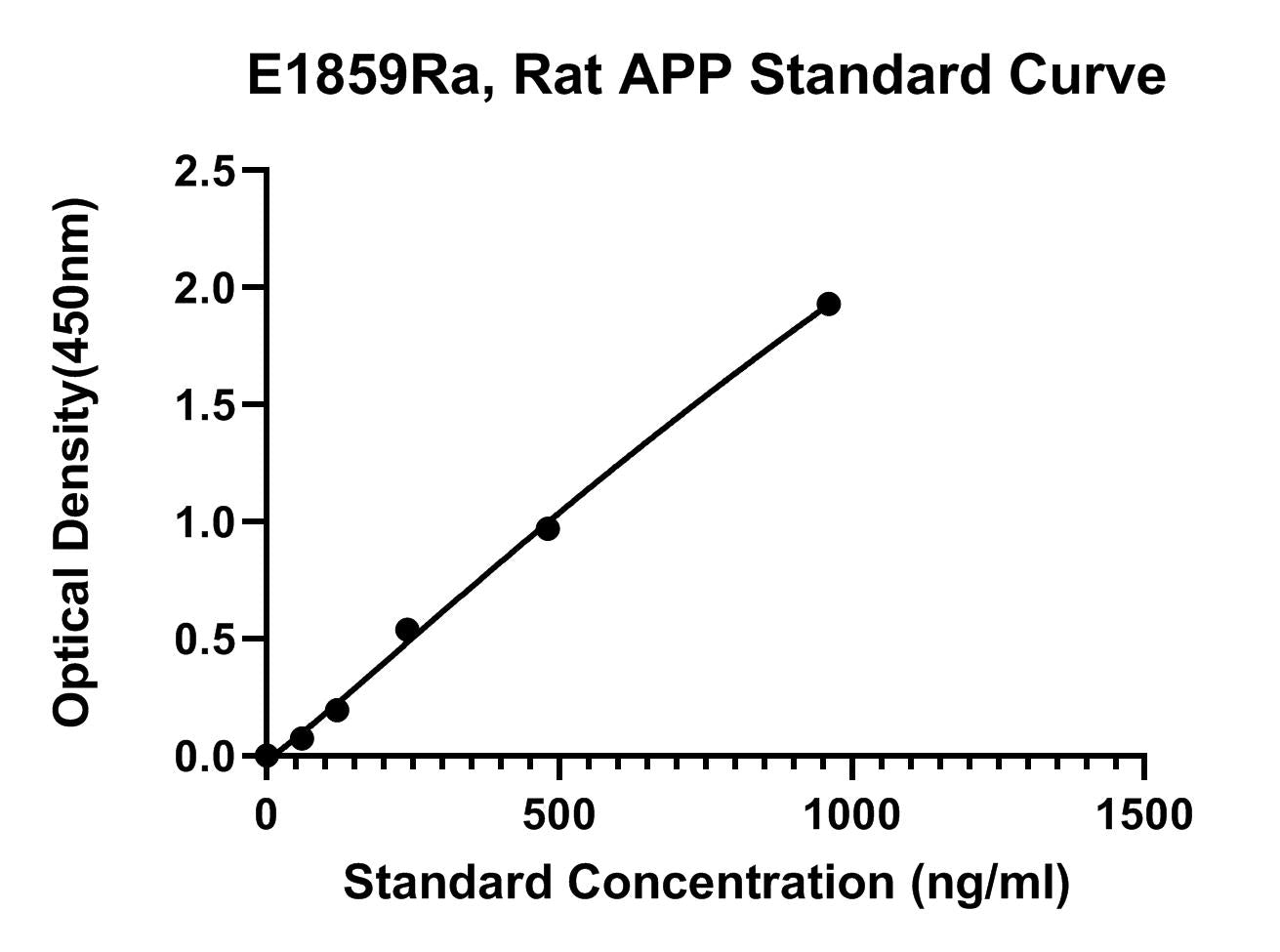
The Rat (APP) Amyloid Beta A4 Protein ELISA Kit measures Amyloid Beta A4 Protein in Rat samples. The plate has been pre-coated with Rat APP antibody. APP present in the sample is added and binds to antibodies coated on the wells. And then biotinylated Rat APP Antibody is added and binds to APP in the sample. Then Streptavidin-HRP is added and binds to the Biotinylated APP antibody. After incubation unbound Streptavidin- HRP is washed away during a washing step. Substrate solution is then added and color develops in proportion to the amount of Rat APP. The reaction is terminated by addition of acidic stop solution and absorbance is measured at 450 nm.
Catalog No:
E1859Ra
Regular price
$595.00 USD
Regular price
$458.00 USD
Sale price
$595.00 USD
Unit price
/
per
2.5 weeks
Couldn't load pickup availability
Product Details
Species Reactivity
Rat
Sensitivity
3.34 ng/mL
Detection Range
6-1800 ng/mL
Sample Type
Serum, plasma, cell culture supernates
Incubation(s)
1.5 hour(s)
Research Areas
Neuroscience
Background
Functions as a cell surface receptor and performs physiological functions on the surface of neurons relevant to neurite growth, neuronal adhesion and axonogenesis. Interaction between APP molecules on neighboring cells promotes synaptogenesis. Involved in cell mobility and transcription regulation through protein-protein interactions (By similarity). Can promote transcription activation through binding to APBB1-KAT5 and inhibit Notch signaling through interaction with Numb (By similarity). Couples to apoptosis-inducing pathways such as those mediated by G(O) and JIP. Inhibits G(o) alpha ATPase activity. Acts as a kinesin I membrane receptor, mediating the axonal transport of beta-secretase and presenilin 1 (By similarity). By acting as a kinesin I membrane receptor, plays a role in axonal anterograde transport of cargo towards synapes in axons (By similarity). May be involved in copper homeostasis/oxidative stress through copper ion reduction. Can regulate neurite outgrowth through binding to components of the extracellular matrix such as heparin and collagen I and IV (By similarity). The splice isoforms that contain the BPTI domain possess protease inhibitor activity. Induces a AGER-dependent pathway that involves activation of p38 MAPK, resulting in internalization of amyloid-beta Peptide and leading to mitochondrial dysfunction in cultured mitochondrial dysfunction in cultured cortical neurons. Provides Cu(2+) ions for GPC1 which are required for release of nitric oxide (NO) and subsequent degradation of the heparan sulfate chains on GPC1 (By similarity). Amyloid-beta Peptides are lipophilic metal chelators with metal-reducing activity. Binds transient metals such as copper, zinc and iron. Rat and mouse amyloid-beta Peptides bind only weakly transient metals and have little reducing activity due to substitutions of transient metal chelating residues. Amyloid-beta protein 42 may activate mononuclear phagocytes in the brain and elicits inflammatory responses. Promotes both tau aggregation and TPK II-mediated phosphorylation. Also binds GPC1 in lipid rafts (By similarity). Appicans elicit adhesion of neural cells to the extracellular matrix and may regulate neurite outgrowth in the brain. The gamma-CTF Peptides as well as the caspase-cleaved Peptides, including C31, are potent enhancers of neuronal apoptosis. N-APP binds TNFRSF21 triggering caspase activation and degeneration of both neuronal cell bodies (via caspase-3) and axons (via caspase-6). Source: UniProt Consortium (2025)
Shipping Condition
Shipped on cold gel packs.
Storage Condition and Shelf Life
2-8C
Analyte
Amyloid Beta A4 Protein
Regulatory Status
For Research Use Only