1
/
of
1
Rat ATP5C1 (Atp Synthase Subunit Gamma, Mitochondrial) ELISA Kit
Rat ATP5C1 (Atp Synthase Subunit Gamma, Mitochondrial) ELISA Kit
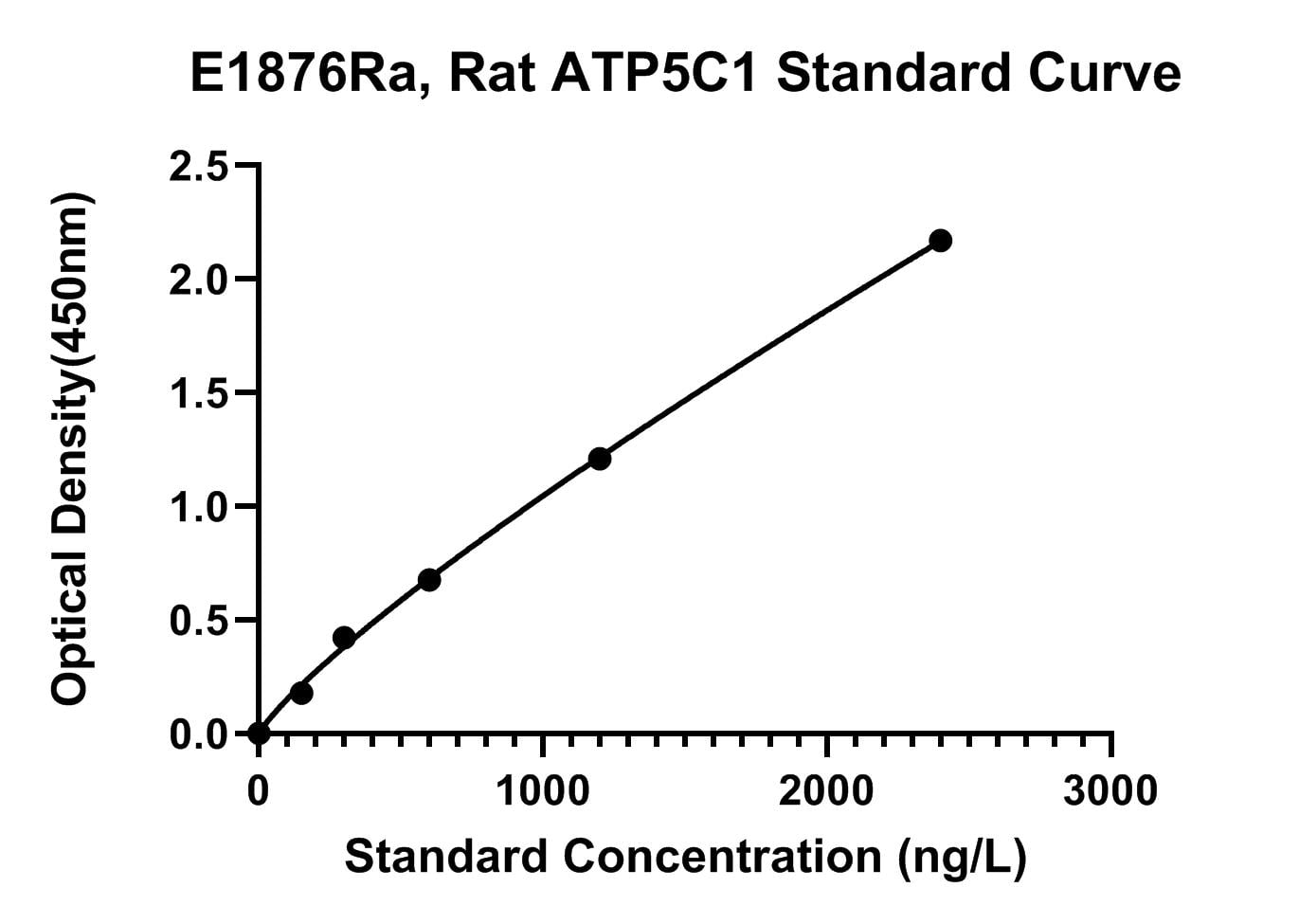
The Rat (ATP5C1) Atp Synthase Subunit Gamma, Mitochondrial ELISA Kit measures ATP Synthase subunit gamma, mitochondrial in Rat samples. The plate has been pre-coated with Rat ATP5C1 antibody. ATP5C1 present in the sample is added and binds to antibodies coated on the wells. And then biotinylated Rat ATP5C1 Antibody is added and binds to ATP5C1 in the sample. Then Streptavidin-HRP is added and binds to the Biotinylated ATP5C1 antibody. After incubation unbound Streptavidin-HRP is washed away during a washing step. Substrate solution is then added and color develops in proportion to the amount of Rat ATP5C1. The reaction is terminated by addition of acidic stop solution and absorbance is measured at 450 nm.
Catalog No:
E1876Ra
Regular price
$595.00 USD
Regular price
$458.00 USD
Sale price
$595.00 USD
Unit price
/
per
2.5 weeks
Couldn't load pickup availability
Product Details
Species Reactivity
Rat
Sensitivity
9.14 ng/L
Detection Range
20-4500 ng/L
Sample Type
Serum, plasma, cell culture supernates
Incubation(s)
1.5 hour(s)
Research Areas
Tags and Cell Markers
Background
Mitochondrial membrane ATP synthase (F1F0 ATP synthase or Complex V) produces ATP from ADP in the presence of a proton gradient across the membrane which is generated by electron transport complexes of the respiratory chain. F-type ATPases consist of two structural domains, F1 - containing the extramembraneous catalytic core, and F0 - containing the membrane proton channel, linked together by a central stalk and a peripheral stalk. During catalysis, ATP synthesis in the catalytic domain of F1 is coupled via a rotary mechanism of the central stalk subunits to proton translocation. Part of the complex F1 domain and the central stalk which is part of the complex rotary element. The gamma subunit protrudes into the catalytic domain formed of alpha3beta3. Rotation of the central stalk against the surrounding alpha3beta3 subunits leads to hydrolysis of ATP in three separate catalytic sites on the beta subunits. Source: UniProt Consortium (2025)
Shipping Condition
Shipped on cold gel packs.
Storage Condition and Shelf Life
2-8C
Analyte
ATP Synthase subunit gamma, mitochondrial
Regulatory Status
For Research Use Only