1
/
of
1
Rat CD71 (Transferrin Receptor Protein 1) ELISA Kit
Rat CD71 (Transferrin Receptor Protein 1) ELISA Kit
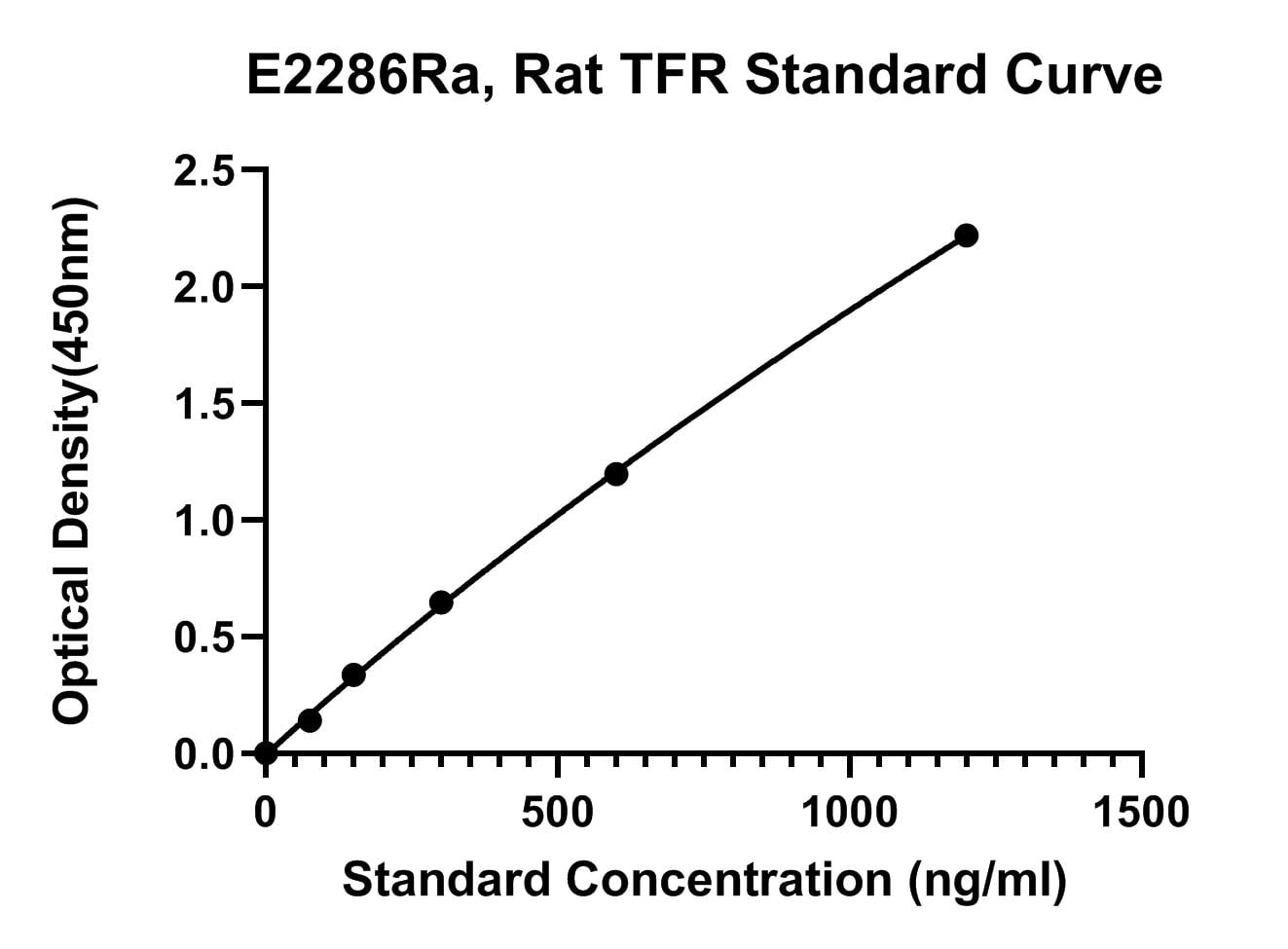
The Rat (CD71) Transferrin Receptor Protein 1 ELISA Kit measures Transferrin receptor protein 1/CD antigen CD71 in Rat samples. The plate has been pre-coated with Rat TFR antibody. TFR present in the sample is added and binds to antibodies coated on the wells. And then biotinylated Rat TFR Antibody is added and binds to TFR in the sample. Then Streptavidin-HRP is added and binds to the Biotinylated TFR antibody. After incubation unbound Streptavidin- HRP is washed away during a washing step. Substrate solution is then added and color develops in proportion to the amount of Rat TFR. The reaction is terminated by addition of acidic stop solution and absorbance is measured at 450 nm.
Catalog No:
E2286Ra
Regular price
$595.00 USD
Regular price
$458.00 USD
Sale price
$595.00 USD
Unit price
/
per
2.5 weeks
Couldn't load pickup availability
Product Details
Species Reactivity
Rat
Sensitivity
5.08 ng/mL
Detection Range
10-2000 ng/mL
Sample Type
Serum, plasma, cell culture supernates
Incubation(s)
1.5 hour(s)
Research Areas
Cardiovascular, Immunology, CD & Adhesion molecule
Background
Cellular uptake of iron occurs via receptor-mediated endocytosis of ligand-occupied transferrin receptor into specialized endosomes (By similarity).
Endosomal acidification leads to iron release. The apotransferrin-receptor complex is then recycled to the cell surface with a return to neutral pH and the concomitant loss of affinity of apotransferrin for its receptor. Transferrin receptor is necessary for development of erythrocytes and the nervous system (By similarity).
Positively regulates T and B cell proliferation through iron uptake (By similarity).
Acts as a lipid sensor that regulates mitochondrial fusion by regulating activation of the JNK pathway (By similarity).
When dietary levels of stearate (C18:0) are low, promotes activation of the JNK pathway, resulting in HUWE1-mediated ubiquitination and subsequent degradation of the mitofusin MFN2 and inhibition of mitochondrial fusion (By similarity).
When dietary levels of stearate (C18:0) are high, TFRC stearoylation inhibits activation of the JNK pathway and thus degradation of the mitofusin MFN2 (By similarity). Source: UniProt Consortium (2025)
Shipping Condition
Shipped on cold gel packs.
Storage Condition and Shelf Life
2-8C
Analyte
Transferrin receptor protein 1/CD antigen CD71
Regulatory Status
For Research Use Only