1
/
of
1
Rat CSRP3 (Cysteine and Glycine-rich Protein 3) ELISA Kit
Rat CSRP3 (Cysteine and Glycine-rich Protein 3) ELISA Kit
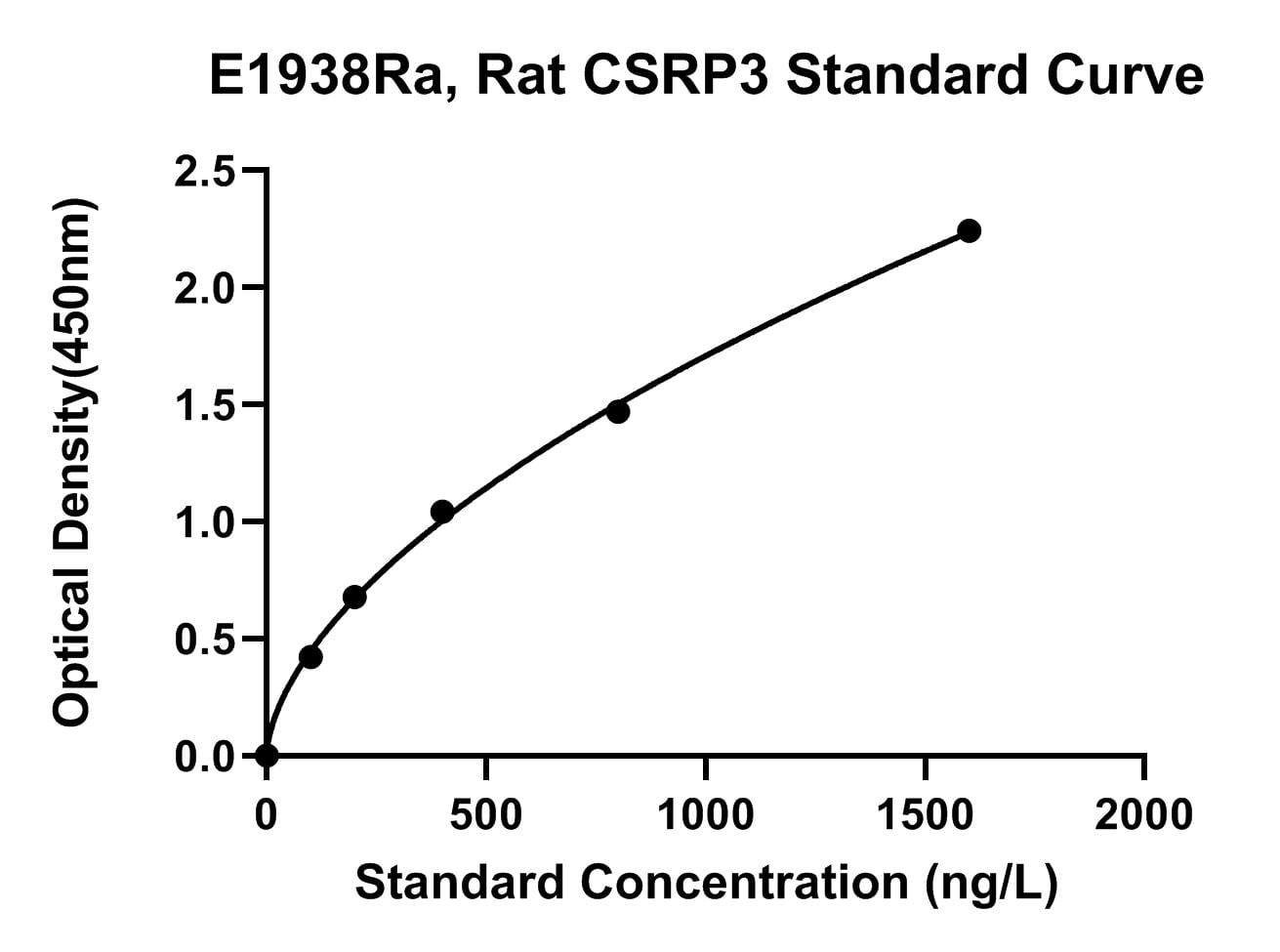
The Rat (CSRP3) Cysteine and Glycine-rich Protein 3 ELISA Kit measures Cysteine and Glycine-Rich Protein 3 in Rat samples. The plate has been pre-coated with Rat CSRP3 antibody. CSRP3 present in the sample is added and binds to antibodies coated on the wells. And then biotinylated Rat CSRP3 Antibody is added and binds to CSRP3 in the sample. Then Streptavidin-HRP is added and binds to the Biotinylated CSRP3 antibody. After incubation unbound Streptavidin-HRP is washed away during a washing step. Substrate solution is then added and color develops in proportion to the amount of Rat CSRP3. The reaction is terminated by addition of acidic stop solution and absorbance is measured at 450 nm.
Catalog No:
E1938Ra
Regular price
$595.00 USD
Regular price
$458.00 USD
Sale price
$595.00 USD
Unit price
/
per
2.5 weeks
Couldn't load pickup availability
Product Details
Species Reactivity
Rat
Sensitivity
7.33 ng/L
Detection Range
15-3000 ng/L
Sample Type
Serum, plasma, cell culture supernates
Incubation(s)
1.5 hour(s)
Research Areas
Epigenetics and Nuclear Signaling, Cardiovascular
Background
Positive regulator of myogenesis. Acts as cofactor for myogenic bHLH transcription factors such as MYOD1, and probably MYOG and MYF6. Enhances the DNA-binding activity of the MYOD1:TCF3 isoform E47 complex and may promote formation of a functional MYOD1:TCF3 isoform E47:MEF2A complex involved in myogenesis (PubMed: 7954791, PubMed: 9234731). Plays a crucial and specific role in the organization of cytosolic structures in cardiomyocytes. Could play a role in mechanical stretch sensing. May be a scaffold protein that promotes the assembly of interacting proteins at Z-line structures. It is essential for calcineurin anchorage to the Z line. Required for stress-induced calcineurin-NFAT activation. The role in regulation of cytoskeleton dynamics by association with CFL2 is reported conflictingly. Proposed to contribute to the maintenance of muscle cell integerity through an actin-based mechanism. Can directly bind to actin filaments, cross-link actin filaments into bundles without polarity selectivity and protect them from dilution- and cofilin-mediated depolymerization; the function seems to involve its self-association. In vitro can inhibit PKC/PRKCA activity. Proposed to be involved in cardiac stress signaling by down-regulating excessive PKC/PRKCA signaling (By similarity). Source: UniProt Consortium (2025)
Shipping Condition
Shipped on cold gel packs.
Storage Condition and Shelf Life
2-8C
Analyte
Cysteine and Glycine-Rich Protein 3
Regulatory Status
For Research Use Only