1
/
of
1
Rat EIF4E (Eukaryotic Translation Initiation Factor 4E) ELISA Kit
Rat EIF4E (Eukaryotic Translation Initiation Factor 4E) ELISA Kit
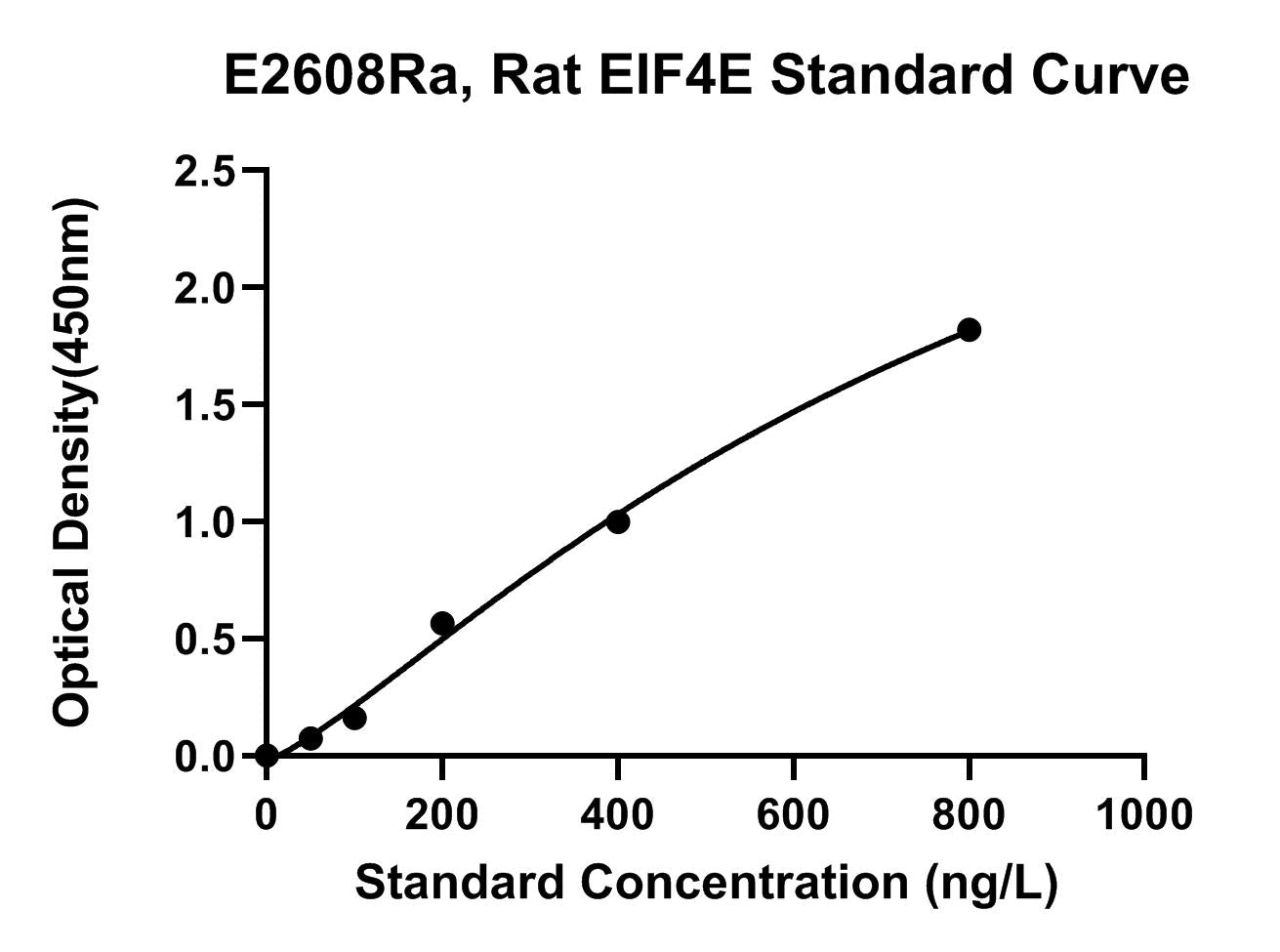
The Rat (EIF4E) Eukaryotic Translation Initiation Factor 4E ELISA Kit measures Eukaryotic Translation Initiation Factor 4E in Rat samples. The plate has been pre-coated with Rat EIF4E antibody. EIF4E present in the sample is added and binds to antibodies coated on the wells. And then biotinylated Rat EIF4E Antibody is added and binds to EIF4E in the sample. Then Streptavidin-HRP is added and binds to the Biotinylated EIF4E antibody. After incubation unbound Streptavidin-HRP is washed away during a washing step. Substrate solution is then added and color develops in proportion to the amount of Rat EIF4E. The reaction is terminated by addition of acidic stop solution and absorbance is measured at 450 nm.
Catalog No:
E2608Ra
Regular price
$595.00 USD
Regular price
$458.00 USD
Sale price
$595.00 USD
Unit price
/
per
2.5 weeks
Couldn't load pickup availability
Product Details
Species Reactivity
Rat
Sensitivity
4.12 ng/L
Detection Range
7-1500 ng/L
Sample Type
Serum, plasma, cell culture supernates
Incubation(s)
1.5 hour(s)
Research Areas
Epigenetics and Nuclear Signaling
Background
Recognizes and binds the 7-methylguanosine-containing mRNA cap during an early step in the initiation of protein synthesis and facilitates ribosome binding by inducing the unwinding of the mRNAs secondary structures (PubMed:7939721).
In addition to its role in translation initiation, also acts as a regulator of translation and stability in the cytoplasm (PubMed:8558852).
Component of the CYFIP1-EIF4E-FMR1 complex which binds to the mRNA cap and mediates translational repression: in the complex, EIF4E mediates the binding to the mRNA cap. Component of a multiprotein complex that sequesters and represses translation of proneurogenic factors during neurogenesis (By similarity).
In P-bodies, component of a complex that mediates the storage of translationally inactive mRNAs in the cytoplasm and prevents their degradation (By similarity).
May play an important role in spermatogenesis through translational regulation of stage-specific mRNAs during germ cell development (PubMed:8558852). Source: UniProt Consortium (2025)
Shipping Condition
Shipped on cold gel packs.
Storage Condition and Shelf Life
2-8C
Analyte
Eukaryotic Translation Initiation Factor 4E
Regulatory Status
For Research Use Only