1
/
of
1
Rat GPNMB (Transmembrane Glycoprotein Nmb) ELISA Kit
Rat GPNMB (Transmembrane Glycoprotein Nmb) ELISA Kit
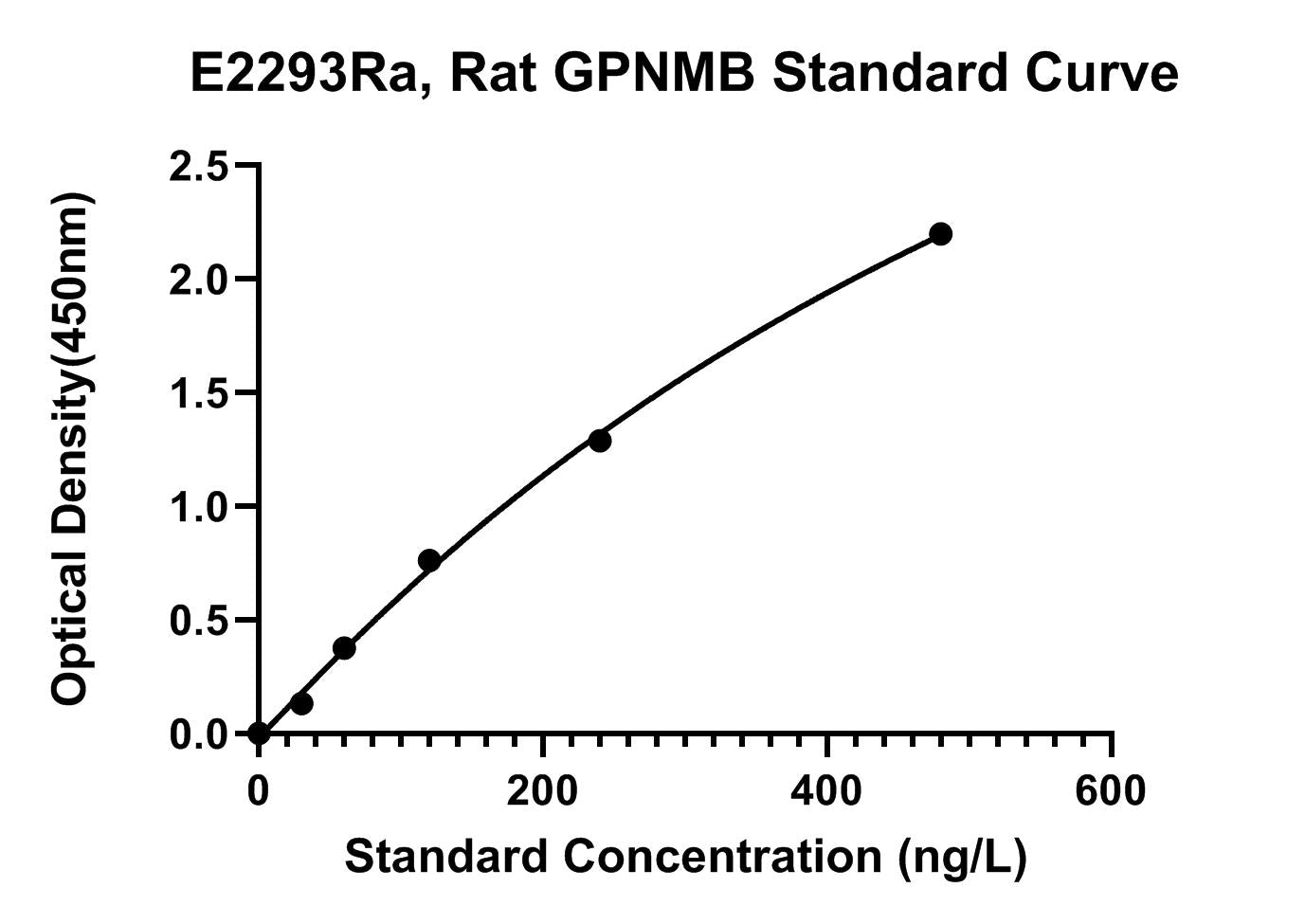
The Rat (GPNMB) Transmembrane Glycoprotein Nmb ELISA Kit measures Transmembrane glycoprotein NMB in Rat samples. The plate has been pre-coated with Rat GPNMB antibody. GPNMB present in the sample is added and binds to antibodies coated on the wells. And then biotinylated Rat GPNMB Antibody is added and binds to GPNMB in the sample. Then Streptavidin-HRP is added and binds to the Biotinylated GPNMB antibody. After incubation unbound Streptavidin-HRP is washed away during a washing step. Substrate solution is then added and color develops in proportion to the amount of Rat GPNMB. The reaction is terminated by addition of acidic stop solution and absorbance is measured at 450 nm.
Catalog No:
E2293Ra
Regular price
$595.00 USD
Regular price
$458.00 USD
Sale price
$595.00 USD
Unit price
/
per
2.5 weeks
Couldn't load pickup availability
Product Details
Species Reactivity
Rat
Sensitivity
1.63 ng/L
Detection Range
3-900 ng/L
Sample Type
Serum, plasma, cell culture supernates
Incubation(s)
1.5 hour(s)
Research Areas
Immunology
Background
Transmembrane glycoprotein NMB is a protein that in humans is encoded by the GPNMB gene. Two transcript variants encoding 560 and 572 amino acid isoforms have been characterized for this gene in humans. The mouse and rat orthologues of GPNMB are known as DC-HIL and Osteoactivin (OA), respectively. GPNMB is a type I transmembrane glycoprotein which shows homology to the pmel17 precursor, a melanocyte-specific protein. In osteoblast progenitor cells, Osteoactivin works as a positive regulator of osteoblast differentiation during later stages of matrix maturation and mineralization [9] that is mediated at least in part by Bone morphogenetic protein 2 in a SMAD1 dependent manner to promote osteoblast differentiation. In addition, using a rat fracture model, Osteoactivin (OA) enhances the repairing process in bone fracture, demonstrated by its high expression during chondrogenesis (soft callus) and osteogenesis (hard callus) compared to the intact femurs that is why Osteoactivin (OA) could be a novel therapeutic agent used to treat generalized osteoporosis or localized osteopenia during fracture repair by stimulating bone growth and regeneration. Similarly, Osteoactivin expression increases during osteoclast differentiation and it is functionally implicated in this process, possibly by promoting the fusion of osteoclast progenitor cells. Source: UniProt Consortium (2025)
Shipping Condition
Shipped on cold gel packs.
Storage Condition and Shelf Life
2-8C
Analyte
Transmembrane glycoprotein NMB
Regulatory Status
For Research Use Only