1
/
of
1
Rat SMAD3 (Mothers Against Decapentaplegic Homolog 3) ELISA Kit
Rat SMAD3 (Mothers Against Decapentaplegic Homolog 3) ELISA Kit
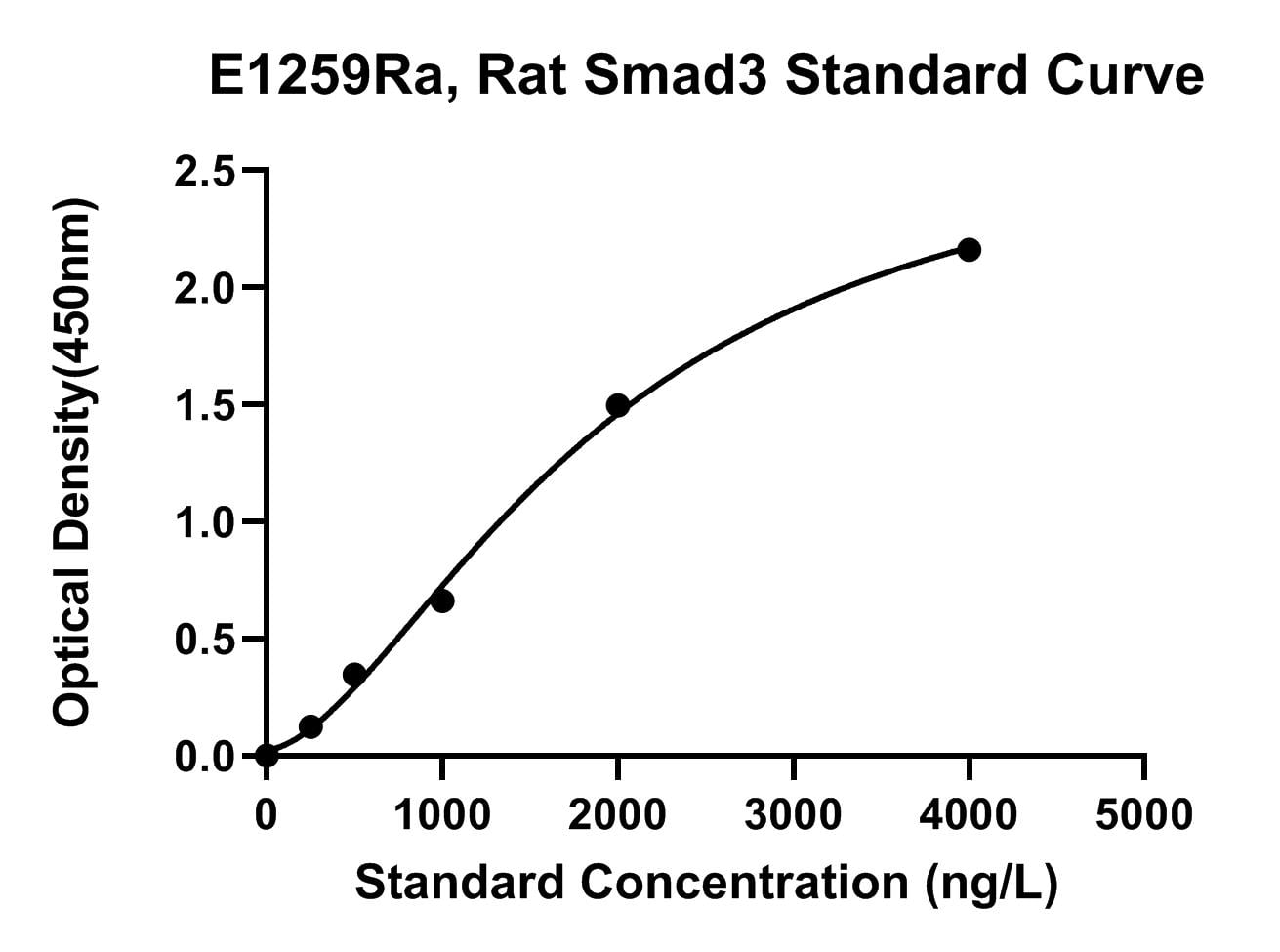
The Rat (SMAD3) Mothers Against Decapentaplegic Homolog 3 ELISA Kit measures Mothers Against Decapentaplegic Homolog 3 in Rat samples. The plate has been pre-coated with Rat SMAD3 antibody. SMAD3 present in the sample is added and binds to antibodies coated on the wells. And then biotinylated Rat SMAD3 Antibody is added and binds to SMAD3 in the sample. Then Streptavidin-HRP is added and binds to the Biotinylated SMAD3 antibody. After incubation unbound Streptavidin-HRP is washed away during a washing step. Substrate solution is then added and color develops in proportion to the amount of Rat SMAD3. The reaction is terminated by addition of acidic stop solution and absorbance is measured at 450 nm.
Catalog No:
E1259Ra
Regular price
$595.00 USD
Regular price
$458.00 USD
Sale price
$595.00 USD
Unit price
/
per
2.5 weeks
Couldn't load pickup availability
Product Details
Species Reactivity
Rat
Sensitivity
10.31 ng/L
Detection Range
21.01-7500 ng/L
Sample Type
Serum, plasma, cell culture supernates
Incubation(s)
1.5 hour(s)
Research Areas
Signal Transduction, Epigenetics and Nuclear Signaling, Stem Cells, Cancer
Background
Receptor-regulated SMAD (R-SMAD) that is an intracellular signal transducer and transcriptional modulator activated by TGF-beta (transforming growth factor) and activin type 1 receptor kinases. Binds the TRE element in the promoter region of many genes that are regulated by TGF-beta and, on formation of the SMAD3/SMAD4 complex, activates transcription. Also can form a SMAD3/SMAD4/JUN/FOS complex at the AP-1/SMAD site to regulate TGF-beta-mediated transcription. Has an inhibitory effect on wound healing probably by modulating both growth and migration of primary keratinocytes and by altering the TGF-mediated chemotaxis of monocytes. This effect on wound healing appears to be hormone-sensitive. Regulator of chondrogenesis and osteogenesis and inhibits early healing of bone fractures. Positively regulates PDPK1 kinase activity by stimulating its dissociation from the 14-3-3 protein YWHAQ which acts as a negative regulator (By similarity). Source: UniProt Consortium (2025)
Shipping Condition
Shipped on cold gel packs.
Storage Condition and Shelf Life
2-8C
Analyte
Mothers Against Decapentaplegic Homolog 3
Regulatory Status
For Research Use Only